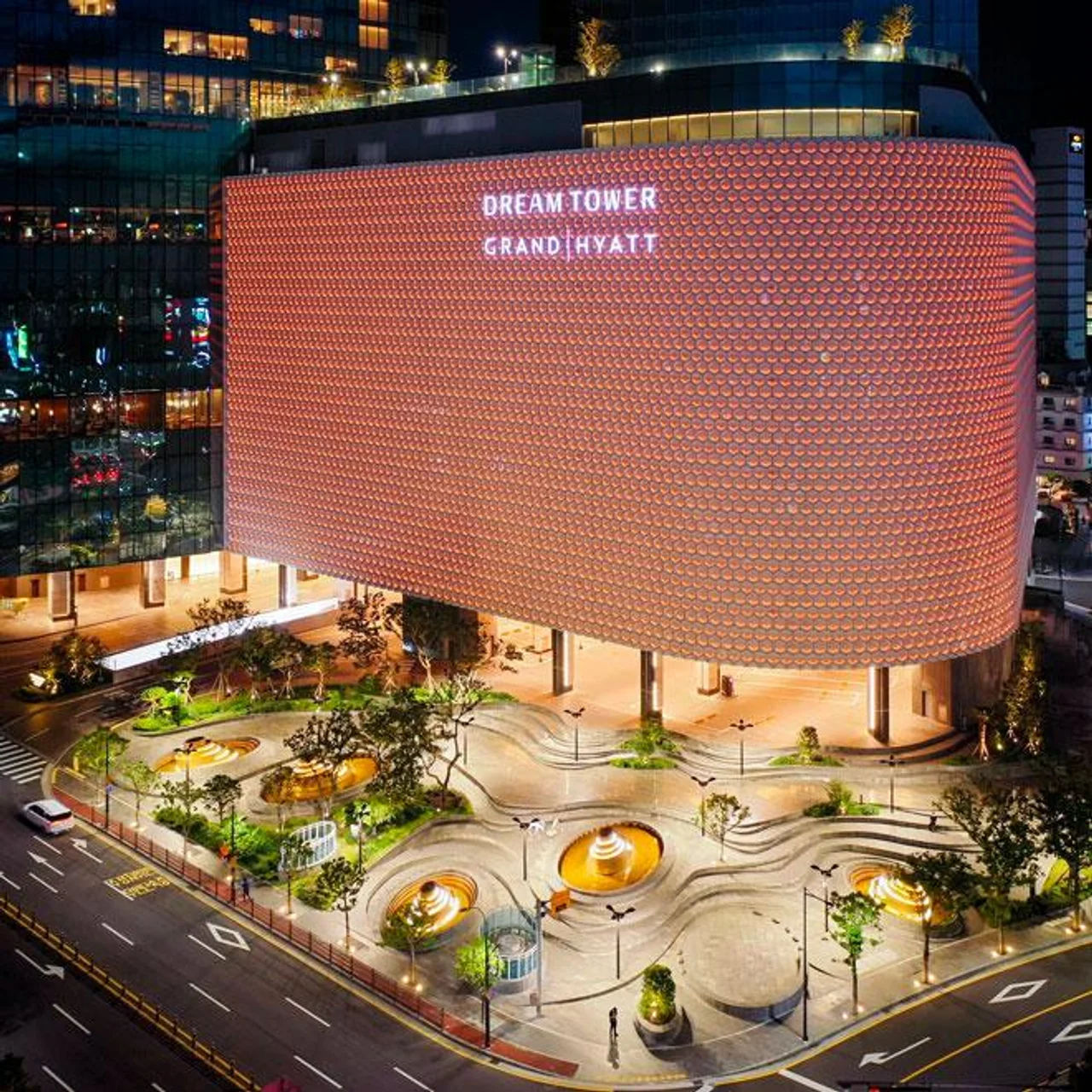
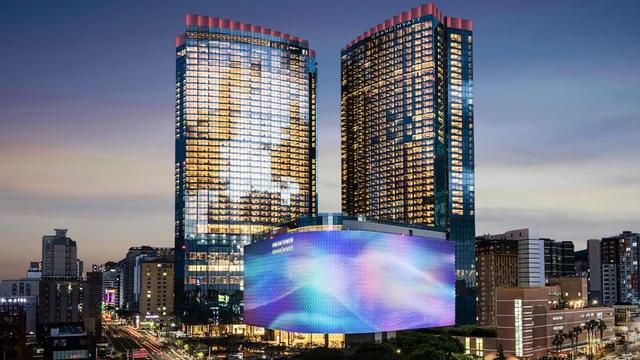
Jeju Dream Tower Casino is making history by shattering monthly revenue records for foreign-only casinos in Korea.
In October, net casino revenue surpassed 60 billion KRW for the first time ever, marking the highest performance among all single casino venues in the country.
Notably, by surpassing the previous record holder, Paradise Walkerhill Casino in Seoul, the industry is closely watching for potential shifts in the landscape of Korea's foreign-only casino market.
According to the Financial Supervisory Service's Data Analysis, Retrieval and Transfer System (DART) on the 3rd, the net revenue of Jeju Dream Tower Casino, operated by Lotte Tour Development, reached 62.526 billion KRW in October.
This represents a 24.1% increase compared to the same month last year and a massive 115.4% jump from the previous month.
This figure significantly exceeds the previous monthly record of 52.9 billion KRW set in September of last year.
It also surpassed the previous record for a single domestic casino venue, held by Paradise Walkerhill in June 2023 at 59.8 billion KRW.
Lotte Tour Development explained that this is the first time a single domestic casino venue has exceeded 60 billion KRW in monthly revenue.
This record is noteworthy because it reflects a simultaneous expansion in both customer visits and betting volume, rather than just a temporary spike in revenue.
In October, the table game drop amount reached 327.416 billion KRW, an increase of 27.5% year-on-year and 37.7% month-on-month.
'Drop amount' refers to the total amount of money customers exchange for chips to play, serving as a key indicator of a casino's operational scale and customer activity.
This is also the first time the monthly drop amount has exceeded 300 billion KRW.
Casino visitors totaled 66,254, just 139 shy of the record high of 66,393 set the previous month, averaging about 2,137 visitors per day.
Table game revenue accounted for 60.352 billion KRW, or 96.5% of total net casino revenue. Conversely, machine revenue was 2.174 billion KRW, up 5.5% year-on-year but down 34.3% from the previous month, reaffirming the table-game-centric revenue structure of Dream Tower Casino.
From September Slump to October Record
What is most striking is the dramatic turnaround in performance.
In September, despite recording the highest number of visitors to date, Dream Tower Casino's revenue remained at the 29 billion KRW level.
This was primarily due to the table hold rate dropping to 10.8% at the time.
However, in October, the hold rate rose to 18.4%, causing revenue to more than double.
Casino hold rate refers to the percentage of money exchanged for chips that the casino retains as revenue. In the short term, this can fluctuate significantly based on customer wins, losses, and high-stakes betting outcomes.
Therefore, it is difficult to interpret the record-breaking revenue in October solely as a result of increased customer influx or improved competitiveness.
In fact, while the number of customers remained similar to the previous month, the surge in revenue due to the higher hold rate suggests that short-term revenue volatility and fundamental operational strength should be evaluated separately.
Nevertheless, the fact that visitor numbers remained high and the drop amount set an all-time record is a positive sign that Dream Tower's ability to attract foreign customers is growing.
Shifts in the Jeju Casino Market Landscape
Dream Tower's record-breaking performance carries significant implications for the domestic foreign-only casino industry.
Historically, the domestic foreign-only casino market has been dominated by large casinos in the metropolitan area, centered around Seoul and Incheon, such as Paradise Walkerhill, Paradise City, and GKL Seven Luck.
However, by setting a new monthly revenue record, Jeju Dream Tower has demonstrated the potential for Jeju to grow into a core market for foreign-only casinos in Korea.
Jeju Dream Tower differentiates itself from existing Jeju casinos as an urban integrated resort that combines a casino, hotel, dining, shopping, and tourism facilities.
Its strength lies in its business structure, which leverages the 1,600-room Grand Hyatt Jeju to attract overseas tourists and link casino operations with accommodation.
Additionally, the expansion of international flights connecting major Asian cities such as China, Japan, and Taiwan is acting as a positive factor for strengthening competitiveness.
According to data from the Ministry of Land, Infrastructure and Transport, international flights at Jeju Airport during this winter season are expected to reach 486 flights per week, a 39.3% increase from the 349 flights in the previous winter season. The number of international routes is also expected to increase from 17 to 25.
Cumulative Net Revenue of 455.5 Billion KRW… Aiming for Annual Record
Dream Tower's growth is also evident in its cumulative performance.
From January to October of this year, cumulative net casino revenue reached 455.555 billion KRW, an 18.5% increase compared to the same period last year. The cumulative drop amount for the same period was 2.287103 trillion KRW, up 12.3% year-on-year.
Revenue from the integrated resort, combining the casino and hotel, is also on an upward trend. Including hotel revenue, the combined revenue for the casino and hotel sectors in October reached approximately 78.1 billion KRW, a monthly record high. Cumulative revenue for January–October also reached approximately 603.3 billion KRW, an increase of over 16% compared to the same period last year.
Expansion in casino performance is directly translating into growth for the entire integrated resort.
Lotte Tour Development stated that the room occupancy rate also reached an all-time high of 84.4% on a cumulative basis this year. The company expects performance improvements to continue in the fourth quarter, driven by the expansion of international flights and an increase in foreign tourists.
How Long Will the Record Streak Last?
The key question is whether this growth can be sustained.
The casino industry is unique in that revenue growth cannot be guaranteed solely by an increase in tourists or the expansion of facilities.
In particular, the fact that monthly performance can fluctuate significantly based on the outcomes of high-stakes players and hold rate volatility is a challenge that Dream Tower must address.
Furthermore, changes in the Chinese tourism market, international flight conditions, competition with neighboring countries' casinos, and commission burdens for attracting customers are factors that will influence mid-to-long-term performance.
Revenue growth does not automatically translate into increased operating profit and net income. Factors such as customer acquisition costs, including casino agent commissions, hotel operating expenses, and financial costs, must also be considered.
Specifically, the burden of borrowings and financial costs resulting from the development of a large-scale integrated resort has been pointed out as a management challenge for Dream Tower. In a report last June, iM Securities analyzed that the financial costs and refinancing issues related to Dream Tower's debt are major variables affecting profitability.
Ultimately, future competitiveness depends on whether the company can translate the increase in customer visits and drop amounts into stable profits, rather than relying on temporary monthly revenue records.
It is clear that Jeju Dream Tower has made new history in Korea's foreign-only casino market. However, breaking a record once does not necessarily mean sustained growth or securing industry leadership.
Industry attention is focused on whether Dream Tower, having opened the era of 60 billion KRW in monthly net revenue, can challenge new records of 70 billion or 80 billion KRW, or if its growth pace will be adjusted amidst hold rate fluctuations and intensifying competition.