As construction of Japan's first casino integrated resort (IR) accelerates with a target opening in the fall of 2030, enhancing the competitiveness of the domestic casino industry, including Kangwon Land, has emerged as an urgent task.
The Osaka IR, which involves an investment of approximately 15 trillion won, is set to be a massive complex featuring 470 casino table games, 6,400 electronic gaming machines, and 2,500 hotel rooms, expected to reshape the competitive landscape of the Asian casino market.
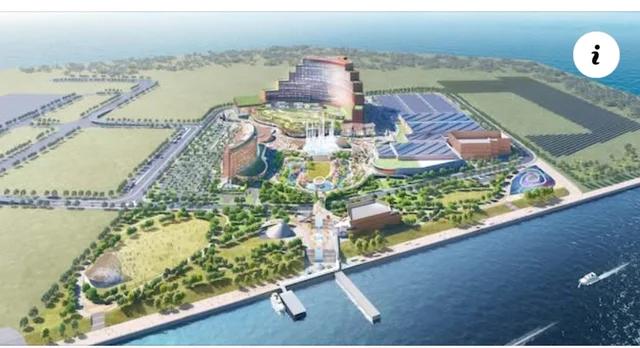
According to data from the Osaka Prefectural and City governments and MGM Resorts International on the 12th, the Osaka IR is being built on Yumeshima, an artificial island in Osaka Bay, covering a site of approximately 492,000 square meters with a total floor area of about 780,000 square meters.
The initial investment for this project, which includes participation from MGM Resorts and Japan's Orix, is approximately 1.513 trillion yen (about 15 trillion won), consisting of 1.195 trillion yen in construction costs and 318 billion yen in other expenses.
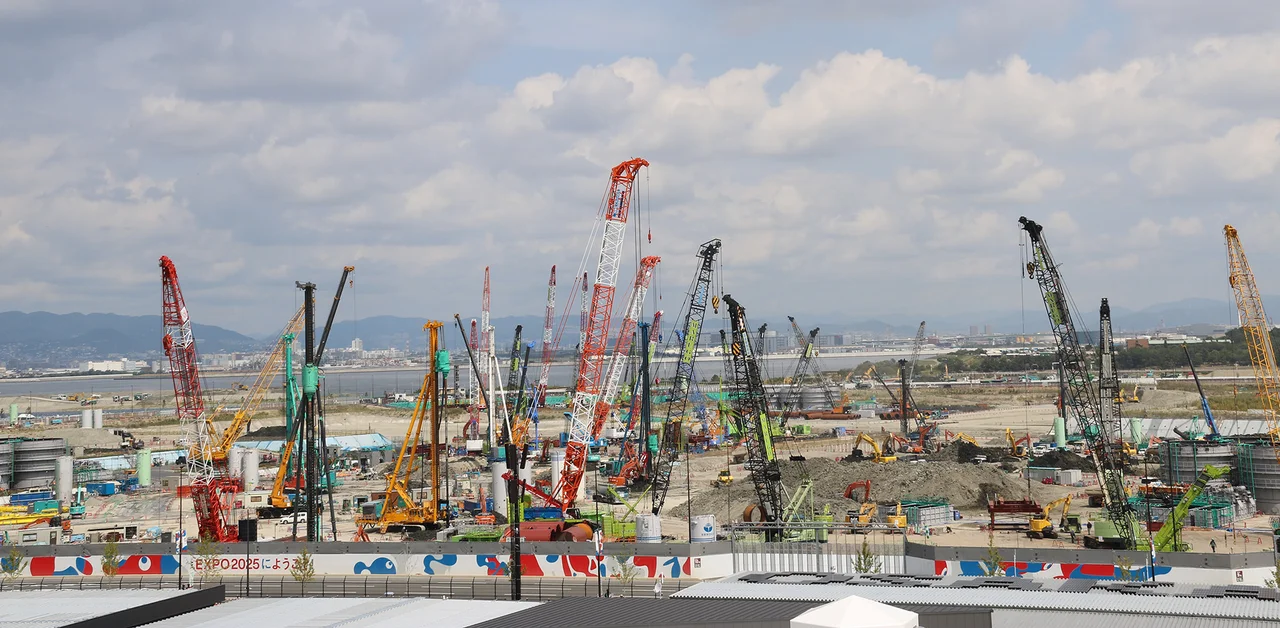
Having received approval from the Japanese government in April 2023, the Osaka IR began main construction on April 24, 2025, with a goal of completion in the summer of 2030 and opening in the fall of the same year.
In its earnings report at the end of July this year, MGM Resorts stated that underground foundation work is over 60% complete, and concrete pouring and steel fabrication for above-ground structures are underway.
Bill Hornbuckle, CEO of MGM Resorts, explained that construction is proceeding within schedule and budget, maintaining the target for a fall 2030 opening.
The most notable aspect is the scale of the casino.
The gaming floor area of the Osaka IR is planned to be approximately 23,293 square meters. It is expected to house about 470 table games and 6,400 electronic gaming machines, including slot machines and electronic table games (ETG).
The total floor area of the casino facility is about 70,000 square meters, with the actual gaming area restricted to within 3% of the total IR floor area according to Japanese regulations.
In particular, the large-scale provision of the latest slot machines, electronic games, and a variety of table games is expected to secure significant competitiveness in attracting Asian casino customers.
Beyond the casino, the complex will feature a 2,500-room hotel, international conference facilities capable of accommodating over 6,000 people, exhibition halls, a 3,500-seat theater, and shopping and cultural facilities.
Osaka Prefecture and City are aiming for 20 million annual visitors after opening, consisting of 14 million domestic Japanese residents and 6 million international tourists.
Annual revenue is projected at approximately 520 billion yen, with 420 billion yen from the casino sector and 100 billion yen from non-casino sectors.
Another strength of the Osaka IR is its excellent accessibility, connecting to Kansai International Airport, downtown Osaka, and surrounding tourist destinations like Kyoto, Kobe, and Nara.
Since it can be reached from Korea in about two hours by flight, it is expected to become a new option for domestic customers who wish to enjoy both overseas travel and casino gaming.
Consequently, this is likely to place a significant burden on Kangwon Land, the only casino in Korea where locals are permitted to enter.
Although Kangwon Land has grown based on its domestic monopoly, once the Osaka IR opens, it may face full-scale international competition in terms of facility scale, game variety, and customer service.
In particular, there are concerns that if issues such as a lack of popular slot machines, waiting times for games, insufficient rest areas, and various operational regulations are not addressed, there could be a shift toward preferring overseas casinos, especially among high-spending customers.
Of course, domestic accessibility, relatively lower travel costs, and an existing customer base are strengths of Kangwon Land. It is difficult to conclude that the opening of the Osaka IR will immediately lead to a mass exodus of domestic customers.
Kangwon Land is also pushing forward with the 'K-HIT Project,' investing approximately 2.5 trillion won by 2032 to expand its casino floor, renovate hotels and condos, and expand tourism content.
However, experts point out that along with facility investment, securing popular gaming machines, service innovation, reasonable regulatory improvements, and strengthening responsible gaming must be pursued in parallel.
Weakened casino competitiveness could affect not only Kangwon Land but also the local economy of the abandoned mining areas in Jeongseon, Gohan, and Sabuk, including lodging and restaurants.
Ultimately, the approximately four years remaining until the Osaka IR opens will be a crucial preparation period to determine whether Kangwon Land can move beyond the limitations of a domestic monopoly and leap into a complex resort with international competitiveness.