
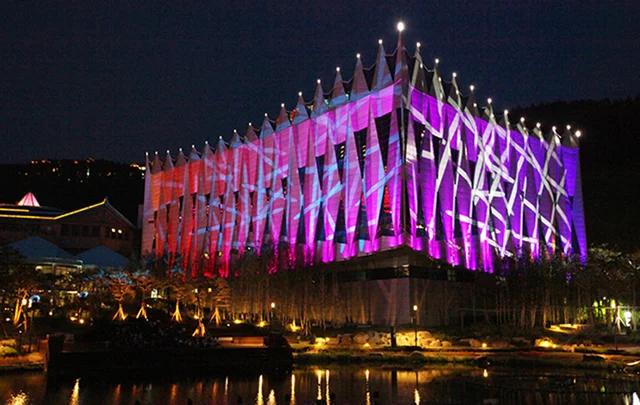
The question that will define the next 26 years of Kangwon Land is clear: Why should customers return?
For the past 26 years, Kangwon Land has supported jobs and local finances in the former mining region. However, the extent to which corporate success has translated into competitiveness for the local tourism industry and customer satisfaction remains a task to be addressed.
Its status as the only casino in Korea accessible to locals was once a powerful motivation for visits. Moving forward, beyond this status, it must provide services and travel experiences that justify the time and money customers spend.
The Osaka Integrated Resort (IR) in Japan, slated for opening in 2030, signals this shift. This is why improving Kangwon Land’s facilities and operations, alongside revitalizing the tourism environment of the former mining region, must be prioritized.
At this juncture, Jeongseon-gun's push to host a correctional facility in the Sabuk area has sparked debate over the relationship between regional economic diversification and the existing tourism industry. While securing new jobs and a permanent population is important, it is necessary to examine how this will harmonize with the tourism industry that has sustained the region.
◆ The Backbone of the Local Economy: It Starts with the Customer
The impact of Kangwon Land on the Jeongseon-gun economy is significant.
Of the 5.4 billion KRW in regular property taxes levied in July this year, Kangwon Land accounted for 2.7 billion KRW, or half of the total. Thousands of jobs, including direct employees and those at partner companies, are linked to Kangwon Land’s operations.
Local lodging, dining, and transportation businesses are also influenced by the demand from casino and resort visitors. This is why the economic effect on the region cannot be explained solely by corporate direct employment and tax revenue.
The starting point of this structure is the customer. Economic activity for both the company and the region continues as customers spend time and money to visit, dine, stay, and travel.
Therefore, regional coexistence cannot be evaluated solely by how much a company provides in support. It must also examine what kind of experience the region provided to the customer and whether that experience led to a repeat visit.
If Kangwon Land wants to encourage customers to use local businesses, those businesses must also earn the customer's choice through price, quality, kindness, and accessibility. Increasing local consumption by customers must start with recommendations and lead to satisfaction that brings them back.
◆ The Question Posed by the “I’ll Go to Osaka” Response
According to research data released by a casino-related association on the 14th, 52.1% of the 493 Kangwon Land customers surveyed said they would be willing to visit the Osaka IR once it opens.
This should not be interpreted as half of Kangwon Land's customers leaving immediately. Intent to visit and actual travel are different, and even if they visit Osaka, they may continue to use Kangwon Land.
Nevertheless, it is worth noting that a majority of existing customers are interested in overseas IRs. It shows the potential for the customer's comparison criteria to expand beyond casino games to tourism products that combine lodging, food and beverage, shopping, and performances.
Kangwon Land must examine what customers expect when they look abroad. It needs to identify which factors—game options, service, lodging products, or entertainment for accompanying family members—are most important to determine its response strategy.
Customer demands should not be reduced solely to betting limits or operating hours. There are many factors that can be improved now, such as friendly service, convenient transportation, adequate rest, and reasonable pricing.
There is no reason to wait for the opening of overseas competitors. Identifying and reducing the inconveniences customers currently face is the starting point for strengthening competitiveness.
◆ Hosting a Correctional Facility: Examining Necessity and Location
Jeongseon-gun is pushing to host a correctional facility in Jikjeon-ri, Sabuk-eup, with a capacity for 1,000 inmates and 250 resident staff.
According to the county's plan, the site covers approximately 192,700㎡ with a construction cost of about 241.9 billion KRW, aiming for operation by 2035. The county held a public hearing on the 8th, applied to the Ministry of Justice on the 12th, and the county council approved the motion on the 14th.
Jeongseon-gun expects an influx of about 600 people, including staff and their families, 15,000 visitors per year, and an expansion of local employment and consumption. These are projected effects, and the actual scale may vary depending on future project implementation and settlement conditions.
The intent is to secure stable public sector jobs and a permanent population, as relying solely on Kangwon Land is difficult. There is sufficient reason to consider this as a regional economic diversification plan to address population decline.
However, the necessity of the project does not automatically justify the appropriateness of a specific location. Factors such as distance from existing tourist facilities, visual impact on the landscape, traffic flow, and surrounding development plans must be analyzed together.
It cannot be assumed that a correctional facility will harm the tourism industry simply because of its nature. It is necessary to distinguish between preconceptions about the facility and its actual impact, and to judge the expected effects and burdens based on concrete data.
◆ Hosting Procedures and Tourism Industry Feedback Are Separate
Along with site review, the scope and timing of gathering opinions must be verified.
Before applying to host, it is necessary to disclose what information was provided to Kangwon Land and the tourism industry, what opinions were received, and how they were reflected in the project plan.
Going through the procedures of public hearings and council consent is separate from thoroughly reviewing the impact on the tourism industry. Opinions from casino customers, resort guests, and Kangwon Land employees—not just residents and merchants—should be included in the decision-making data.
Simply asking for a yes or no on the correctional facility has limitations. The location, scale, landscape, and traffic measures of the candidate site must be explained, and it should be examined under what conditions concerns can be reduced and how it actually affects visit decisions.
Comparing the number of visitors to a correctional facility with the number of casino visitors based on raw numbers should be done with caution. The number of visitors to the facility is an estimate, while the number of casino visitors represents total annual visits including repeat visits. The purpose of the visit, length of stay, and consumption patterns are also different.
The benefits and burdens of the project can only be judged by separately analyzing the settlement effects of staff and families, the possibility of local business participation, infrastructure costs, and tourism impacts.
Jeongseon-gun should disclose the review details and consultation progress, and Kangwon Land should also provide specific grounds and alternatives if there are concerns. The focus of the discussion should go beyond the pros and cons of hosting to whether the location is suitable for the long-term development of the region.
◆ Including Customer Satisfaction in the Criteria for Regional Coexistence
Coexistence between Kangwon Land and the region is not complete just by increasing subsidies or local procurement. It must also create reasons and convenience for customers to use the region.
Information on restaurants and transportation linked to casino operating hours, accurate lodging guidance, clear price labeling, and cleanliness management are the basics. Inconveniences experienced during late-night dining, transportation, and departures should also be addressed at the regional level.
Whether an inconvenience experienced by a customer occurred inside the casino or at a local lodging facility or transport service may not be separated in the customer's decision to return. This is because the entire trip remains as a single experience.
Cooperation is needed where companies, local governments, and merchant associations receive customer complaints together and share improvement results. It is necessary to identify recurring complaints and divide roles for improvement.
Performance in regional coexistence should also be verified by customer usage of local businesses, satisfaction levels, and the resolution of inconveniences, in addition to subsidies and purchase amounts.
The demand from accompanying family members who do not use the casino and general tourists is also important. Growing stay-over products that utilize forest, cultural, and industrial heritage will diversify the purpose of visits and broaden the foundation for responding to changes in casino demand.
◆ K-HIT: Changing Facility Investment and User Experience Together
Kangwon Land is pushing to leap into a global integrated resort through the K-HIT project. However, it is difficult to explain competitiveness solely by the scale of investment and the number of facilities.
The entire process customers experience—from reservation to transportation, entry, gaming, rest, lodging, and departure—must improve together. Reducing the inconvenience that existing customers must endure while new facilities are being built is also important.
Guidance during large-scale construction, movement paths, noise, and landscape management are also services evaluated by customers. Inconveniences and alternative routes should be announced in advance, and help should be easily accessible on-site.
Customer protection should also be promoted alongside service improvements. An environment where customers can rest sufficiently, stop playing when they choose, and receive necessary explanations and counseling is a basic condition for customers to use the facility with peace of mind.
The government should check the actual effectiveness of regulations in light of the goal of preventing addiction. It is necessary to distinguish between operational tasks that companies should improve on their own and matters that require policy adjustment, and institutional improvements should be reviewed along with customer protection measures.
Kangwon Land must reduce operational inconveniences and strengthen customer protection alongside facility investment. Jeongseon-gun and local governments in the former mining region must review harmony with the existing tourism industry while attracting new industries and support service improvements in local commercial districts. The government must check the rationality and effectiveness of regulations.
If the past 26 years were a time for establishing a casino in the former mining region, the future must be about making customers choose both Kangwon Land and the region.
That choice starts with the service and trust experienced during every visit, rather than the size of an investment plan.
