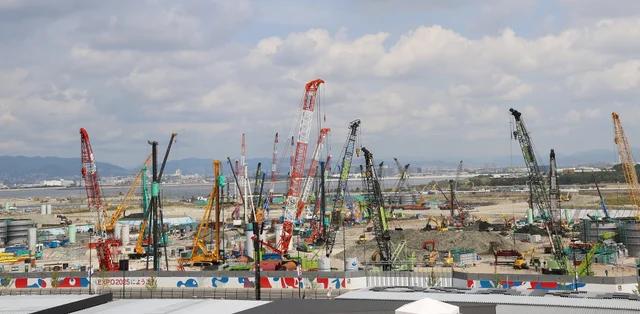
As construction of Japan’s first casino integrated resort, 'MGM Osaka,' progresses smoothly toward its 2030 opening, tension is mounting within the domestic casino industry, including Kangwon Land.
This goes beyond the simple emergence of a new casino; it represents the arrival of a massive, comprehensive tourism city near Korea. It combines the operational know-how of global casino giant MGM with Japan’s tourism and transportation infrastructure, large-scale MICE facilities, hotels, performances, and shopping.
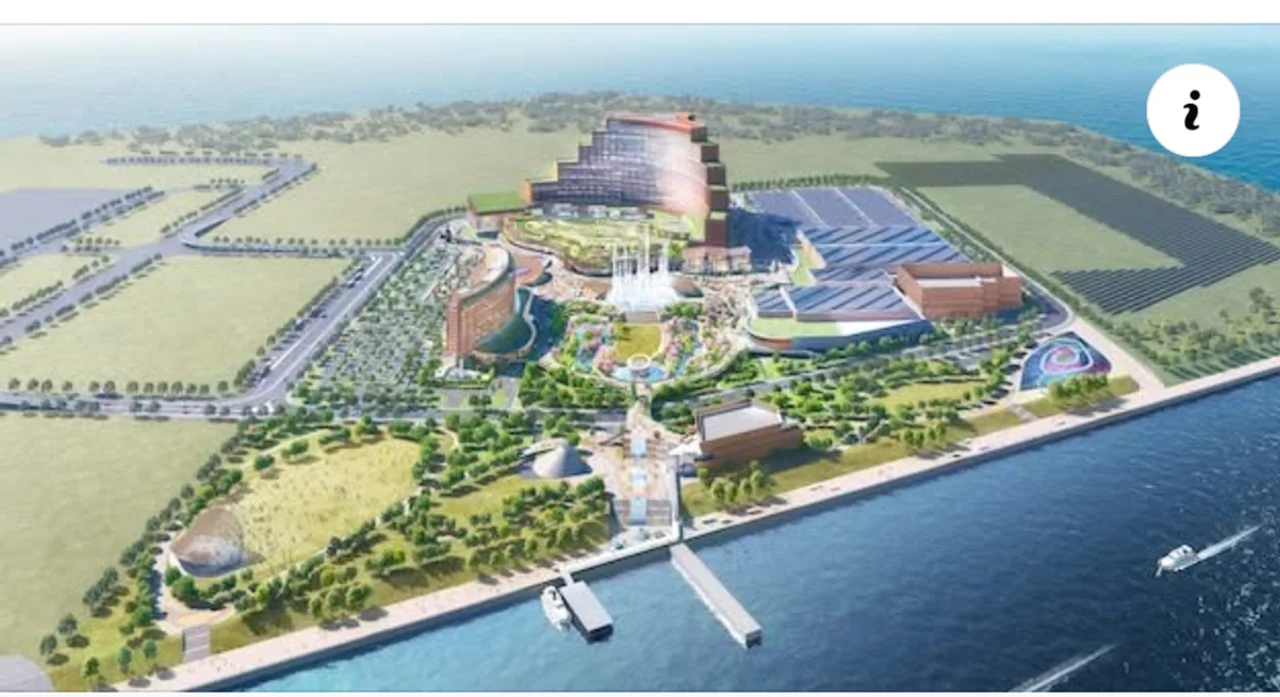
According to the Osaka Prefectural Government and industry sources on the 29th, MGM Osaka is being built on Yumeshima, an artificial island in Osaka Bay, with an investment of approximately 1.7 trillion yen (about 16 trillion KRW), aiming for an opening in the fall of 2030. MGM Resorts International and Japan’s Orix are participating in the project.
According to recently released architectural plans, the core building is a 126-meter-tall, 27-story tower. Featuring a curved exterior reminiscent of the Bellagio in Las Vegas, it will house two hotels with 1,840 rooms, a casino, and a large theater. Including an additional 660-room resort hotel, the total capacity reaches approximately 2,500 rooms.
The scale of the casino is also significant compared to domestic operators.
The casino floor area is planned at approximately 23,293㎡, with about 470 table games and 6,400 electronic gaming machines. MGM has stated that the Osaka casino has the potential to become one of the highest-grossing casinos in the world.
Following government deregulation, Kangwon Land may increase its tables from 200 to 250 and machines from 1,360 to 1,610. Even after these expansions, the Osaka IR will have approximately 1.9 times the number of gaming tables and 4 times the number of gaming machines as Kangwon Land.
However, analysts suggest that the true competitive edge of the Osaka IR lies outside the casino floor.
MICE facilities for hosting large-scale international conferences and exhibitions, performance venues, shopping and dining facilities, and hotels are all concentrated in one space. Related plans project approximately 20 million annual visitors, with about 6 million being foreigners. The annual revenue target is approximately 520 billion yen.
Yumeshima is connected to downtown Osaka by rail, and terminals for ferries and cruise ships are also planned. The Osaka Prefectural Government is even anticipating tourism synergy with the nearby Universal Studios Japan (USJ).
Accessibility and complex content are exactly what the Korean casino industry is focusing on.
Flight times from the Seoul metropolitan area to Japan's Kansai region are short, and Osaka is already a familiar destination for Korean tourists. When combined with MGM’s global customer data, VIP marketing, Japan’s unique service culture, and a mix of food, shopping, and performances, analysts believe it has the potential to attract not only casino players but also family and business tourists.
In particular, while Kangwon Land faces geographical limitations requiring land travel from the capital, the Osaka IR can target overseas customers simultaneously based on its international airport and major city tourism infrastructure.
Past research has already highlighted these risks.
A 2019 domestic casino industry impact analysis cited by the Gangwon Institute estimated that if the Japanese IR opened, approximately 670,000 of Kangwon Land’s annual visitors would shift to Japan, leading to an estimated outflow of 1.33 trillion KRW in spending. However, this was a past study conducted before the current Osaka IR business plan was finalized and is not a direct prediction of 2030 demand.
Domestic foreign-only casinos are also struggling to feel at ease.
Operators like Paradise City, Inspire, GKL Seven Luck, and Jeju-based casinos are competing for VIPs and tourists from China, Japan, and Southeast Asia. If Osaka establishes itself as a new international casino destination, the competition for customers could become even more intense.
Lee Ki-won, Chairman of the Korea Gaming Tourism Association, stated, “The Osaka IR is not just a casino; it is a city and a complex industrial platform,” adding, “We must prepare for the possibility that the flow of the Asian casino tourism market will change significantly after it opens.”
Seo Cheon-beom, head of the Korea Leisure Industry Institute, has also pointed out that if the Osaka casino secures advantages in accessibility, service, and facilities, Kangwon Land must accelerate its efforts to expand casino facilities and improve services.
Kangwon Land is also pushing to transform into a global integrated resort through large-scale investments by 2032, including expanding the casino floor, increasing gaming equipment, and raising betting limits in the foreign-only zone.
However, experts believe that simply increasing the number of tables and slot machines will not be enough to compete with the Osaka IR.
They argue that competitiveness is needed to bundle not just casino facilities, but also accessibility, hotel standards, food and shopping, performances, MICE, customer service, digital marketing, and overseas VIP networks into a single tourism product.
When MGM Osaka opens in 2030, the Korean casino industry will face its first era of direct competition with a massive, domestic-accessible IR operated by a global casino giant in nearby Japan.
Although there are still about four years left until the opening of the Osaka IR, the clock of competition has already begun ticking for the domestic casino industry.