


"Chief Kim of the project group, please lead the site selection process."
This is what Kim Gwang-sik, then-head of the Coal Industry Rationalization Project Group, recalled hearing when he met Gangwon Province Governor Choi Gak-kyu back in 1996, during the time the site for the Kangwon Land casino was being determined. Kim, who would later become the second president of Kangwon Land, explained in an interview with me how the site selection process, which had been stalled due to conflicting regional interests, was handed over to the project group.
One of the strong candidates he reviewed was the Manhang district of Hambaeksan Mountain. Jijangsan Mountain in Sabuk, where the current Kangwon Land main casino and Grand Hotel are located, was initially far from being a primary candidate. The strengths of the Manhang district were its paved roads connecting Taebaek, Gohan, and Yeongwol, its natural environment as a mountain resort, and the conditions to accommodate lodging and leisure facilities together.
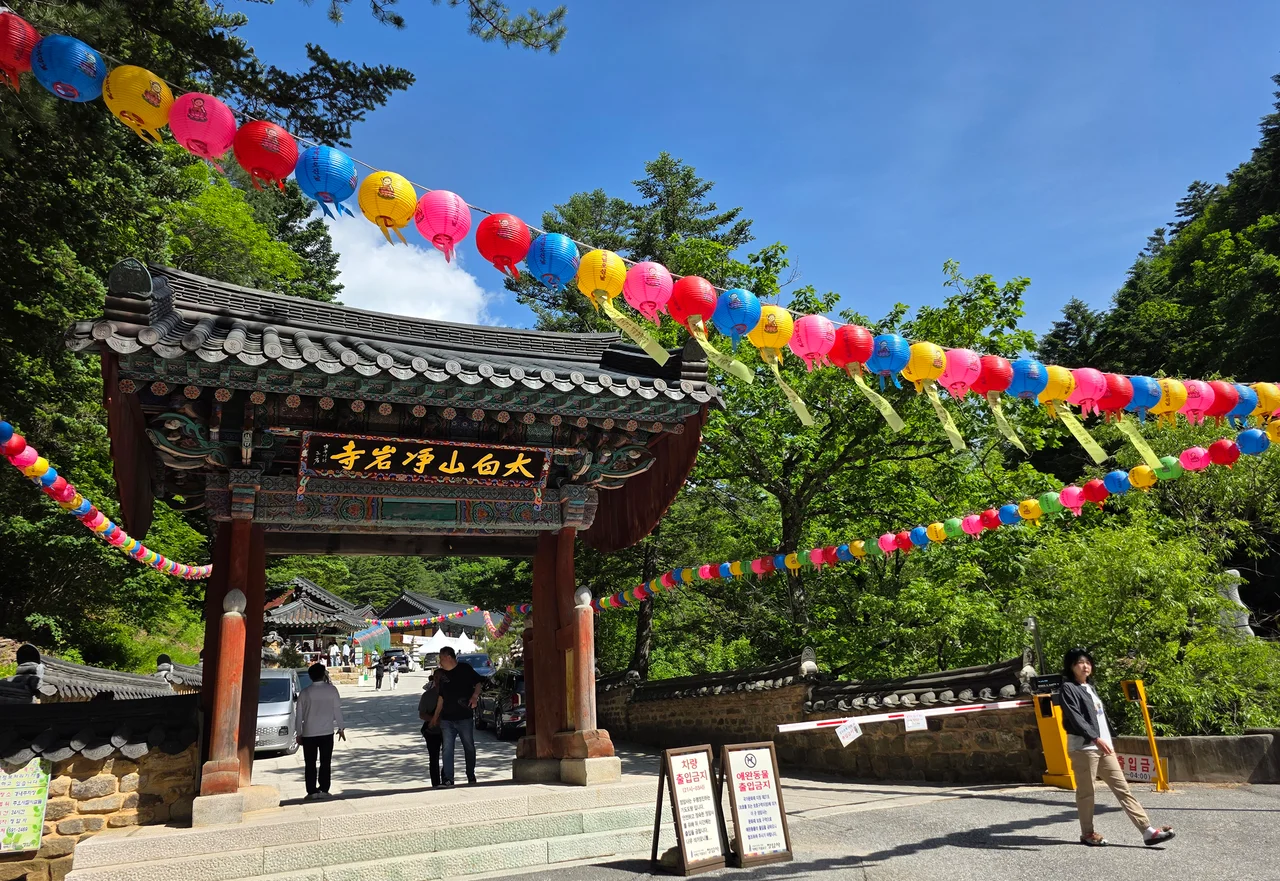
However, there was a threshold that could not be crossed even with high site evaluation scores: the opposition from the Jogye Order, which included Jeongamsa and Woljeongsa temples. This fact remains in the official responses of Gangwon Province at the time of the project's promotion, along with the recollections of those involved.
On July 19, 1996, at the 4th meeting of the 73rd Industrial Committee of the Gangwon Provincial Council, Assemblyman Jeong Won-gyo from Taebaek asked about the circumstances under which the development of the Manhang district had become difficult due to opposition from the Buddhist community. Then-Governor Choi Gak-kyu explained, "The planned development site is temple forest owned by Jeongamsa, and the Jogye Order is opposing it due to reasons such as forest destruction, environmental pollution, and damage to cultural heritage protection zones."
The result was its exclusion from the development plan. The province stated that it had submitted the application in May of that year with the Manhang district removed, and that the governor and relevant officials had repeatedly consulted with Woljeongsa but could not find common ground. The judgment was that if the order's opposition continued, it would be difficult to obtain approval for the entire development plan including Manhang.
The core of the conflict surrounding Manhang was the land and the temple. The local community desperately needed a tourism industry to create new jobs and income in the abandoned mining area. The order found it difficult to accept large-scale development and a casino entering Jeongamsa, a space for spiritual practice, and the surrounding forest. The position of the order at the time, as covered by Casino Hong, was that they could not allow a gambling den above the temple.
After the passage of the Special Act on Abandoned Mine Areas, local assemblymen Park Woo-byung and Ryu Seung-gyu also set out to persuade the order for the development of Manhang. The central government, Gangwon Province, and the local community also sought cooperation. However, simply explaining the need for regional economic revival could not change the order's decision. The specific details of political contact are based on interview testimonies, and the provincial council records confirm the repeated consultations by the governor and officials and the opposition from the Buddhist community.
At the time, Assemblyman Ryu Seung-gyu recalled, "To build the Kangwon Land resort on Manhangjae of Hambaeksan Mountain, we visited Woljeongsa and the Jogye Order several times to earnestly request the wishes of local residents, but we had to hear from the Jogye Order that they could never accept the installation of a gambling den above the thousand-year-old temple, Jeongamsa."
Jeongamsa is a thousand-year-old temple widely known today for its National Treasure, the Sumano Pagoda. The Sumano Pagoda was designated a National Treasure on June 25, 2020. At the time of the site controversy, it was a treasure, and the preservation of cultural heritage and the surrounding environment was a key issue even then.
The recollections of former president Kim Gwang-sik show the next choice. He said that while the casino facility site was originally supposed to be decided by the Gangwon Province governor, the work was delayed because the interests of four cities and counties in the abandoned mining area were at stake. He explained that after consulting with Governor Choi, the project group led the feasibility review of the candidate sites and commissioned a research project on five candidate sites to the Korea Planning Association.
As the candidate sites were reviewed one by one, the advantages of Manhang and the limitations of the alternatives were revealed. Former President Kim recalled that for the Gotoil district, a significant portion of the land was in a state of speculative purchase, and it was evaluated that the terrain was not suitable for placing hotels, condos, ski resorts, or golf courses.
He said, "The Manhang district of Hambaeksan Mountain received the highest score, but we judged that the opposition from the Jogye Order was too severe to overcome." He recalled that the Baksim district was pointed out for ground issues in the review at the time, and the candidate site behind Sabuk Yonsei Hospital was also not evaluated as suitable.
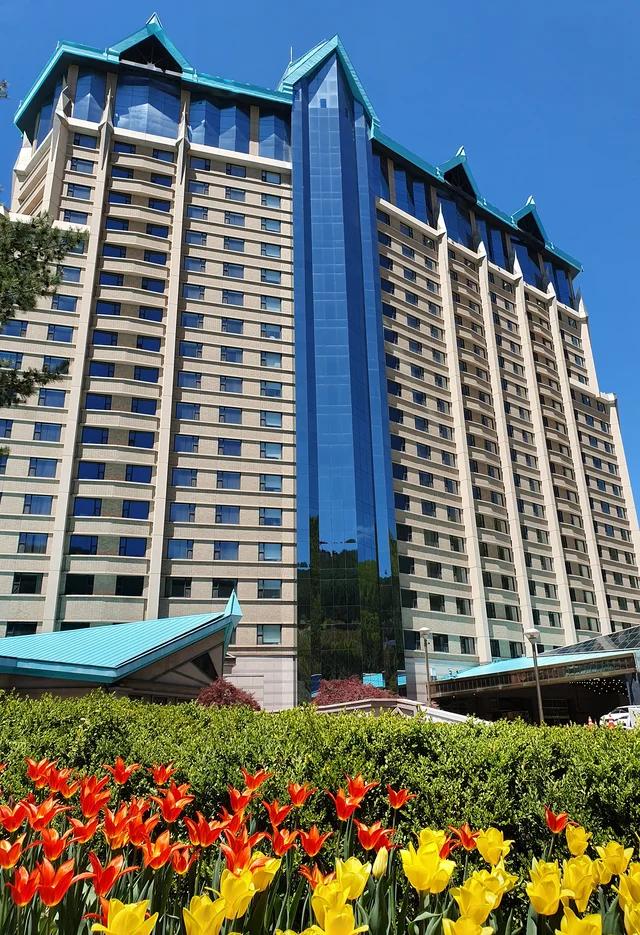
What remained at the end was the Jijangsan company housing complex in Sabuk. Former President Kim explained, "It was finally chosen because the ground was safe and the surrounding development conditions were the best," adding, "The lobbying by some in political circles is not true." This statement is the judgment and testimony of the person in charge of site selection.
The 'History of the Coal Industry in Jeongseon-gun' published by Jeongseon-gun also shows the research process of the association. The data records that from May 12 to June 20, 1997, they surveyed the Gotoil, Jijangsan, Manhang, and Baksim districts, and on August 13 of the same year, they selected and announced the Baegunsan district as the casino business permit target area. It further explains that the project group established a master plan for the casino resort from November 1997 to October of the following year. The selection of the permit target area and the decision on the main facility site within it must be read as separate stages.
The recollections regarding the Baksim district also need to be viewed separately from the later creation of the Small Casino. This is because a project with a different scale and purpose was later established in a place where limitations were pointed out in the initial review of the main facility site.
'History of the Coal Industry in Jeongseon-gun' records that as they pushed for an early opening after the foreign exchange crisis, they finalized the Small Casino plan for the Gohan Baksim district in 1999 and opened it on October 28, 2000. Afterward, the main casino and hotel were built on Jijangsan in Sabuk, and other leisure facilities were added in stages.
The initial model was Genting in Malaysia. It is a complex resort where visitors with various purposes stay by combining hotels, casinos, food and beverage, shopping, and theme parks in a mountainous area at an altitude of about 1,800m. The Manhang concept was also in the direction of bundling mountain recreation and casinos in the same area. However, an agreement on land use with the order was not reached, and the spatial structure of Kangwon Land changed through the selection of alternative sites and phased commercialization.
Today, customers calculate travel time and transportation whenever they use separate facilities. The company also has to deploy personnel and management systems at multiple bases and operate transportation. While the additional costs due to dispersion are a task to be calculated through cost analysis, the fact that connecting facilities is an important condition for customer convenience and operational efficiency is confirmed on-site.
An explanation that attributes all causes of the current layout to a single opposition is not sufficient. There was temple forest and Jogye Order opposition in the background of the blocked Manhang concept, and the current resort was built by accumulating subsequent investments and individual project decisions. The claim by some that the casino went elsewhere because a specific individual opposed it is groundless.
Hambaeksan Manhang is a strong candidate site that Kangwon Land could not choose. We can see the Kangwon Land of today only when we know what was caught at that threshold and who made what judgments. Accurately recording the history of past sites is the starting point for asking how to connect the separated facilities into one journey in the future.