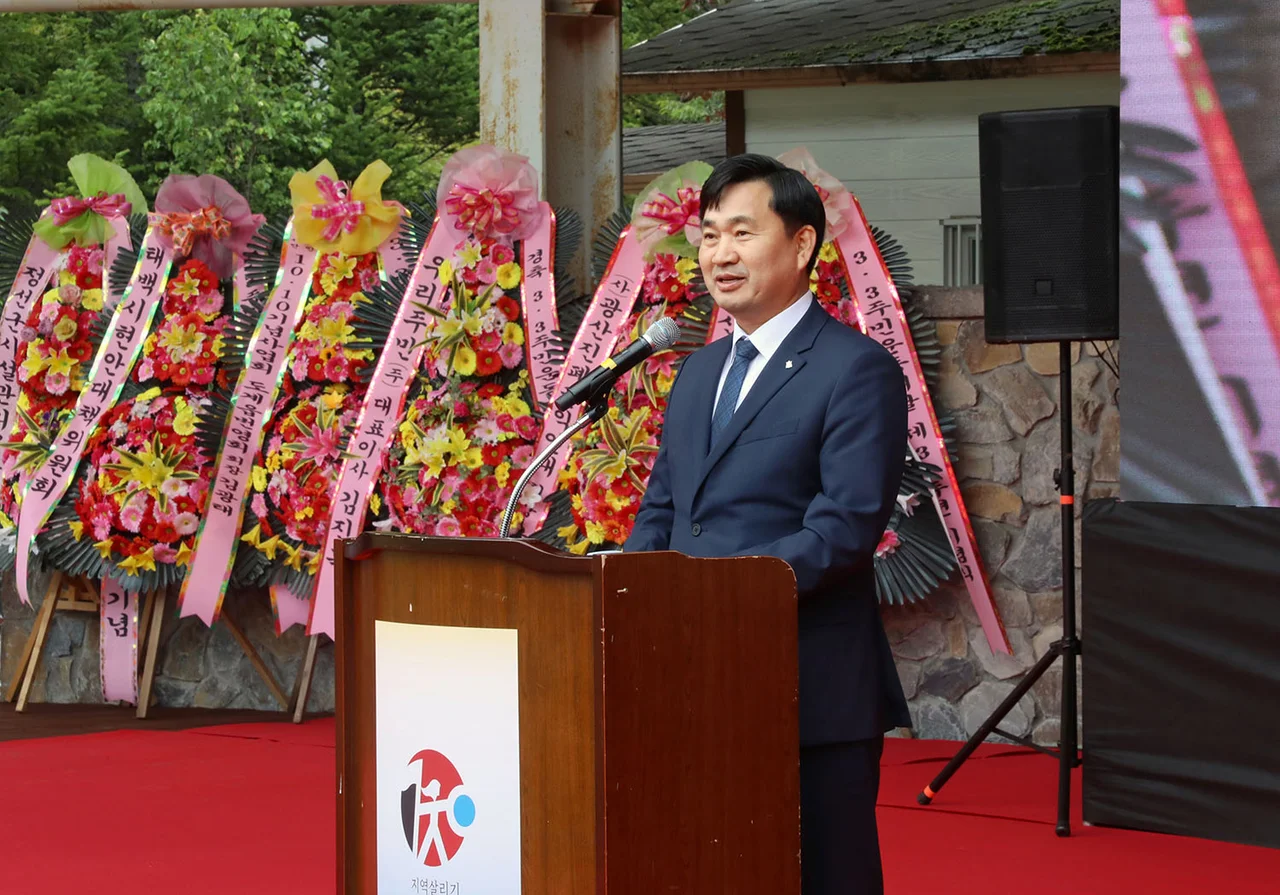
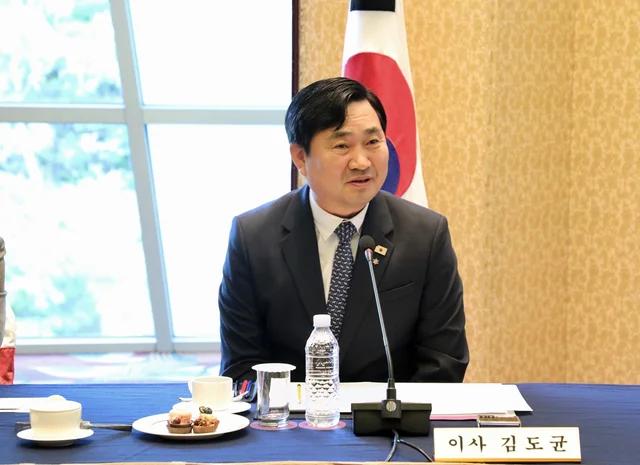
One month into his tenure, Kangwon Land CEO Kim Do-kyun has launched an Organizational Diagnosis & Innovation Task Force (TF), signaling the start of full-scale organizational reform.
How to translate the management vision presented at his inauguration—specifically regional coexistence, boosting employee morale, customer service innovation, casino regulatory improvement, and strengthening competitiveness through Artificial Intelligence (AI)—into actual business operations has become the primary focus of CEO Kim's early term.
According to Kangwon Land on the 30th, CEO Kim established the Organizational Diagnosis & Innovation TF on the 22nd. The TF, consisting of eight members including a team leader, is tasked with diagnosing overall operations and preparing innovation strategies.
Currently, Kangwon Land's structure consists of 4 headquarters, 15 offices, 59 teams, and 2 centers under the CEO and the Vice President.
Given that this dedicated diagnosis unit was formed immediately after the new CEO's inauguration, attention is focused on whether this will lead to comprehensive changes, such as adjusting the functions of headquarters, offices, and teams, streamlining redundant tasks, and reallocating personnel.
The first task of the Kim administration is 'boosting employee morale and personnel innovation.'
There is a growing sentiment that rather than simply increasing welfare benefits, the company needs a personnel system that expands promotion opportunities for internal talent with proven ability and expertise.
In particular, if the method of promoting internal staff to head key business divisions—such as casino, resort, and planning—is realized, it is expected to provide employees with clear growth potential and inject new momentum into the organization.
'Customer service innovation' is another indispensable task.
There is a call to build a system that quickly identifies and addresses inconveniences experienced by customers at the casino.
Experts suggest that the company should systematically analyze feedback from online communities and apps used by Kangwon Land customers regarding seating, rest facilities, entry procedures, gaming environments, and staff interactions, and translate these insights into service improvements.
Casino regulatory reform is also a core issue CEO Kim must resolve.
Currently, Kangwon Land is subject to various regulations, including monthly entry limits and a 20-hour daily operation cap. Alternatives discussed by the industry and customers include replacing uniform entry limits with a 'time-cap system' that allows a set number of hours within a specific period, as well as transitioning to 24-hour operations.
Advocates argue that the time-cap system could be reviewed in conjunction with responsible gaming policies, as it shifts the focus from limiting entry dates to managing actual time spent in the casino.
While 24-hour operations are expected to create additional jobs, disperse customer traffic, and alleviate overcrowding during peak hours, proponents note that sufficient review and consultation with relevant authorities regarding gambling addiction prevention must come first.
Increasing betting limits, expanding gaming facilities, and improving the venue environment are also cited as long-term regulatory tasks necessary for Kangwon Land to compete with global casinos and integrated resorts.
Strengthening competitiveness through AI and smart casinos is another pillar of organizational innovation.
Operational efficiency can be improved by applying AI to analyze table game and slot machine data, optimize facility layout, predict customer flow, manage dealer scheduling, and forecast casino congestion.
There is also significant potential to use AI in hotels, condos, and leisure facilities for room demand forecasting, staffing, energy management, and personalized customer services.
Ultimately, experts point out that AI transformation is not just about building IT systems, but about fundamentally changing how casinos and resorts operate, which requires securing professional expertise within the organization.
'Regional coexistence,' which CEO Kim emphasized at his inauguration, is also being translated into concrete projects.
At the 235th Board of Directors meeting held on the 30th, Kangwon Land decided to contribute 3.7 billion KRW to support the relocation and growth of companies in coal industry transition regions and the Gangwon area, and to invest 1.066 billion KRW in welfare for partner company employees and ESG management support.
With a total of 4.766 billion KRW in coexistence projects finalized at the first board meeting under the Kim administration, the local community is closely watching for further changes in regional policies.
Locals are calling for a new coexistence model that goes beyond simple donations and support, focusing instead on attracting businesses, creating jobs, encouraging youth settlement, and fostering a virtuous cycle in the local economy.
There is also a practical reason for CEO Kim to accelerate organizational innovation.
The National Assembly audit scheduled for October 19th is expected to be the first official stage to evaluate the Kim administration's management direction, organizational reform, regional coexistence, and casino competitiveness strategies.
This is why there is keen interest in what organizational restructuring and personnel reform cards CEO Kim will play following the audit, after having already conducted business reports, visited local institutions, and launched the Organizational Diagnosis & Innovation TF.
Kangwon Land stands at a turning point, transitioning from a casino-centered public enterprise to a global integrated resort company.
Whether the Kim administration's organizational innovation remains at the level of changing the organizational chart or leads to substantive management reform—connecting employee morale, customer service, regulatory reform, regional coexistence, and AI-based competitiveness—will be a key criterion for evaluating his first year in office.