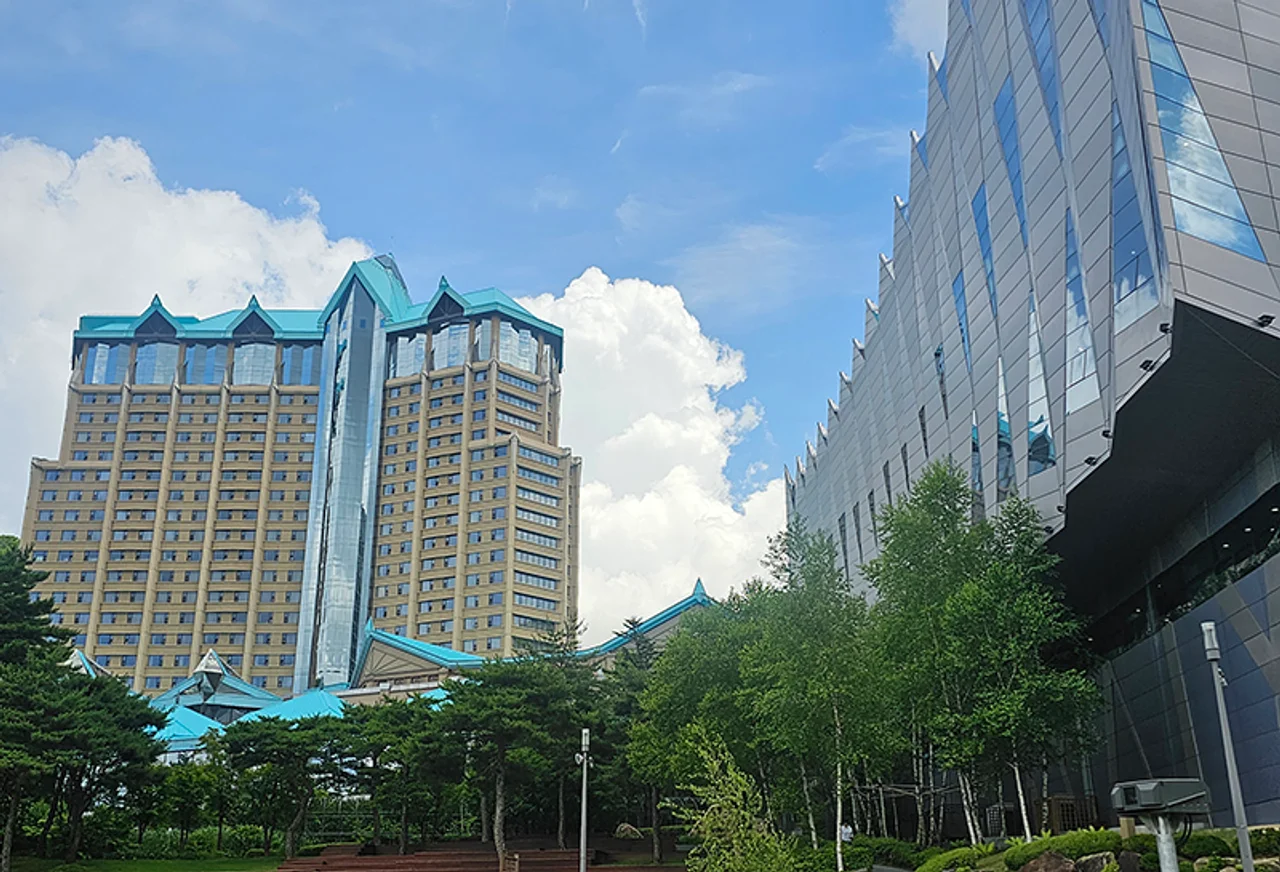
With Kangwon Land generating approximately 1.47 trillion KRW in revenue over the past year, attention is focused on its Q3 performance as casino revenue has shown signs of slowing since Q2.
According to data from the Financial Supervisory Service, Kangwon Land's IR materials, and securities analysis, consolidated revenue was 384.1 billion KRW in Q3 2025, 365.4 billion KRW in Q4, 378.9 billion KRW in Q1 of this year, and 345.6 billion KRW in Q2. The total for the last four quarters is approximately 1.474 trillion KRW.
Looking at the quarterly trend, revenue peaked at 384.1 billion KRW in Q3 of last year, dipped to 365.4 billion KRW in Q4, rebounded to 378.9 billion KRW in Q1, and fell again to 345.6 billion KRW in Q2.
Notably, Q2 revenue dropped 4.2% year-on-year, with operating profit falling significantly to around 43.2 billion KRW. This was driven not only by a slump in the non-casino sector due to room renovations but also by a decline in casino revenue.
Casino operations remain the core of Kangwon Land’s performance.
In 2025, casino revenue reached 1.3077 trillion KRW, a 5% increase from the previous year, accounting for over 86% of total business revenue. In Q1 of this year, casino revenue was approximately 330.4 billion KRW, up more than 4% year-on-year.
Performance by game segment highlights the volatility of the VIP sector.
In Q1, while general floor revenue remained flat year-on-year, VIP room revenue surged by over 27%, driving overall casino growth. At the time, analysts noted that "the 20% growth in the VIP segment, rather than mass market, defended the performance."
However, the atmosphere shifted in Q2.
According to Kangwon Land’s IR data, Q2 casino operating revenue was 349.1 billion KRW, a 3.4% decrease year-on-year.
Specifically, general tables generated 147.9 billion KRW, slot machines 133.9 billion KRW, and VIP rooms 67.4 billion KRW.
Compared to the same period last year, general tables fell 3.1%, slot machines 1.5%, and VIP rooms 7.6%.
Notably, VIP revenue declined due to a lower hold rate despite an increase in visitors and drop amounts. Conversely, the general floor saw a decline in both the number of visitors and total drop amounts.
This suggests that the recent casino performance slump is not merely due to VIP volatility, but is linked to stagnant growth in the mass market, primarily among general customers.
Until last year, Kangwon Land’s casino revenue structure was anchored by two pillars: general tables and slot machines.
In 2024, general table revenue was 617.1 billion KRW, slot machines 547.8 billion KRW, and VIP 199.4 billion KRW. As slot machine revenue climbed to nearly 90% of general table revenue, the importance of machine games grew rapidly.
This structure continued into 2025.
According to official IR data, Q1 2025 saw 160.4 billion KRW from general tables, 48.7 billion KRW from VIP, and 135.3 billion KRW from slots. In Q2, general tables brought in 152.6 billion KRW, VIP 72.9 billion KRW, and slots 136 billion KRW.
Therefore, recent performance is characterized by relatively stable slot machine revenue, stagnant general table revenue, and increasing quarterly volatility in the VIP sector.
Q3 results have not yet been officially tallied.
The market consensus estimates Q3 consolidated revenue at approximately 377.7 billion KRW and operating profit around 63.6 billion KRW. This is a slight decrease compared to the 384.1 billion KRW recorded in Q3 of last year.
In a September report, NH Investment & Securities projected that Q3 results would meet market expectations, but noted that the recovery speed of casino visitors and drop per capita remains slow.
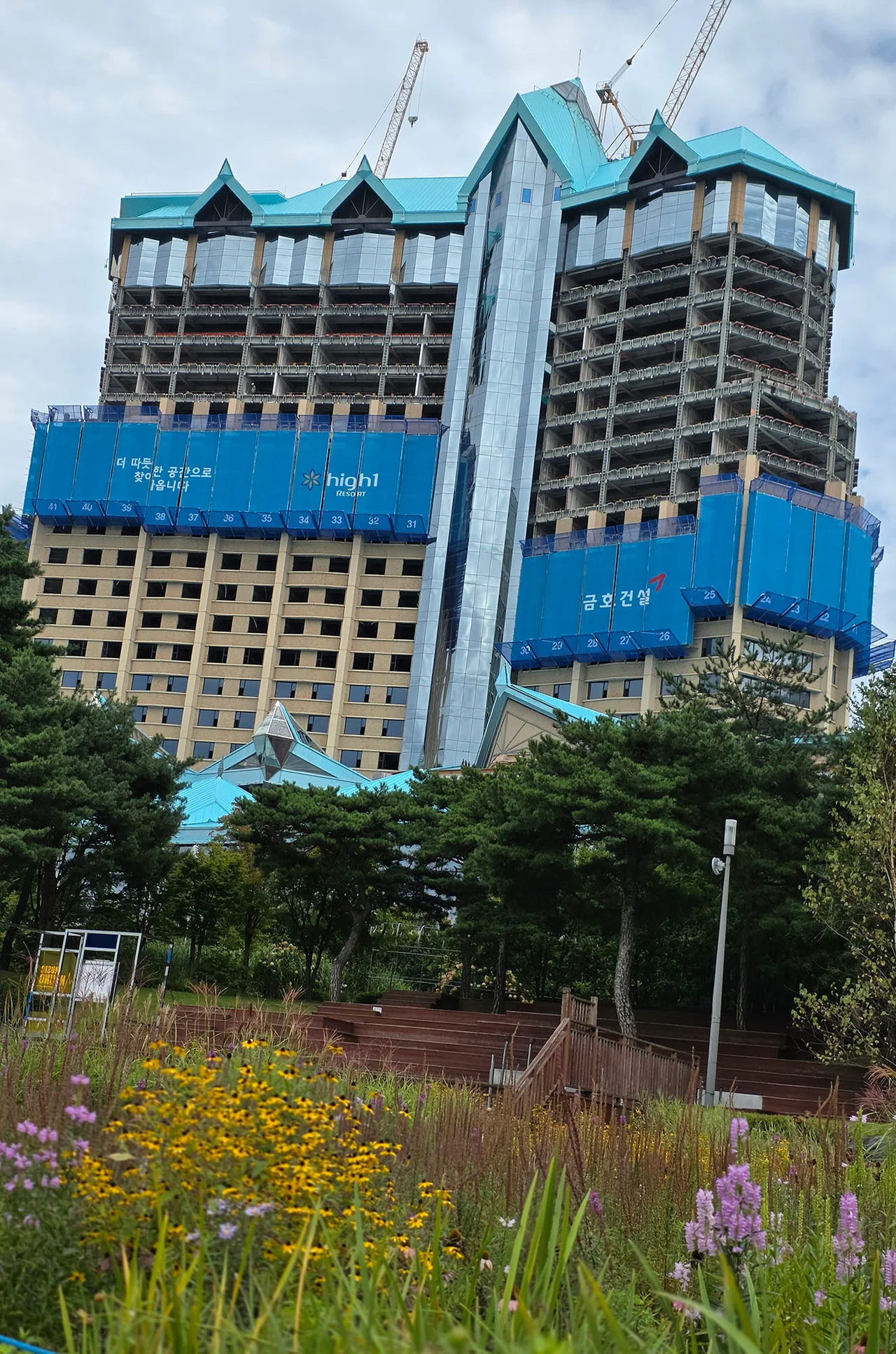
Short-term performance pressure is also stemming from hotel and condo renovations.
A total of 757 rooms, including 477 rooms in the Grand Hotel Main Tower and 280 rooms in the Mountain Condo, are undergoing renovations, significantly reducing lodging capacity. Analysts point out that this reduction in rooms may also impact casino foot traffic.
On the other hand, the second casino is a key medium-to-long-term variable.
Kangwon Land plans to establish a second casino by 2027, adding 50 general tables and 250 machines. The securities industry expects the impact of this expansion to be fully reflected from 2028 onwards.
Ultimately, the most important aspect of the Q3 results is not just the total revenue, but the composition of revenue within the casino.
The key indicators are whether VIP revenue recovers, whether general table revenue rebounds from the Q2 slump, and whether slot machines maintain their stable revenue of around 130 billion KRW.
In particular, if the stagnation in slot machines and general tables persists, there is growing sentiment that the company must re-examine its game product competitiveness, changing customer preferences, and overall casino operational strategy rather than blaming external economic factors.