After ending the longest leadership vacuum in the company's history—lasting nearly 2 years and 9 months—the 11th CEO of Kangwon Land, Kim Do-kyun, has begun a full-scale assessment of pending issues, receiving intensive business reports starting on his second day in office.
According to Kangwon Land on the 3rd, CEO Kim is receiving reports on key operations and immediate issues from each headquarters. Departments reporting directly to the CEO are presenting their updates through team leaders.
Unlike previous new CEOs who typically spent five or more days focusing on detailed departmental status reports, CEO Kim has drastically condensed the reporting process to focus on core tasks and urgent issues within a single day.
This approach is considered unprecedented at Kangwon Land. It is seen as a reflection of CEO Kim's determination to resolve the long-standing management vacuum and respond swiftly to the pile of pending tasks.
Following the reports, CEO Kim plans to visit the four cities and counties of the coal industry transition region—Taebaek, Jeongseon, Yeongwol, and Samcheok—starting on the 4th. He will meet with mayors, county governors, local councils, and key organizations to introduce himself and request cooperation for the mutual development of Kangwon Land and the local community.
He also plans to visit the Gangwon State Office, central government ministries such as the Ministry of Trade, Industry and Energy and the Ministry of Culture, Sports and Tourism, and the National Assembly. At the National Assembly, he is expected to seek cooperation from standing committees related to Kangwon Land's issues, such as the Trade, Industry, Energy, SMEs and Startups Committee and the Culture, Sports and Tourism Committee.
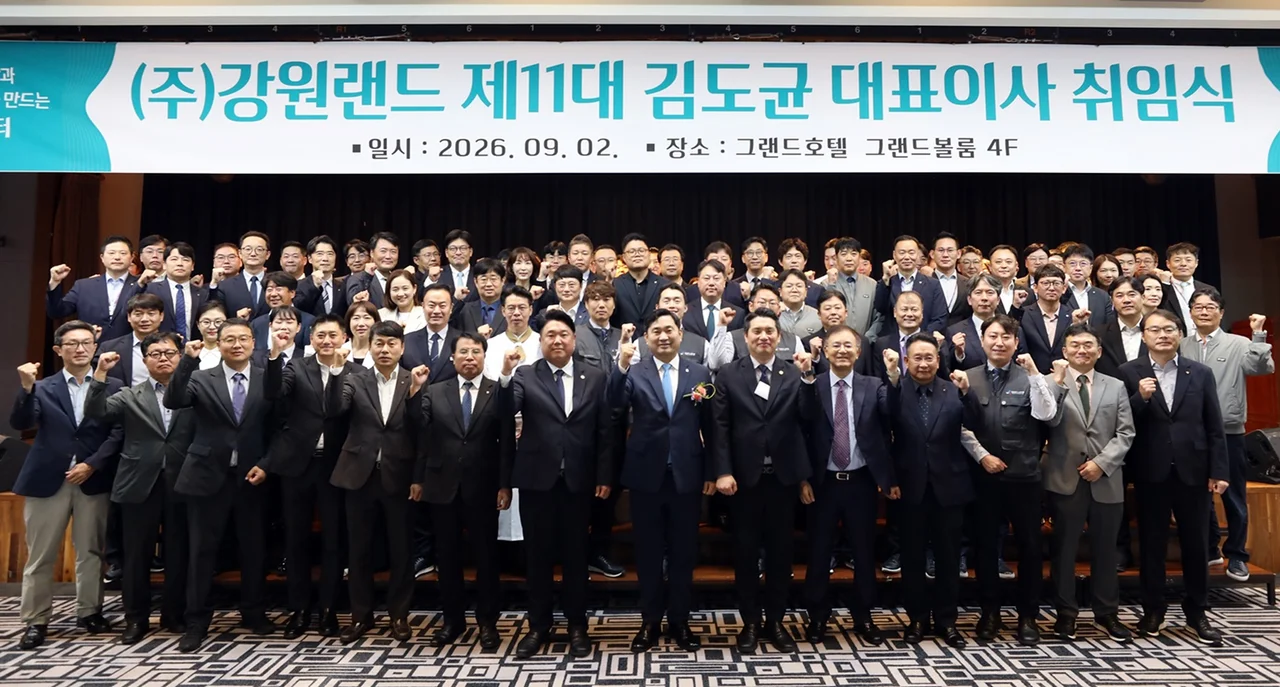
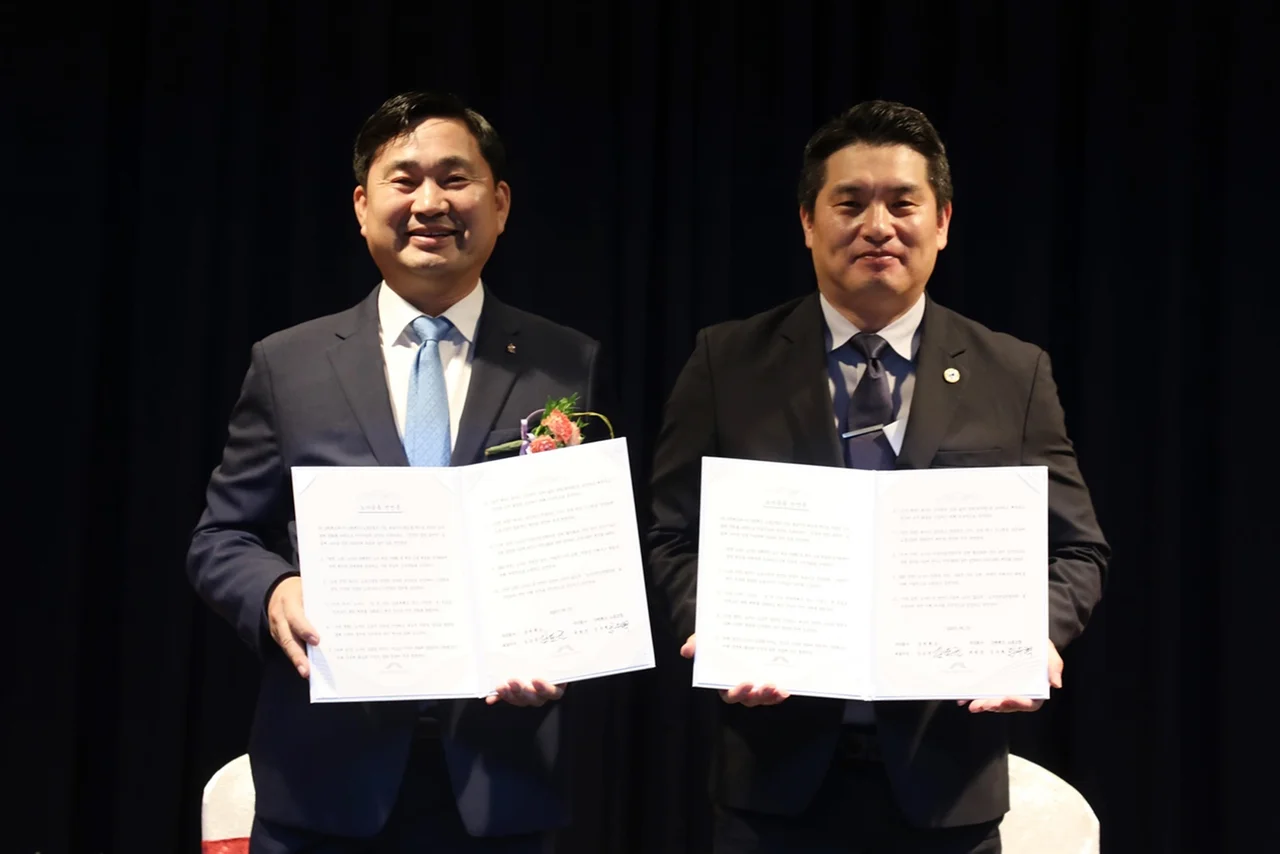
CEO Kim officially met with employees for the first time during his inauguration ceremony at the High1 Grand Hotel on the 2nd. Before the ceremony, he paid his respects at the Taebaek Memorial Tower for Industrial Warriors, expressing his commitment to regional cooperation.
Immediately after the ceremony, he reportedly met with the labor union leadership and approached security, hotel, and resort staff to shake hands with a smile. Employees who witnessed this noted, “He is far from being authoritarian or bureaucratic,” and “He gives the impression of being an inclusive and gentle leader.”
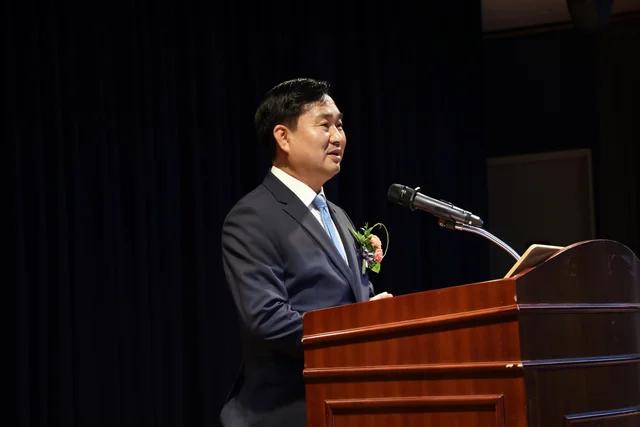
In his inaugural address, CEO Kim defined Kangwon Land as “a crystallization of mutual growth built upon the earnest wishes and sacrifices of the residents, and a key anchor company supporting the local economy.” He prioritized regional cooperation as a core management direction and pledged to leap forward as a global public-style integrated resort, strengthen the execution of the K-HIT project, and innovate organizational culture.
However, the reality facing CEO Kim is not easy.
First, he must stabilize the organization, which has become loose during the long leadership vacuum, and re-establish priorities for major projects. He must also carefully review the investment feasibility and execution of the multi-trillion won K-HIT project to ensure it leads to actual customer growth and regional economic revitalization.
Strengthening competitiveness in response to the Osaka Integrated Resort (IR) in Japan, scheduled to open at the end of 2030, is also urgent. There is growing concern that Kangwon Land's core customer base could shift once the Osaka IR opens with its state-of-the-art casino, hotel, performance, and shopping facilities.
Another challenge is to dispel the “non-expert” concerns raised by some due to his background as a military general with no experience in the casino or tourism industry. Conversely, there is hope that his experience in commanding large organizations and his ability to communicate with the government and the National Assembly will serve as strengths in pushing for regulatory improvements and organizational innovation at Kangwon Land.
The National Assembly audit scheduled for mid-October will be the first test of CEO Kim’s management philosophy and ability to handle pending issues. He must provide concrete solutions for various issues surrounding Kangwon Land, including regional cooperation, large-scale investment projects, casino competitiveness, gambling addiction prevention, and organizational management.
Ultimately, analysts suggest that CEO Kim's success depends less on whether he is a military man or a casino expert, but rather on how quickly he can take control of the organization and reflect the voices of the field in his management.
Attention is focused on whether his swift business reports and field-oriented communication moves will lead to tangible results in organizational innovation, regional cooperation, and global competitiveness, rather than remaining one-time events.