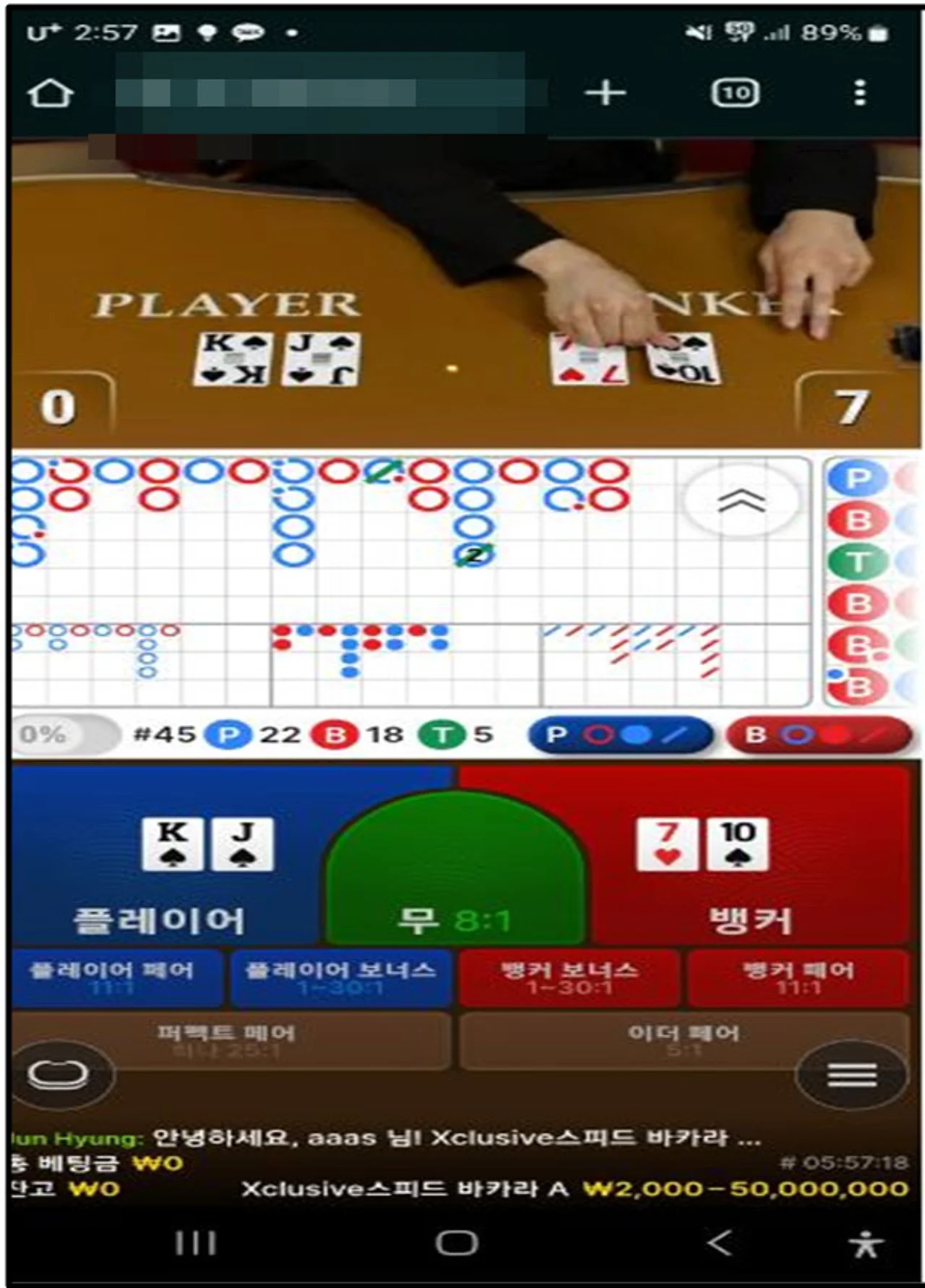




As e-gaming revenue in the Philippines sees a significant decline, speculation has emerged regarding a potential cooling effect on the illegal online gambling market that targets Koreans through overseas hubs. Analysts suggest that if the Philippines' tighter controls on payments and operations have hindered the funding and management of these illegal sites, it may have led to a partial decrease in domestic usage.
However, there is currently no statistical data directly confirming a reduction in the number of Korean users or total transaction volume. The recent revenue drop reflects the performance of the regulated market in the Philippines and cannot be directly applied as a decline rate for the illegal gambling market in Korea.
According to the Philippine Amusement and Gaming Corporation (PAGCOR), the total Gross Gaming Revenue (GGR) for the third quarter of 2026 reached 83.72 billion pesos, an 11.41% decrease compared to the same period last year. The e-gaming sector accounted for the bulk of this decline, falling 22.86% to 35.28 billion pesos. PAGCOR attributed the drop to inflationary pressures and geopolitical uncertainties affecting consumer spending.
◇ Could Payment Controls Affect Operations Targeting Koreans?
The key to understanding the impact on Korea lies in payment and operational infrastructure.
PAGCOR previously strengthened financial safeguards, such as disconnecting e-wallets and certain payment methods, and noted that gaming revenue weakened as operators and users adjusted to these changes. This demonstrates that measures restricting payment accessibility can directly impact usage.
If illegal sites targeting Koreans faced difficulties with deposits, settlements, or local operations due to these controls, it is possible that customer acquisition and site traffic were temporarily suppressed. One could infer that if deposits are delayed or sites are shut down, some customers may reduce or cease their gambling activities.
However, this remains an analysis of potential transmission channels. The recent PAGCOR announcement does not contain data showing how illegal sites targeting Koreans were specifically affected.
◇ Distinguishing Between Usage Decline and Site Migration
To determine if domestic illegal gambling has truly decreased, one must distinguish between users quitting and users simply moving to other platforms.
If operators facing difficulties in the Philippines relocate their hubs to other countries, or if users migrate to different sites, a contraction in one specific market may not necessarily lead to an overall reduction in harm. Conversely, if payment controls and crackdowns successfully lead to the blocking of domestic deposit networks, the potential for a decrease in usage could be more significant.
Therefore, at this stage, it is appropriate to conclude that "while it is possible that stricter regulations in the Philippines have partially suppressed illegal online gambling by Koreans, the scale and sustainability of this effect remain unconfirmed."
What Korean authorities must verify is not just the decline in overseas revenue, but whether recruitment advertisements and deposit transactions targeting Koreans have decreased, and whether customers from defunct sites have migrated elsewhere. To translate overseas regulatory effects into a reduction of domestic harm, the tracking of operational organizations and the blocking of domestic financial networks must be pursued in tandem.