타타타 저널

Kangwon Land News·10/29/26

[In-Depth] Kangwon Land's 2030 Crisis: What Are the 7 Major Risks?

홍춘봉편집국 기자·By

[In-Depth] Kangwon Land's 2030 Crisis: What Are the 7 Major Risks?

Kangwon Land, the only casino in South Korea accessible to locals, has embarked on large-scale facility investments, regulatory innovation, and management reforms in preparation for the opening of the Osaka Integrated Resort (IR) in Japan in 2030.


During a board meeting on the 26th, Kangwon Land completely overhauled its management strategy to aim for 2035, setting a new revenue goal of 3 trillion won.


The plan is to leap forward as a global integrated resort through the 'K-HIT Project,' which involves a 2.5 trillion won investment by 2032, the establishment of a second casino floor, renovations for hotels and condos, and organizational innovation.


However, it remains unclear whether this blueprint will actually lead to strengthened competitiveness and improved performance.


This is because the company faces a mountain of challenges, including the emergence of a powerful competitor in the Osaka IR, as well as revenue caps on gambling industries, operational regulations, regional conflicts, customer service complaints, and the burden of investment.


In particular, there is a potential structural conflict between Kangwon Land's 3 trillion won revenue goal and the revenue cap system imposed by the National Gambling Control Commission (NGCC).


Critics point out that if the regulatory approach—which previously reduced casino operating hours and gaming tables due to exceeding revenue caps—is maintained, large-scale facility investments and revenue expansion strategies could be severely restricted.


Furthermore, with Jeongseon-gun pushing for a correctional facility in Sabuk and some local community members opposing 24-hour casino operations, the symbiotic relationship between Kangwon Land and the former mining region is being put to the test.


As Kangwon Land marks its 26th anniversary, its competitiveness after the Osaka IR opens will depend heavily on the preparations made over the next four years.


Tatata Journal has examined the seven core risks threatening Kangwon Land's sustainable growth and management innovation.
◇ ① Osaka IR Risk: The Era of Competition for a Monopoly Casino


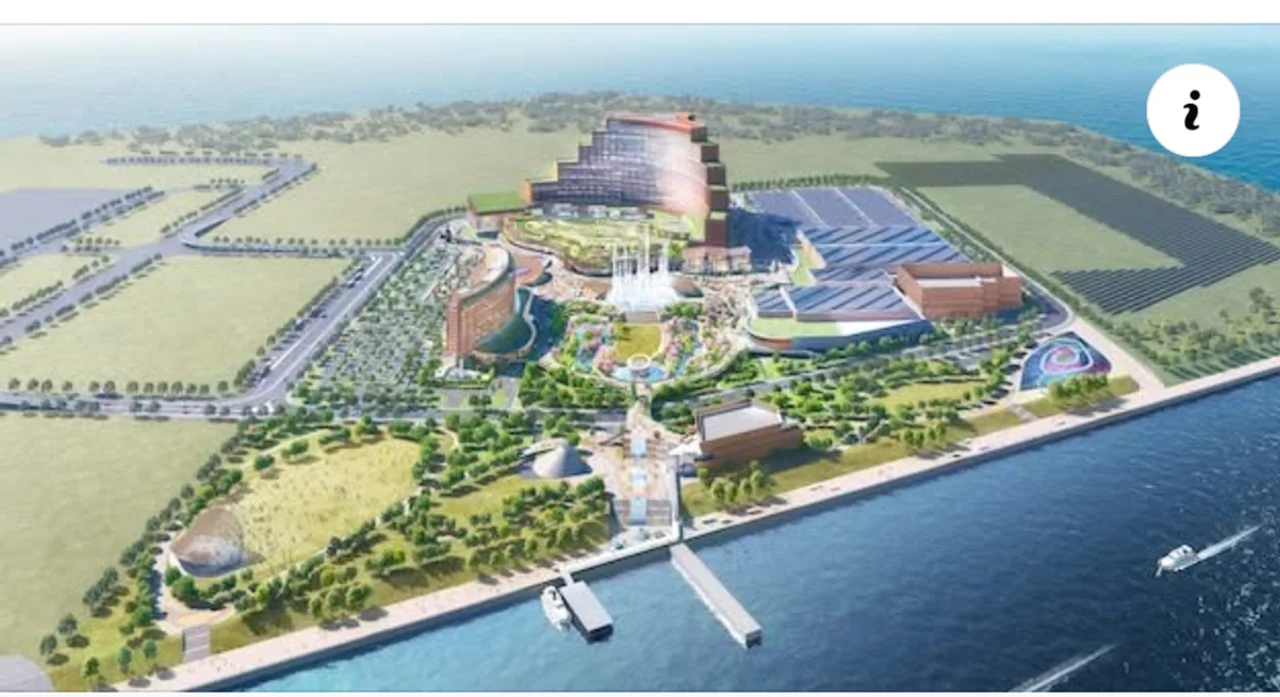
The most immediate threat Kangwon Land must prepare for is the Osaka IR, scheduled to open in the fall of 2030.


The Osaka IR is being developed by MGM Resorts (USA) and Orix (Japan) as a massive integrated resort with an investment of approximately 1.513 trillion yen, featuring a casino, 2,500 hotel rooms, international conference and exhibition facilities, and shopping and performance venues.


The emergence of a large-scale casino in Osaka, which is close to Korea, poses a threat equivalent to competing with a second domestic casino for locals.


According to a survey released by the Korea Casino Tourism Association on the 14th, 52.1% of the 493 Kangwon Land customers surveyed expressed an intention to visit the Osaka IR once it opens.


Researchers presented a scenario where approximately 445,304 Kangwon Land customers could visit the Osaka IR annually, with casino spending potentially reaching up to 1.266 trillion won.


While this is an estimate based on a survey and does not necessarily represent the actual scale of customer churn or revenue loss for Kangwon Land, it is noteworthy that 38.4% of respondents cited 'freedom of casino gaming' and 20.7% cited 'freedom of access and regulation' as reasons for visiting.


Even if Kangwon Land maintains its legal monopoly as the only casino for locals, it cannot restrict customers from choosing overseas casinos.


Competition with the Osaka IR will likely be a comparison of overall casino competitiveness, including gaming environment, customer service, accessibility, tourism content, and regulatory levels, rather than just facility scale.

◇ ② Government & Regulatory Risk: Conflict Between Revenue Caps and the 3 Trillion Won Goal


The second risk for Kangwon Land is the structural contradiction between the government's gambling industry regulations and its management goals.


The core issue is the NGCC's revenue cap system.


Implemented in 2009, the revenue cap system manages annual net revenue by industry to curb the excessive expansion of gambling and social side effects like addiction.


However, Kangwon Land faced intense regulatory pressure after exceeding its revenue cap for four consecutive years from 2013 to 2016.


The total excess amount over those four years reached approximately 472.5 billion won.


Subsequently, amid tightened government management and casino operating regulations, Kangwon Land reduced its gaming tables from 180 to 160 in January 2018 and cut daily operating hours from 20 to 18 hours in April of the same year.


These measures directly reduced operating hours and gaming facility supply to suppress revenue.


Previously, the NGCC had also recommended reducing ATMs, relocating them outside the casino, decreasing the proportion of high-stakes machine games, and implementing closures or shorter hours.


This regulatory approach, which prioritized revenue suppression over customer convenience—even involving issues like changing bank branch access routes to limit financial services within the casino—has sparked controversy.


These measures also burdened financial performance. Kangwon Land's standalone revenue fell from approximately 1.5462 trillion won in 2017 to 1.436 trillion won in 2018, and net profit dropped from 437.5 billion won to 297.3 billion won.


The National Assembly Budget Office pointed to these regulatory measures as factors for the decline in performance.


While preventing gambling addiction and managing the industry at an appropriate scale is a vital government duty, there needs to be an objective evaluation of how effective the uniform reduction of facilities and hours has been in preventing addiction, and whether it caused side effects like customer inconvenience or increased overseas casino usage.


Moreover, Kangwon Land has set a challenging goal of 3 trillion won in revenue in its mid-to-long-term strategy. While this is more than double the 2025 consolidated revenue of approximately 1.4767 trillion won, the revenue cap is based on casino net revenue, not total consolidated revenue.


The problem is that the casino remains Kangwon Land's core revenue source. If the revenue cap continues to act as a ceiling for growth, even massive investments in a second casino floor will be constrained in terms of efficiency and performance.


Currently, Kangwon Land is subject to various regulations, including 20-hour daily operations, monthly visit limits, betting caps, and table counts. Adjusting these is essential for competing with overseas casinos.


If the government demands global competitiveness and economic revitalization while maintaining uniform revenue suppression, policy conflict is inevitable. Therefore, the regulatory system needs to shift from uniform control to analyzing individual user behavior and managing addiction risks.

◇ ③ Regional Community Risk: Conflict of Interest and Symbiosis


Conflicts of interest with the local community are emerging as a significant variable in Kangwon Land's efforts to strengthen competitiveness.


Jeongseon-gun is currently pursuing the construction of a correctional facility in Sabuk-eup, designed for 1,000 inmates and 250 resident staff.


Jeongseon-gun argues that this will reduce economic dependence on Kangwon Land and create new growth engines. However, critics argue this was pushed without sufficient consultation with Kangwon Land or analysis of the impact on tourism, raising concerns about the image of a 'casino and resort tourism city.'


Conflicts over 24-hour casino operations are also a new risk factor. According to Tatata Journal, some local social organizations have expressed opposition to 24-hour operations to Kangwon Land management, fearing the impact on local businesses like accommodations and restaurants.


Conversely, longer hours could lead to more visitors and local spending, necessitating an objective economic impact analysis. If Kangwon Land and the local community cannot build a cooperative system to enhance tourism competitiveness, it could become a burden in the competition against the Osaka IR.

◇ ④ Casino Game & Customer Service Risk: The Gap in Customer Expectations


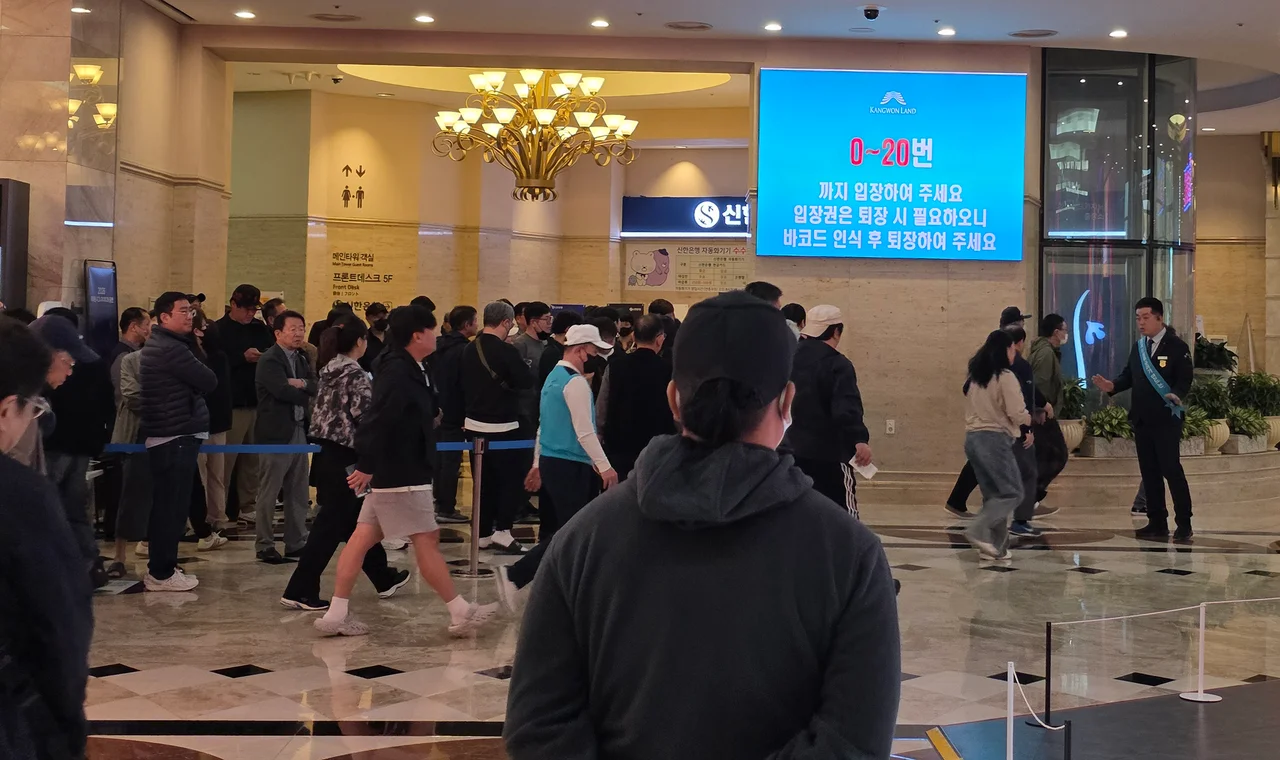
Despite its monopoly, Kangwon Land suffers from various customer inconveniences, such as a shortage of gaming facilities, long wait times, competition for popular slot machine seats, and complex entry procedures.


The unique culture of securing entry sequences via ARS and competing for seats has long been a source of complaint. Issues like seat trading and proxy betting have also become problematic.


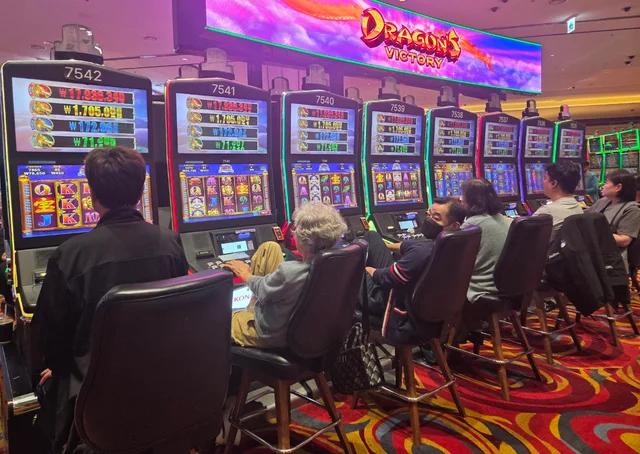
Recently, some slot machine users have complained that bonus games and jackpots occur less frequently than in the past. While this cannot be confirmed without objective verification of payout rates and operational data, it is clear that Kangwon Land needs to innovate its service—simplifying entry, improving convenience facilities, and guiding novice customers—to meet the standards of customers who are accustomed to global choices.

◇ ⑤ Investment & Financial Risk: 2.5 Trillion Won Investment, No Guarantee of Success


Kangwon Land plans to invest 2.5 trillion won by 2032 through the K-HIT project to expand casino and resort facilities. However, massive investment does not guarantee competitiveness.


Most importantly, the Osaka IR is targeting a 2030 opening, which is ahead of the K-HIT project's full completion. If core projects are delayed, Kangwon Land may find itself in a situation where it has made massive investments but is still unprepared for international competition.


Profitability of non-casino businesses is also a critical task. While Kangwon Land aims to be a four-season resort, some non-casino businesses have accumulated significant deficits. Management must carefully control construction costs and future operational expenses while ensuring that non-casino sectors provide real growth engines.

◇ ⑥ Organizational & HR Innovation Risk: Will Personnel Reform Lead to Performance?


The organizational innovation and HR improvements pushed by new CEO Kim Do-kyun are crucial variables. Since taking office in September, CEO Kim has launched an organizational diagnosis task force and conducted personnel reshuffles.


The core of organizational innovation lies not in simple personnel changes, but in enhancing expertise in casino and resort operations to create tangible results. Key departments, such as casino marketing and hotel/leisure operations, must be staffed with experts who have field experience.


Moving away from seniority-based practices toward a performance-oriented culture is essential. If organizational innovation remains limited to internal personnel changes and does not lead to improvements in customer service and the gaming environment, the effectiveness of these reforms will continue to be questioned.

◇ ⑦ Responsible Gambling & Customer Trust Risk: Balancing Competitiveness and Public Interest


The final risk Kangwon Land must not overlook is its responsible gambling policy and customer trust. As a public-interest casino, it has a significant social responsibility to prevent gambling addiction.


Even if the company expands operations to strengthen competitiveness, a lack of protective mechanisms could lead to social criticism and stricter regulations. Given that a large portion of long-term visitors are elderly, customized responsible gambling policies are necessary.


Securing customer trust is also paramount. Distrust regarding payout rates, inconvenience in entry procedures, and illicit activities by some customers can damage the casino's image. To compete with overseas casinos, Kangwon Land must establish a transparent and fair operating system, recognizing responsible gambling not just as regulatory compliance, but as a core strategy for sustainable management.

Frequently Asked Questions

What is the core strategy Kangwon Land is pursuing in preparation for the 2030 Osaka IR opening?+

Kangwon Land has established a mid-to-long-term management strategy aiming for 2035 and is pushing the 'K-HIT Project,' which involves investing 2.5 trillion won by 2032. Through this, it aims to leap forward as a global integrated resort by establishing a second casino floor, renovating hotels and condos, and conducting organizational innovation, while setting a new revenue goal of 3 trillion won.

What is the conflict between Kangwon Land's 3 trillion won revenue goal and the government's revenue cap system?+

The revenue cap system manages annual net revenue to prevent gambling side effects, and in the past, it led to strict regulations like reduced operating hours and fewer gaming tables for Kangwon Land. Even if Kangwon Land invests heavily to reach its 3 trillion won goal, if the revenue cap acts as a ceiling for growth, it creates a structural contradiction that could lower investment efficiency and limit performance.

What are the regional conflicts and challenges Kangwon Land is facing?+

Jeongseon-gun's push for a correctional facility and local opposition to 24-hour casino operations are clashing with Kangwon Land's management innovation. While the community seeks economic independence, Kangwon Land is reviewing extended hours for competitiveness, leading to conflicting interests. A cooperative system that goes beyond unilateral support to enhance tourism competitiveness is urgently needed.

About the reporter

홍
홍춘봉Reporter

K-Journal reporter covering casino industry news and issues.

More from 홍춘봉 →

Comments

No sign-up or login required.

No comments yet. Be the first to comment.