The South Korean government is pushing to raise the upper limit of the Tourism Promotion and Development Fund contribution rate for foreign-only casinos from the current 10% of revenue to 15%, sparking strong backlash from the domestic casino industry.
According to industry sources on the 30th, the core of the Ministry of Culture, Sports and Tourism's proposed reform is to increase the maximum contribution rate under the Tourism Promotion Act from 10% to 15%. The current enforcement decree applies rates based on annual revenue per casino: 1% for 1 billion KRW or less, 5% for over 1 billion to 10 billion KRW, and 10% for over 10 billion KRW.
The government is considering raising the legal maximum to 15% and then determining the specific revenue brackets for the 15% rate through an enforcement decree. Therefore, it is not yet confirmed that a flat 15% will be applied to all casino revenue.
The government's push for reform stems from the judgment that the current system, which has been in place for over 30 years, fails to properly reflect the growth of the casino industry.
The casino tourism fund contribution system was introduced in 1994. According to the Ministry, only 6 out of 13 casinos had revenue exceeding 10 billion KRW at the time, but now most establishments exceed that amount. The government explains that total revenue for foreign-only casinos has increased more than 10-fold, and average revenue per establishment has grown more than 7-fold since the system's inception.
The government's stance is that as the casino industry has grown due to the increase in foreign tourists, a structure is needed to return a portion of that revenue to the Tourism Promotion and Development Fund for reinvestment into tourism infrastructure and human resources.
However, the casino industry perceives the situation very differently.
According to the Korea Casino Association, the fund contributions paid by the industry have increased from 1.2 billion KRW in 1994 to 303.9 billion KRW in 2025, a roughly 250-fold increase. The industry argues that since they already pay the fund based on revenue, in addition to various taxes such as individual consumption tax, education tax, and corporate tax, an additional increase would significantly heighten the burden on management.
In particular, the industry points out that the fund is levied based on 'revenue,' not 'profit.'
Even if operating profit drops sharply or losses occur, the fund must be paid as long as a certain level of revenue is generated. The industry claims that if the maximum contribution rate rises to 15% under these conditions, the capacity to invest in facility improvements, marketing to attract foreign customers, and non-casino facilities like hotels, performances, and shopping could be reduced.
The securities industry also suggests that if the contribution rate is actually expanded to the 15% level, major casino companies could see a decline in operating profit. Hana Securities analyzed that assuming a 5 percentage point increase in the contribution rate, the operating profits of Paradise and GKL could decrease by approximately 22% and 28%, respectively. Eugene Investment & Securities also estimated potential additional burdens of about 47 billion KRW for Paradise and 23 billion KRW for GKL. However, these are hypothetical figures as the specific progressive brackets have not been finalized, and the actual burden could vary significantly depending on the design of the enforcement decree.
Not only the Korea Casino Association but also tourism-related organizations such as the Korea Tourism Association, Korea Hotel Association, Korea Association of Travel Agents, and Korea MICE Association issued a joint statement in August, demanding a re-examination, stating that the increase could impact investment and employment in integrated resorts.
The industry is reacting even more sensitively due to the international competitive environment.
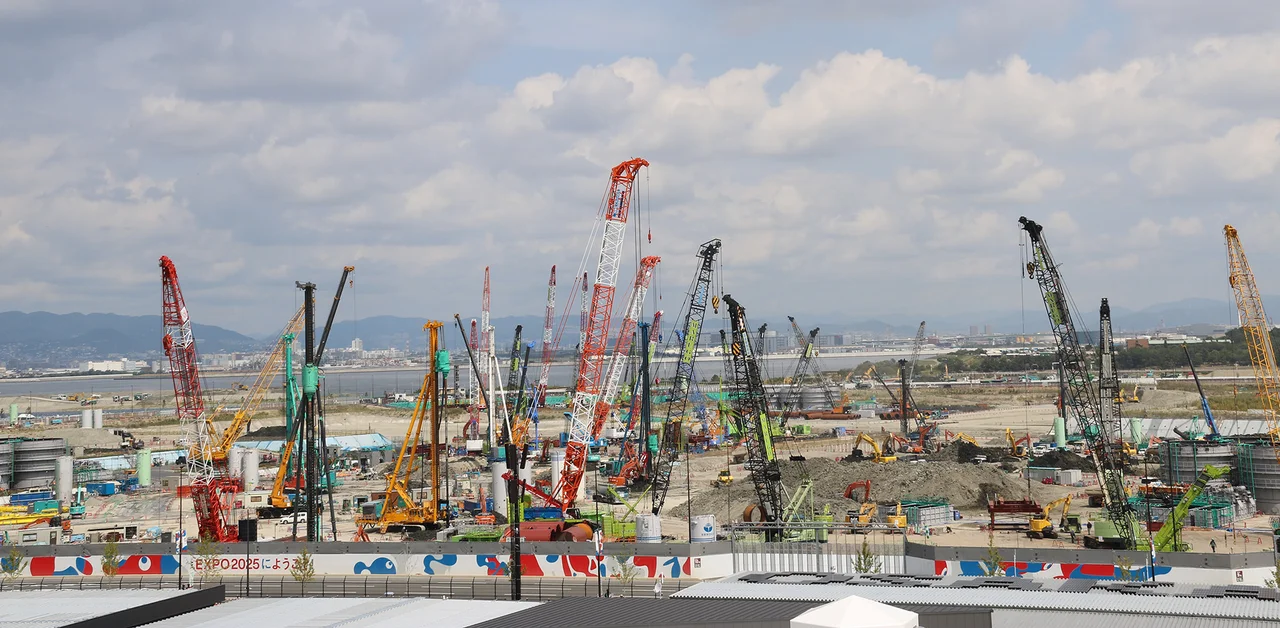
Domestic foreign-only casinos are competing with integrated resorts in Macau, Singapore, and the Philippines to attract tourists from China, Japan, and Southeast Asia. The industry argues that this is a critical time to secure facility and content competitiveness, especially with the planned opening of the Osaka IR in Japan in 2030.
In the past, the government also evaluated foreign-only casinos as a strategic industry contributing to foreign currency acquisition, job creation, and extended stays for foreign tourists, and pursued deregulation and support policies. The Ministry of Culture, Sports and Tourism previously announced that it would expand support to strengthen the competitiveness of the domestic casino industry following the approval of the Osaka IR in 2023.
The biggest issue going forward will likely be which scale of casinos will be subject to what contribution rates, rather than the 15% cap itself.
As of early September, the government is delaying the legislative timeline from its original plan while collecting further opinions from the casino industry and individual operators. Measures to include transitionary provisions for recently licensed operators are also being considered. Although a bill was initially discussed for September, the specific timing has not been confirmed, and it is reported that the government continues to review the matter with the goal of pushing it forward within the year.
Ultimately, in future National Assembly discussions, the government's logic of expanding public contributions from the casino industry is likely to clash directly with the industry's concerns over reduced investment, employment, and international competitiveness.
In particular, the core test of this reform will be how much the increase in the Tourism Promotion and Development Fund raises the cost burden for domestic foreign casinos, what actual impact it has on new investment and employment, and what changes it brings to the competitiveness of domestic integrated resorts ahead of the 2030 Osaka IR opening.
An official from the Korea Casino Association pointed out, "If the government raises the upper limit of the Tourism Promotion and Development Fund contribution from the current 10% of revenue to 15%, the industry will wither away," adding, "At a time when strengthening competitiveness is urgent ahead of the Osaka IR opening, the plan to increase the tourism fund is an anachronistic idea."