Why Does Greed Grow in a Casino?
-The Psychology of Casino Greed and Healthy Usage Habits-
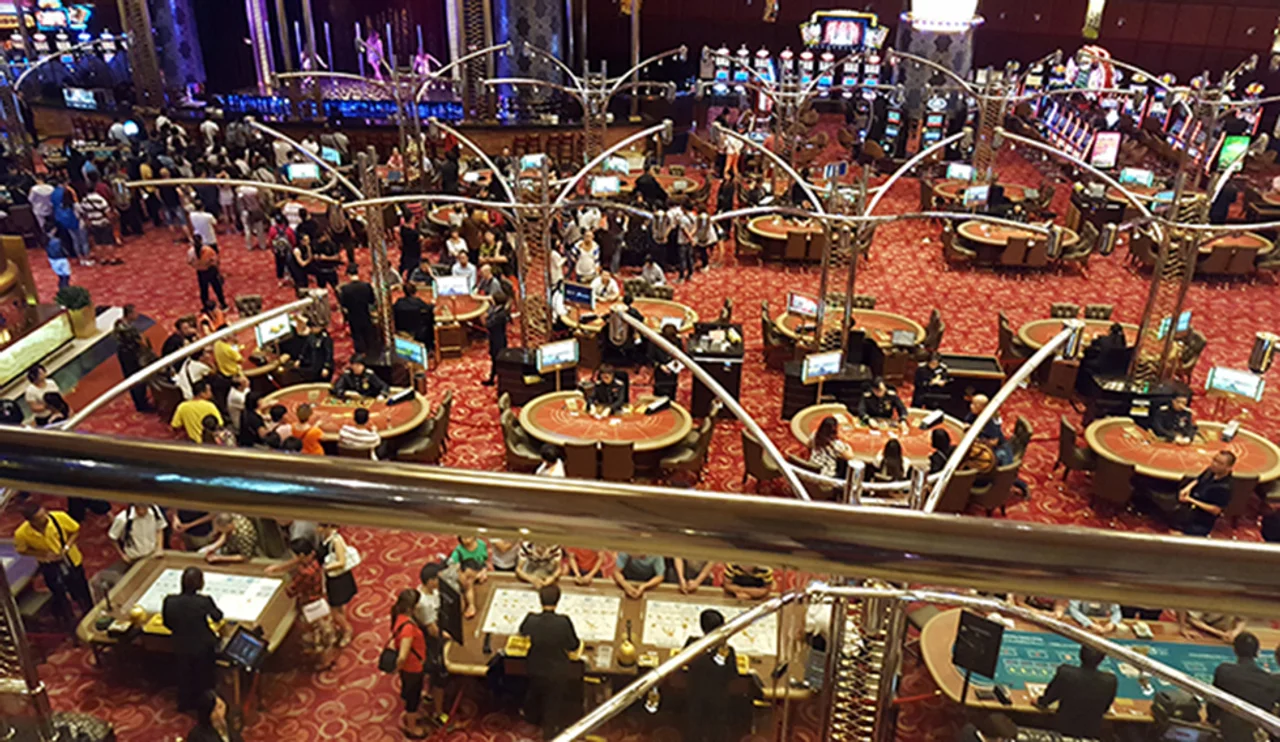
When you step into a casino, your judgment regarding money is easily clouded. Brilliant lights, upbeat sounds, jackpot alerts, cheers from others, and the fast pace of games constantly stimulate expectations and excitement.
The moment cash is converted into chips or electronic game credits, a psychological distance from money is created. While 100,000 won in cash feels significant, a few chips or numbers on a screen are easily perceived as mere game tools.
At that moment, thoughts like these start to creep into your mind:
“I can win if I just play a little more.”
“Let’s just play this one last round.”
“I’ll just win back what I lost and quit.”
Greed in a casino doesn't grow just because of a weak will. It is the result of an environment and game structure that stimulates human expectations, illusions, and the competitive spirit.
-The 'Near-Miss' Trap
When a slot machine shows a jackpot or bonus symbol just one spot away, the user feels like they were "almost there." However, a "narrow miss" is statistically the same as any other failure.
Most slot machine results are determined by a Random Number Generator (RNG). Just because you were one symbol short in the previous game does not mean the odds of winning the next game increase.
Nevertheless, the human brain easily interprets a close failure as a signal that success is near. This is called the 'near-miss effect.'
Common phrases among Kangwon Land customers like "the machine is heating up," "it's about to hit," or "that was so close" are linked to this psychology. Even if it looked close on the screen, it does not mean the actual probability of winning has increased.
-The Most Dangerous Moment: Thinking About 'Breaking Even'
Initially, you may visit the casino for fun, but once you start losing, your goal changes.
"Let's have fun" turns into "Let's just break even."
The stronger the desire to break even, the faster the betting speed and the larger the amounts, leading to rushed judgments. The act of betting more to recover losses, which often leads to even greater losses, is called 'loss chasing.'
At Kangwon Land, factors like long-distance travel, accommodation costs, long wait times, and limited entry days can further fuel this loss-chasing psychology.
“I can’t just leave after coming all this way.”
“If I lose today, the next opportunity is too far away.”
However, the transportation, lodging, and game costs already spent do not increase your winning odds for the next round. If you start thinking you must break even, it is not a signal to keep playing, but a warning that you should stop.
-Overconfidence After a Winning Streak
After winning a few times in a row, it is easy to believe that your senses or luck are special.
“I have a good feeling today.”
“I’m really in the zone.”
“I’ve figured out the pattern.”
This is known as the 'hot hand fallacy' or the illusion of a winning streak. While some games involve judgment and strategy, a short winning streak does not guarantee victory in the next game.
In fact, winning streaks often lead to higher bets and longer game times. A psychology emerges where you treat the winnings as 'easy money' and bet more boldly than usual. Eventually, one big bet can wipe out all your previous gains and your original capital.
It is not just losing streaks that are dangerous in a casino. The moments immediately following a winning streak, when confidence is at its peak, are when self-control is most likely to crumble.
-Why Do Superstitions Arise?
Superstitious behaviors are easily observed in casinos.
People wash their hands, insist on sitting in the same seat, or attach meaning to specific times, numbers, and colors. If the results are poor, they may blame the machine, the dealer, or the 'energy' of the person next to them.
These behaviors stem from a psychological desire to exert some control in a situation where results are hard to predict. If you happen to win after a specific action, you tend to connect the two events and remember them, while easily forgetting when you lose.
Phrases like "the machine hits when that person sits there" or "the next person will hit the jackpot when I get up" are examples of assigning special meaning to coincidence.
If superstitions are just small habits that provide comfort, they may not be a major problem. However, it becomes dangerous when you start increasing your bets or game time based on them.
-Why Can't You Give Up a Specific Seat?
One of the most prominent phenomena at Kangwon Land is the obsession with seats at popular slot machines and table games.
First, because popular games have fewer seats than demand, a seat feels like an 'opportunity.'
Second, the more time and money you invest, the more you think, "I've put in this much, so a reward must be coming soon." This is the 'sunk cost fallacy,' where you cannot stop a wrong choice because of the costs already incurred.
Third, there is a fear that someone else might win big immediately after you leave. If that actually happens, the regret of "I should have stayed a little longer" lingers for a long time.
However, the money and time you spent are not linked to the next user's winning probability. Seat obsession is closer to a psychology of avoiding regret and loss than a rational judgment of probability.
-The Identity of the 'I Feel Like Today Is the Day' Feeling
A casino feels like a special space separated from daily life. The flashy atmosphere, jackpot sounds, and seeing others win fuel the expectation that "I could be next."
People tend to amplify information that aligns with their expectations and downplay information that does not. You are more likely to vividly remember the one person hitting a spectacular jackpot than the many people who quietly leave after losing money.
“I lost last time, so it’s my turn to win.”
“The feeling is different today.”
“I had a good dream, so luck will follow.”
However, past losses or personal feelings do not change today's probabilities. The 'feeling that it will happen' is likely an emotion created by expectation, not an ability to predict.
-Why Greed Is Easily Triggered at Kangwon Land
Kangwon Land has environmental characteristics that differ from typical overseas casinos. It combines the symbolism of being the only casino where locals can legally enter with limited entry days, long-distance travel, concentration on popular machines, seat competition, and a culture of long stays.
In this environment, the following pressures can intensify:
“If I can't do it today, the next chance is far off.”
“It’s hard to get this seat again if I leave.”
“I can’t just go back after coming all this way.”
“Others are winning, why am I the only one who isn’t?”
These emotions fuel greed, seat obsession, loss chasing, and superstitious behavior. Therefore, what Kangwon Land customers need is not the ability to find 'which machine hits well,' but the ability to recognize the moment their judgment starts to waver.
-7 Principles for Healthy Casino Use
To use a casino for entertainment, you must set standards before starting the game.
Only use money that won't affect your daily life if lost.
Never play with money from cash advances, loans, or borrowed from acquaintances.
Set a loss limit and time limit in advance, and stop immediately if you exceed them.
If you start thinking about 'breaking even,' take a break or leave the casino.
Do not bet if you have been drinking, are angry, or are extremely tired.
Treat winnings as your own money and stop once you reach your profit goal.
Honestly record your spending and time spent.
If you continuously break the limits you set for yourself or start hiding your gambling activities and losses from your family, it may be a sign that you are moving beyond the realm of a simple hobby. In this case, rather than trying to solve it with willpower alone, it is necessary to seek help from counseling centers or professionals.
-Knowing the Casino Means Knowing Your Own Mind
What you need to be wary of in a casino is not just the game itself. The greed and illusions of the person playing can create greater risks.
Risks grow when you trust feelings over probability, when thoughts of breaking even precede enjoyment, and when you repeat 'just one more round' beyond your planned time.
Understanding the casino properly is not about learning how to win every game. It is about realizing why you want to keep playing and recognizing the moment your judgment begins to falter.
Casino Academy—Essential Basics
The purpose of casino basics is not to teach you how to play well or how to win money. It is to accurately understand the probabilities and business structure of a casino to reduce excessive expectations and false beliefs.
-How Do Casinos Make Money?
Legal casinos do not make money by making a single customer lose every time. The key lies in a probability structure designed to be slightly more favorable to the casino in the long run.
Customers can win money for a day or a certain period. However, when many customers repeat numerous games, the overall result gradually approaches mathematical probability. The game rules are designed so that a certain expected profit remains for the casino in this process.
Casino profits do not come from a specific customer losing, but from the casino's small probabilistic advantage accumulating as bets are repeated over a long period.
-What Is Slot Machine RTP?
RTP stands for 'Return to Player,' which refers to the theoretical percentage of the total amount wagered on a game that is returned to customers as winnings over the long term.
For example, if a total of 1 million won is wagered on a slot machine with an RTP of 92%, the long-term theoretical average is that 920,000 won is returned as winnings, leaving the remaining 80,000 won as the casino's share.
However, this does not mean that if one person puts in 1 million won, they will definitely get 920,000 won back. Some users may receive a large prize, while others may lose most of their bet in a short time.
RTP is not an individual's daily result or the result of a short session on one machine, but a theoretical average that appears when a vast number of games are aggregated. It is important to note that as game time increases, it does not guarantee individual victory, but rather exposes you to the casino's mathematical advantage for longer.
-What Is House Edge?
House edge refers to the average mathematical advantage the casino has over the customer in the long run.
If a game has a house edge of 2%, it means that when a customer repeatedly wagers a total of 1 million won, the casino's theoretical expected profit is 20,000 won on average. This does not mean you will definitely lose only 20,000 won if you bet 1 million won at once.
The house edge varies depending on the type of game, such as Baccarat, Blackjack, Roulette, or slot machines, as well as specific rules and betting methods. Especially in the same game, the degree of disadvantage for the customer can change depending on the choices made.
-Are Jackpots Really Determined by Probability?
Legally managed slot machines are fundamentally determined by a Random Number Generator (RNG). On a normal machine, neither the customer nor the employee can choose the result of a specific moment at will.
The thought that "it hasn't hit in a long time, so it's time" does not guarantee probability. Even if you kept failing in previous games, the result of the next game does not become more favorable.
While there are structures like progressive jackpots where a portion of bets accumulates to increase the prize, the fact that the prize has grown and the likelihood of a specific user winning are separate issues.
Jackpots are the casino's most powerful attraction, but at the same time, they are a device that easily creates the illusion that "if I just play a little more, I can do it."
-How Do Baccarat, Blackjack, and Roulette Differ?
Baccarat is a game where you choose to bet on whether the player or banker will win, or if it will be a tie. The rules are relatively simple and the game pace is fast.
Blackjack is a game where the dealer and the user each try to make a number close to 21. Users can choose whether to take more cards or stop, but using strategy does not eliminate the risk itself.
Roulette is a game where you bet on numbers, colors, odd/even, or sections on a spinning wheel. The results are easy to understand and visually entertaining, but numbers like '0' and '00' create the casino's mathematical advantage.
Simply put, Baccarat is characterized by simplicity and speed, Blackjack by elements of choice, and Roulette by intuition and various betting methods. However, there is no way to consistently win in any of these games.
-Why Are Casino Chips Used?
Casino chips are game currency used instead of cash. They have different colors and designs depending on the amount, and high-value chips may have special markings or electronic security technology to prevent counterfeiting.
Casinos use chips because they make game progression and calculation faster and are more convenient to manage and secure than cash.
At the same time, chips have the psychological effect of reducing the pain of spending that customers feel. Betting one or two chips can feel lighter than handing over 100,000 won in cash. Therefore, you must recognize chips as actual money, not just game tools.
-Are Comps Really Free?
'Comp' is an expression derived from 'Complimentary,' referring to free or discounted benefits provided by the casino to customers. This can include hotel rooms, meal vouchers, drinks, points, show tickets, and transportation.
Casinos generally provide comps based on the customer's game time, betting scale, visit frequency, and expected profit contribution.
Therefore, comps are closer to marketing costs for customer management and encouraging repeat visits rather than gifts without conditions. If you play longer or bet more money than planned to get a free room or meal voucher, your losses may outweigh the benefits.
The value of a comp should be considered not by the price of the benefit received, but by how much time and money you spent to obtain it.
-Conclusion of Casino Basics
The purpose of understanding RTP, house edge, RNG, chips, jackpots, and comps is not to find a 'secret to winning money.' It is to accurately know the structure through which casinos profit in the long run and the factors that shake the user's judgment.
The starting point for healthy casino use is clear.
Know the limits of probability before the rules of the game, and control your emotions and spending rather than the flow of the casino. The casino should be entertainment for which you pay a fee, not an investment or a means of livelihood.