When Is It Advantageous to Bet in Casino Games?
― Before Checking Your Hand, Check Your 'State of Mind'
Winning or losing in a casino is not just about cards, roulette numbers, or slot machine results. Especially in games like Hold'em poker, where you must read opponents' behaviors and betting patterns to make split-second decisions, your own physical and mental condition is a critical variable.
One common mistake in casinos is focusing only on "Am I lucky today?" while failing to check, "Am I in a state to make rational decisions right now?"
To put it simply, the most advantageous situation for betting wisely in a casino is when you are well-rested, sober, emotionally stable, and in a state where you won't chase losses.
- Hold'em After a Good Night's Sleep vs. All-Nighter Hold'em
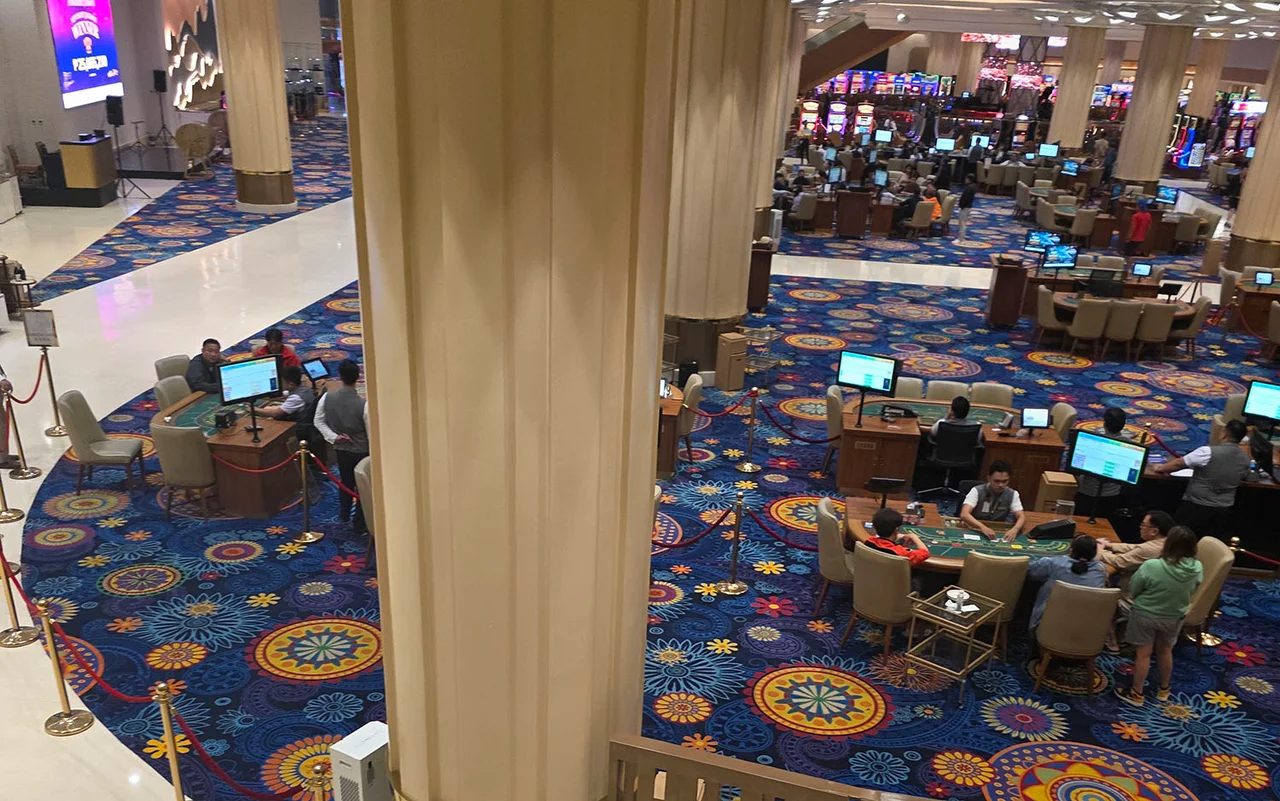
Imagine playing Hold'em at a casino in the Philippines.
A player who enters the poker room after a full rest at the hotel can observe opponents' actions with relative ease.
They can accurately check the cards on the flop, turn, and river, while remembering the opponent's bet size, speed of action, and previous plays to make an informed decision.
"This person made a large bet in a similar situation in the previous hand, and it was a bluff."
"There is now a flush possibility on the board."
"My hand is strong, but there are definitely stronger hands in my opponent's range."
These judgments are possible.
However, if you play until dawn, your eyes grow tired and your concentration drops, and the situation changes.
You might misread a card on the board or be slow to notice a potential straight or flush. It is easy to fall into 'tunnel vision,' where you forget the opponent's betting history and only look at your own cards.
Experimental studies have shown that sleep deprivation weakens the brain's response to losses while increasing expectations for high rewards. In blackjack-style experiments, tired participants tended not to reduce their bet sizes even when the risk increased.
Therefore, the experience that 'games go well when you are well-rested and clear-headed, and errors increase when you are tired' is not just a matter of mood.
- Drinking Doesn't Give You 'Guts'
Casinos and alcohol have a very close relationship.
It is common to see people drinking while playing or having beer or whiskey at the table.
The problem is that alcohol can make you feel more relaxed and confident.
For example, if you are sober, you might face an opponent's all-in and think:
"Based on their play so far, it's highly likely they have a strong hand."
And you would easily fold. But if you've been drinking, you are more likely to think:
"There's no way they have a good hand again."
"Let's just call."
Research has observed that alcohol reduces vigilance toward uncertain rewards and interferes with cognitive processing in decision-making. Other experiments have shown that drinking can increase risky choices or impair the ability to properly weigh rewards and probabilities when facing large potential losses.
The more dangerous part is that 'a person who is drunk may not accurately perceive their own impaired judgment.'
In other words, drinking doesn't improve your skills; it only increases your confidence that 'my judgment is right.' This is especially fatal in Hold'em.
- The Most Dangerous State is 'Right After Losing Money'
As much as fatigue and alcohol, you must be wary of your emotions in a casino.
In Hold'em, this is commonly called 'Tilt.'
Suppose you thought you would win a big pot with a strong hand, but you were outdrawn on the river and lost a lot of money.
In a normal state, the next hand is a completely new game.
But once your emotions are shaken, your thinking changes.
'I must get it back from that person.'
'If I win one big hand, I'll be back to square one.'
'I'm going to push hard this time.'
From this moment, the purpose of your play shifts from 'making good decisions' to 'recovering lost money.'
This is one of the most dangerous shifts in poker.
Sleep deprivation can also make you more vulnerable to this tilt. Studies tracking poker players have examined the link between sleep deprivation, emotional regulation, risky behavior, and tilt symptoms.
Therefore, if you suffer an unexpected loss in a big hand, you must check your emotions before receiving the next hand.
If your heart is racing, you are angry at your opponent, or you suddenly want to increase your bet size, it is not the time to 'play'—it is the time to 'step away from the game.'
- Winning Can Also Be Dangerous
Interestingly, your judgment isn't only impaired when you are losing.
It is also dangerous after a big win.
For example, if you started with 1 million won and it grew to 3 million won.
You think of the initial 1 million won as your own money, but the additional 2 million won might psychologically feel like 'money made from the casino.'
This leads you to make calls or large bets you wouldn't normally make.
"Things are going well today."
"I have a good feeling right now."
"I can afford to bet a bit bigger."
However, the cards have no memory of whether you won or lost money today.
In Hold'em, the fact that you won five hands in a row does not increase the probability of getting a good card in the next hand.
Therefore, 'excessive confidence after a win is an emotion to be as wary of as the anger after a loss.'
- The Best State in Hold'em is 'Not Regretting a Fold'
There is a simple way to judge your condition in Hold'em.
See if you can fold without any regrets when you receive a bad hand.
If you don't get good cards for a long time, you get bored.
If you haven't received a decent hand for an hour, you start thinking, 'I need to do something.'
Then you start playing hands you would normally fold, bluffing excessively, or investing many chips into a weak top pair.
Conversely, a player in a good state won't be shaken even if they fold 10 or 20 times in a row.
This is the most important self-check criterion for players in the Philippines.
'Am I able to wait for a good card right now?'
If waiting feels frustrating and the urge to play a big hand becomes strong, it may be a sign that your concentration is starting to collapse.
- Create a 'Betting Traffic Light' Before Entering the Casino
To summarize it simply like a pro, you can divide your state before the game into three stages.
'Green State' is when you have had enough sleep and rest, have not drunk alcohol, and are emotionally stable. Your bankroll and exit criteria are set in advance.
'Yellow State' is when you are slightly tired, your concentration is dropping, or your emotions are shaken by a big win or loss. If your judgment is ambiguous, it is reasonable to reduce your bets or take a break.
'Red State' is when you are drunk, severely exhausted, angry, or feel that you must win back lost money. At this point, it is more important not to play than to use any strategy.
In particular, if you start thinking, 'I'll just win back what I lost today and leave,' it should be seen as the most dangerous warning sign.
- Sometimes the Best Strategy is 'Not Playing'
Casino players constantly study which games to choose, when to raise bets, and which hands to play.
But there is a question to ask before that.
"Am I in a state to make a rational decision right now?"
In a casino, you can keep playing even if you are tired, you can buy chips even if you are drunk, and the next hand starts immediately even if you are excited from losing a lot of money.
The casino does not force you to rest.
That is why the ability to stop yourself is important.
Especially in Hold'em, the 'ability to wait in bad situations' and the 'ability to read your own emotions' can be more important in the long run than the ability to receive good cards or read opponents.
Only when you are well-rested, sober, calm, and not obsessed with lost money can you properly use your skills.
Conversely, if you are sleepy, drunk, or angry, it is difficult to execute even the best strategies.
The most dangerous moment in a casino is not when your hand is bad.
'It is the moment when your judgment is clouded, but you believe you are normal.'
And this is the most important principle a wise casino player should know:
"Being in a good condition doesn't guarantee a win, but being in a bad condition increases the likelihood of losing."
This is why you should check your own state before looking at your cards.