
Guide to Preventing Harm During Southeast Asia Casino Trips
“What you need to be more careful about than the casino itself is the people and money transactions around the casino.”
Ⅰ. Introduction
Asian casino markets such as Macau, the Philippines, Vietnam, and Singapore are popular destinations for Korean tourists due to their accessibility by air and well-developed large-scale integrated resorts.
Casino travel itself is not inherently dangerous.
If you use official exchange counters and services at properly operated large casinos and resorts, and follow basic travel safety rules, it is not much different from a typical overseas trip.
The problem often starts outside the gaming floor.
As Korean-speaking agents, brokers, private money changers, unofficial junkets, loan sharks, and online casino recruiters approach travelers, a simple casino trip can escalate into financial disputes, fraud, threats, and even confinement.
In particular, you should be extremely wary of approaches that promise free airfare, accommodation, credit for gaming funds, favorable exchange rates, guaranteed win rates, or loss recovery.
The most important principle for overseas casino travel is surprisingly simple:
Be more wary of people than the casino, and verify the path of your money before the game.
Ⅱ. The Most Dangerous Thing is a ‘Friendly Approach’
When traveling abroad, people tend to trust friendly individuals more easily than threatening ones.
Crimes around casinos exploit this psychology.
A fluent Korean speaker might offer airport pickup, hotel stays, and meals, while introducing you to VIP casino services.
At first, everything seems free.
However, the situation can change once you start losing money.
They may offer to lend you additional gaming funds or provide chips on credit, saying, “You can recover if you just play a little more,” and then demand the principal, commissions, exchange fees, and accommodation costs all at once.
Therefore, if you hear the following, it is best to stop the transaction immediately:
“You can pay it back later in Korea.”
“We will take care of your hotel and airfare.”
“The casino guarantees it.”
“You can win back your losses tomorrow.”
“Send money to a Korean account and I’ll give you chips.”
There is almost no such thing as a free trip or free gaming funds.
Always check what conditions are attached behind benefits that seem free.
Ⅲ. The First Principle of Casino Travel: Do Not Borrow Money
Private credit transactions are a major source of serious problems in overseas casino incidents.
When you are losing money in a game, the thought of “I’ll just win back my principal and stop” becomes stronger than rational judgment.
If an agent lends you money or provides chips on credit at this point, your losses can snowball rapidly.
Furthermore, promissory notes or foreign-language contracts signed abroad can lead to complex debt disputes even after you return home.
The principles of casino travel must be clear.
Do not spend more than the gaming budget you prepared before the trip.
If you run out of money, the game is over.
The moment you use a credit card cash advance, borrow money from acquaintances, or borrow gaming funds from a local broker to re-enter the casino, your trip turns from leisure into a debt crisis.
Ⅳ. Private Exchange is a High-Risk Transaction for ‘Slightly Better Rates’
Around casinos, you can easily find private money changers offering better conditions than official exchange rates.
It is also common to be offered cash or casino chips locally if you send money to a Korean account.
However, such transactions carry multiple risks.
The other party may disappear after you transfer the money, or you may receive counterfeit or damaged currency.
A more serious problem is becoming unwittingly involved in criminal money laundering.
If the money you sent to a money changer or the money entering your account is linked to voice phishing or money laundering crimes, your account may be frozen or you may become a subject of investigation after returning home.
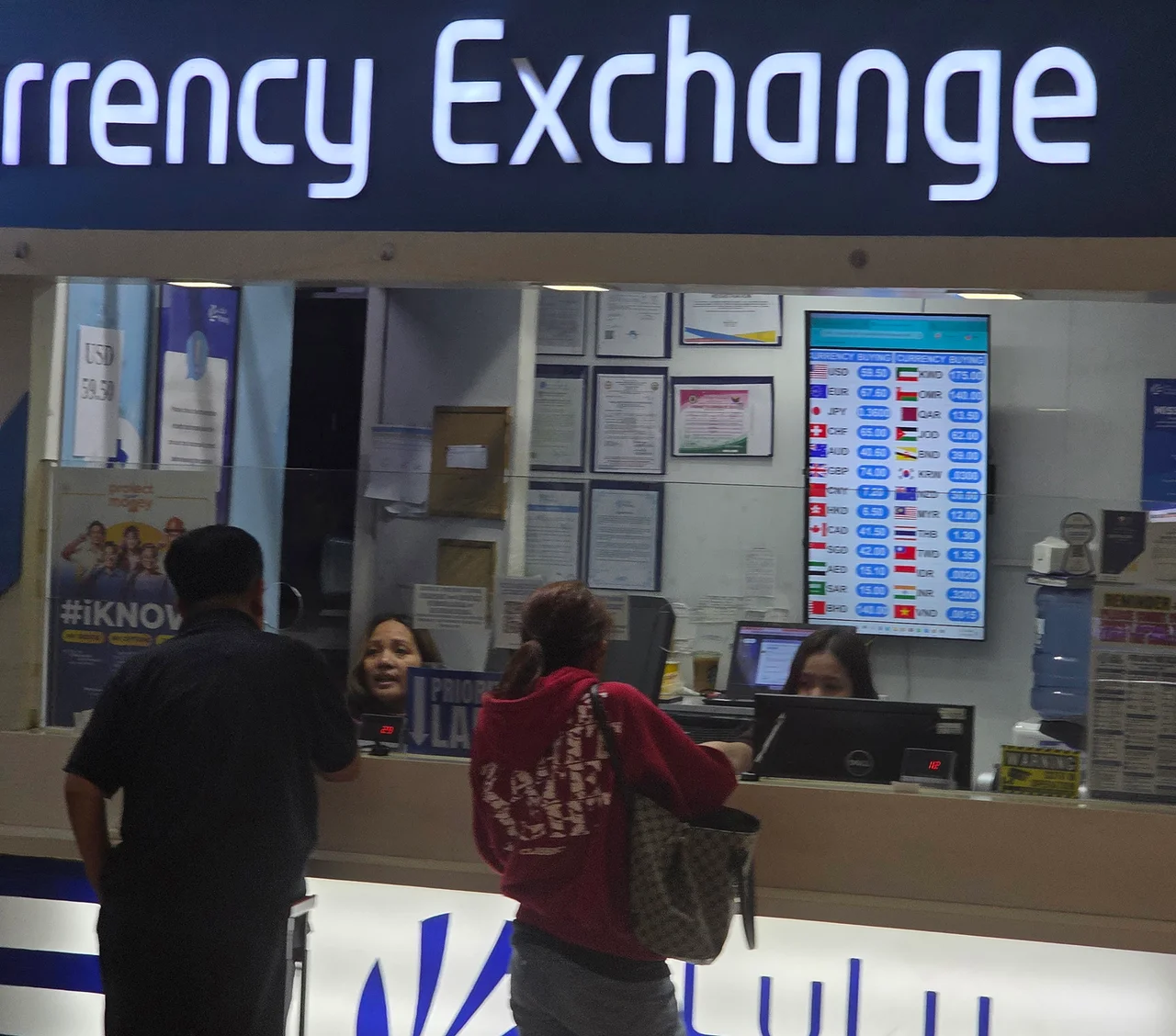
Therefore, it is safest to use official financial institutions and official casino exchange counters for gaming funds.
In particular, avoid proposals for exchange using accounts under other people's names, personal accounts, or virtual assets.
Ⅴ. Just Because You Met Them Inside Doesn't Mean They Are Casino Staff
People sometimes trust others easily because they think the inside of a casino is safe.
However, external junket operators, customer recruiters, and exchange brokers can operate even inside the casino.
If someone claims to be a casino employee, verify their staff ID, department, and whether they are at an official desk.
Just because you signed documents inside a hotel or casino building does not guarantee that the document is a contract with the casino headquarters.
In particular, do not immediately sign promissory notes, chip purchase confirmations, or debt confirmations written in a foreign language.
If you cannot verify the exact corporate name of the counterparty and their relationship with the casino, it is safer to stop the transaction entirely.
Ⅵ. ‘Guaranteed Win Rates’ and ‘Special Information’ Do Not Exist
There are common phrases used in scams targeting casino travelers.
“The dealer is in on it.”
“I know the results in advance.”
“I know when the slot machine will hit.”
“If you analyze the Baccarat flow, you are guaranteed to win.”
You must not believe claims that game results are guaranteed in a legitimate casino.
Sometimes they gain your trust by showing small profits at first, then demand larger amounts or move you to a separate online casino.
Casino games are determined by probability.
If you hear “100% win,” “principal guaranteed,” or “loss recovery,” you should suspect a scam rather than game information.
Ⅶ. Refuse Invitations to Join Online Casinos After Returning Home
There are cases where agents met at overseas casinos introduce online casinos to customers after they return home.
“It’s the same company as the casino you used on-site.”
“You can use your member number as is.”
“We will bet on the casino table for you in real-time.”
“We’ll give you a bonus on your first deposit.”
This is how they get you to sign up for illegal online casinos.
However, the fact that you visited a legal casino abroad does not make using an illegal online casino in Korea legal.
Illegal sites can lead to “eat-and-run” scams, personal information leaks, the use of “daepo” (proxy) accounts, illegal financial transactions, and even extortion.
Your overseas casino trip should end the moment you return home.
There is no reason to continue a relationship with a broker you met on your trip for online gambling.
Ⅷ. You Must Manage Your Passport and Mobile Phone Personally
A traveler's most important safety tools are their passport and mobile phone.
It is normal to present your passport briefly for hotel check-in or immigration procedures.
However, leaving your passport with an agent or loan shark until your departure date is a completely different matter.
The same applies to demands to hand over your mobile phone, bank cards, or internet banking authentication tools.
If your passport and mobile phone are lost at the same time, it becomes difficult to request rescue, stop financial transactions, or send your location.
In actual confinement cases, the tactic of first seizing the victim's mobile phone and passport has been confirmed.
Therefore, you should distribute your passport, mobile phone, cash, and cards and manage them yourself.
Ⅸ. ‘What Kind of Transaction’ is More Important Than the Country
Categorizing Southeast Asian casino countries simply into safe and dangerous is not accurate.
Macau and Singapore have relatively stable casino oversight and security systems, but private exchange and financial fraud can still occur.
In the Philippines, the interior of large integrated resorts is relatively stable, but you need to be cautious about credit transactions, exchange, or entertainment-related disputes with external Korean brokers.
In Vietnam, it is also important to be wary of reliance on agents, exchange, and harm during taxi rides or sightseeing rather than the large resorts themselves.
On the other hand, in some parts of Cambodia and the Golden Triangle bordering Laos and Myanmar, employment scams and confinement risks involving casinos or resorts have been raised more seriously.
Therefore, the question more important than “Which country’s casino is it?” is this:
Who are you dealing with?
Where are you sending the money?
Who is managing your passport and air ticket?
Is it an official casino service or a private broker transaction?
Ⅹ. 7 Things to Prepare Before Departure
A safe casino trip does not start at the airport, but before departure.
First, inform your family of your flight, accommodation, the casino you plan to visit, your companions, and local contact information.
Second, ensure you manage your return flight ticket yourself.
Third, if you use a local agent, verify not only their name but also their company, address, and contractual relationship with the casino.
Fourth, keep a copy of your passport, insurance policy, and credit card loss report phone numbers separately.
Fifth, separate your travel expenses from your casino gaming funds in advance.
Sixth, establish a principle of not using private credit locally.
Seventh, check your overseas travel insurance and whether emergency medical/legal support is available.
In particular, it is dangerous to completely hide the fact that you are on a casino trip from your family.
If an accident occurs, the lack of knowledge about the traveler's exact location and itinerary can delay rescue and initial response.
XI. 10 Things You Must Refuse Locally
As a casino traveler, it is a rule to refuse the following suggestions immediately:
Demands to hand over your passport
Demands to hold your mobile phone or bank cards
Demands to send money to a personal account in Korea
Demands to remit money under the name of a family member or acquaintance
Demands to sign foreign-language documents you do not understand
Acts of providing additional credit under the guise of recovering losses
Claims that the game is rigged with casino staff
Requests to carry cash, chips, or bags for someone else
Invitations to join an online casino after returning home
Suggestions to move to unplanned outskirts or border areas
If even one or two of these appear, you should judge them as warning signs, not simple services.
XII. Transportation and Entertainment Are Part of Casino Travel Safety
It is best to avoid letting people around you know that you have won a large amount of money at the casino.
If it becomes known that you are holding large amounts of cash or chips, you could become a target for stalking or theft.
For transportation between your accommodation and the casino, use official hotel vehicles or verified ride-hailing services if possible.
Do not assume someone is your reserved driver just because they know your name.
It is necessary to verify the vehicle number and driver information and share it with family or companions.
Problems such as overcharging, duplicate card charges, and theft can also occur at entertainment venues around casinos.
Avoid following strangers or bringing them to your accommodation while intoxicated.
XIII. If a Problem Occurs, Distinguish Between ‘Game Loss’ and ‘Criminal Harm’
It is difficult to claim that losses normally incurred in casino games are fraud.
However, if you were tricked into sending money, or if there was assault, threats, confinement, or illegal debt collection, the issue is completely different.
If harm occurs, stop additional remittances immediately and focus on securing evidence.
Preserve bank transfer records, messenger chat logs, promissory notes, business cards, hotel names, vehicle numbers, casino names, and chip purchase receipts as much as possible.
If it is an internal casino issue, verify the individual's affiliation with the casino's official security department or customer center.
If your passport has been seized or there is a possibility of confinement, it is important to notify your family or the Korean consulate of your location, building name, and vehicle number rather than engaging in a reckless confrontation.
The incident does not end just because you returned home.
If there is a possibility that your account was used for crime, report it to financial institutions and the police immediately.
As time passes, securing important evidence such as CCTV and messenger records may become difficult.
XIV. ‘10 Commandments for Overseas Casino Travel Safety’ Proposed by Tatata Journal
Do not borrow casino gaming funds.
Do not trade with private money changers.
Refuse requests to remit to personal Korean accounts.
Always manage your passport and mobile phone yourself.
Do not sign foreign-language promissory notes or contracts carelessly.
Do not believe in ‘guaranteed win rates, loss recovery, or principal guarantees.’
Always distinguish between casino staff and external brokers.
Do not carry cash, chips, or bags for strangers.
Inform your family of your travel itinerary and accommodation.
If a problem arises, prioritize safety and returning home over money.
XV. Conclusion
“The safety of a casino trip is determined by choices, not the gaming floor.”
What Korean tourists in Southeast Asia should be most wary of is not just the win or loss of a casino game.
As private exchange, credit provision, brokers, junkets, entertainment venues, online casinos, and employment placement surrounding casinos combine, simple game losses can escalate into fraud, threats, confinement, and money laundering issues.
However, it is not appropriate to view all Southeast Asian casinos as dangerous places.
One should not generalize large, properly operated casinos and resorts as criminal facilities.
Ultimately, the key to a safe casino trip is ‘transaction methods and people’ rather than the country.
Using official casino counters, playing only with your own money, managing your passport and mobile phone yourself, and refusing personal account remittances and private credit can prevent a significant number of damages.
In particular, you need to view offers promising free airfare, hotels, high-limit credit, guaranteed profits, and loss recovery as ‘warning signs’ rather than ‘luck’.
The best principle for overseas casino travel is not complicated.
“Enjoy the casino but do not blindly trust people; play the game but do not go into debt; and even if you lose money, do not lose your safety.”
And there is one final principle to remember in any situation:
“Returning home is more important than money.”