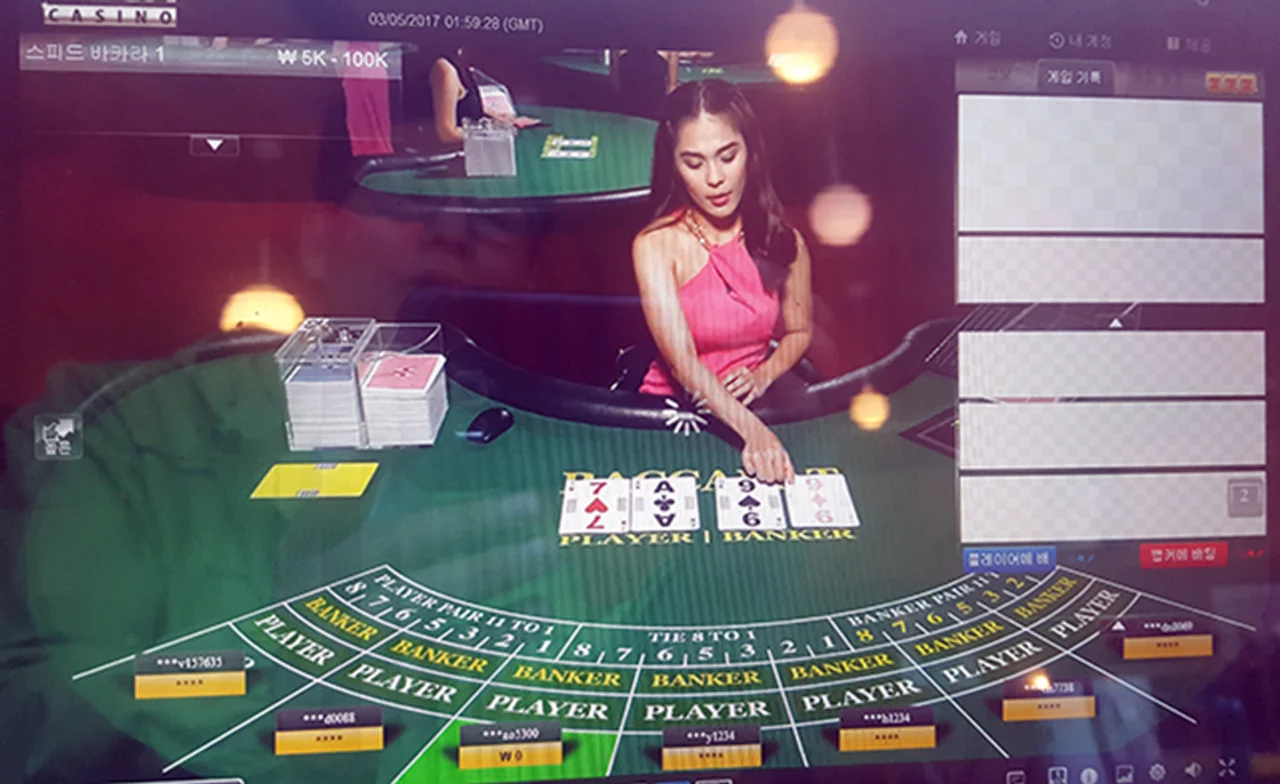

The Most Common Mistakes Made by Kangwon Land Beginners
― The first day's luck might be the most dangerous ―
For those visiting Kangwon Land for the first time, the casino is both an unfamiliar and flashy space.
Numerous slot machines, table games, the sounds of winning, and the cheers of people leave a strong impression on beginners.
If you happen to be lucky enough to win money from the start, your mindset changes even more.
"It's not as hard as I thought," "I could do this with a little study," or "I must be lucky today."
From this very moment, misconceptions about the casino can begin.
The biggest danger for a casino beginner is not knowing how to play the game.
It is thinking they understand the game while failing to properly grasp casino probabilities and their own psychology.
In domestic and international gambling research, various cognitive distortions such as the 'illusion of control' and the 'gambler's fallacy' have been repeatedly identified, and these false beliefs have been shown to be related to loss chasing, excessive spending, and gambling problems.
Ⅰ. First Mistake
Thinking of the casino as a 'place to make money'
This is the first thought a beginner should discard.
Casinos are not financial products or investment markets that exist to provide stable profits to customers.
Casino games have short-term volatility in wins and losses. So, some people may win on their first visit or experience good results several times in a row.
The problem starts when you interpret that experience as your own skill.
The first principle in approaching casino games is simple.
Short-term winning and the ability to consistently make money are completely different stories.
If you start thinking of the casino as a means of wealth management or income generation, you have started on the wrong foot.
Ⅱ. Second Mistake
Mistaking the first win for your own skill
Paradoxically, one of the most dangerous experiences for a beginner can be a 'big win on the first day.'
In slot machine experiments with general participants, results showed that the group that experienced a large initial win exhibited stronger loss chasing afterward. Researchers pointed out that large wins and losses trigger different cognitive distortions, potentially promoting additional gambling behavior.
For example, suppose someone visits a casino for the first time and happens to get a good result.
If that person starts thinking, "I think I have a knack for the game" or "I understood it faster than others," chance is converted into ability.
However, the first win may not be your skill, but a simple fluctuation of results.
For a casino beginner, the first win is not proof of success, but rather a moment that requires a cool head.
Ⅲ. Third Mistake
Finding answers for the future in past results
There is a common trap beginners fall into at the casino.
It is the belief that you can predict the next result by looking at past results.
Humans have a tendency to find rules and meaning even in random events.
In gambling research, the 'Gambler's Fallacy' is a representative concept.
This is the error of thinking that previous results will change future outcomes in independent probability events.
Meta-studies analyzing gambling-related cognitive distortions have also confirmed the gambler's fallacy and the illusion of control as key distortions.
Beginners easily think:
"If I observe enough, I will see the flow."
However, discovering patterns in random events after the fact and actually predicting future results are entirely different issues.
Ⅳ. Fourth Mistake
Thinking 'almost won' means being close to success
A psychological phenomenon to be especially careful of with slot machines is the 'Near Miss.'
It is a situation where, although it is clearly a loss, it feels like you were very close to winning.
People may feel, "I think I'll get it if I just do a little more," when seeing such results.
Research results on the exact effect of near misses on continued play are not entirely consistent, and some controlled experiments have failed to support the hypothesis that they reinforce continuous behavior. Therefore, one should not simply conclude that "near misses necessarily make you continue the game."
However, there is accumulated research that near misses can affect emotions and judgment.
There is one thing a beginner must know.
Even if you 'failed narrowly,' the result is still a failure.
Ⅴ. Fifth Mistake
Thinking you must win back the money you lost
This is one of the thoughts a beginner must be most wary of.
"I'll break even if I just do a little more."
Initially, it was a small loss, but because of the thought of winning it back, the situation can change as you continue to play.
Academically, this is called 'Loss Chasing.'
Loss chasing is not just a habit, but is being studied as one of the key behaviors for understanding problem gambling. A study of 255 people showed that gambling-related expectations, interpretation bias, and a tendency to prioritize immediate results over future ones are related to loss chasing.
Another study showed that the tendency for loss chasing and the severity of gambling problems are related to poor decision-making.
Therefore, one of the most important concepts a beginner should learn is this:
Losses are not a debt that must be recovered in the next game.
Ⅵ. Sixth Mistake
Thinking you should increase your bets if you lose money
The reason loss chasing becomes dangerous is that the goal of winning back money changes your judgment.
What started as a leisure activity can change its purpose as losses increase.
Instead of enjoying it, 'recovering' becomes the goal.
In gambling research, loss chasing is treated as an important characteristic in the process of moving from recreational gambling to problem gambling.
Therefore, if the shift from 'leisure → competition → breaking even → recovery' is appearing in your behavior, it is reasonable to view it not as a signal to study the game more, but as a warning signal to distance yourself from the game.
Ⅶ. Seventh Mistake
Thinking of winnings as 'free money'
Profits made at the casino are also your own money.
However, psychologically, it may feel different from the money you brought initially.
For example, after a good result, you might think, "It's money I didn't have originally, so it's okay to spend a little."
If this thinking is repeated, winning immediately becomes a reason for additional games.
Therefore, the important question is not "How much did I win?" but "Why am I continuing?"
Ⅷ. Eighth Mistake
Trusting your memory too much
People do not remember every experience with the same intensity.
Especially in a casino, dramatic wins and intense moments are easily remembered for a long time.
Conversely, times when small losses were repeated can fade.
There is also research that gamblers with a strong illusion of control selectively focus on their biggest winning moments when evaluating losses.
So, "I won quite a bit at the casino."
Your personal memory might be different from the actual total profit and loss.
You must understand that records are more objective than memory in a casino.
Ⅸ. Ninth Mistake
Believing other customers' success stories as they are
Winning stories spread quickly in a casino.
This is because big wins or dramatic turnarounds become good stories.
Conversely, losses are quiet.
People do not go out of their way to brag about the experience of losing a lot of money.
So, if you judge the casino based only on the stories you hear on-site, it may seem like there are far more winners than there actually are.
This can be understood as a kind of 'survivorship bias.'
The question more important than "Who won how much?" is "What is that person's long-term total profit and loss?"
Ⅹ. Tenth Mistake
Believing that if you go to the casino for a long time, you will develop skills
Casino experience and the ability to generate consistent profits are not the same thing.
Just because you have used a casino for 10 years does not mean you have developed the ability to predict random results.
Rather, you should be wary of the possibility that long-term experience leads to the overconfidence of "I am different from a beginner" or "I know this game."
In research on gambling-related cognitive distortions, the phenomenon of overestimating one's abilities or believing that luck can be controlled has long been a major subject of study.
Experience can help you understand the structure of a casino, but it does not change the probability itself.
Ⅺ. Eleventh Mistake
Thinking the most important thing in a casino is game technique
Beginners try to learn from the rules of the game.
Of course, understanding the rules is necessary.
But from the perspective of safety, there is more important study.
It is understanding the probability structure of the casino and your own psychology.
Why you want to make up for losses,
Why you feel confident after a big win,
Why you find patterns in coincidences,
And you need to know why it can become difficult to end the game.
In fact, a study analyzing 5-year longitudinal data including 1,431 people also found that irrational beliefs about gambling are related to subsequent gambling problems.
Ⅻ. 5 Principles Beginners Should Remember
The principles that the 'Casino Academy' emphasizes to those new to Kangwon Land do not need to be complicated.
First, do not think of the casino as a place to make money.
Second, do not mistake accidental wins for skill.
Third, do not look for the correct answer for the future in past results.
Fourth, do not think of losses as money that must be recovered in the next game.
Fifth, understand your own psychology before the game.
Understanding these five things is more important than learning countless game methods.
@Conclusion
The biggest enemy of a beginner is 'delusion' rather than 'ignorance'
The biggest problem for a Kangwon Land beginner does not lie in not knowing the game.
Rather, the danger can grow from the moment you think you know the game after experiencing it a few times.
If you win money on the first day, you think you have talent; if you lose money, you think you can recover it next time; if past results repeat, you think you have discovered a pattern; and if a result close to winning appears, you might think it will happen next time.
And as experience accumulates, you may believe that you have moved past being a beginner and become an 'expert.'
However, in a casino, probability does not recognize the customer's career or confidence.
So, what a person new to a casino should learn first is not the secret to the game.
What you should study first in a casino is not the casino, but yourself.
You must understand why you want to bet more, why you want to break even, why you mistake coincidence for skill, and why it becomes difficult to stop.
That is the most basic study for looking at a casino.
A word from the 'Casino Academy'
Beginners make mistakes because they don't know the game, but old beginners make mistakes because they believe they know.
The most dangerous moment in a casino might not be the moment you first enter, but the moment you think, "I know a bit about the casino now."
Understanding a casino properly does not mean learning how to bet a lot.
Respecting probability, not mistaking coincidence for skill, and not viewing the casino as a means of making money.
That is the casino common sense that a Kangwon Land beginner should know first.