Gunshots at Midnight, Black Smoke… The Nightmare of a Manila Casino
(This article is a non-fiction reconstruction based on testimony from a Korean official who experienced the shooting and arson at Resorts World Manila in the Philippines on June 2, 2017, the author's on-site reporting, and official reports from the Philippine police at the time. Please note that details regarding damages and missing chips that are difficult to verify are based on claims from local sources. Editor's Note)
Shortly after midnight on June 2, 2017.
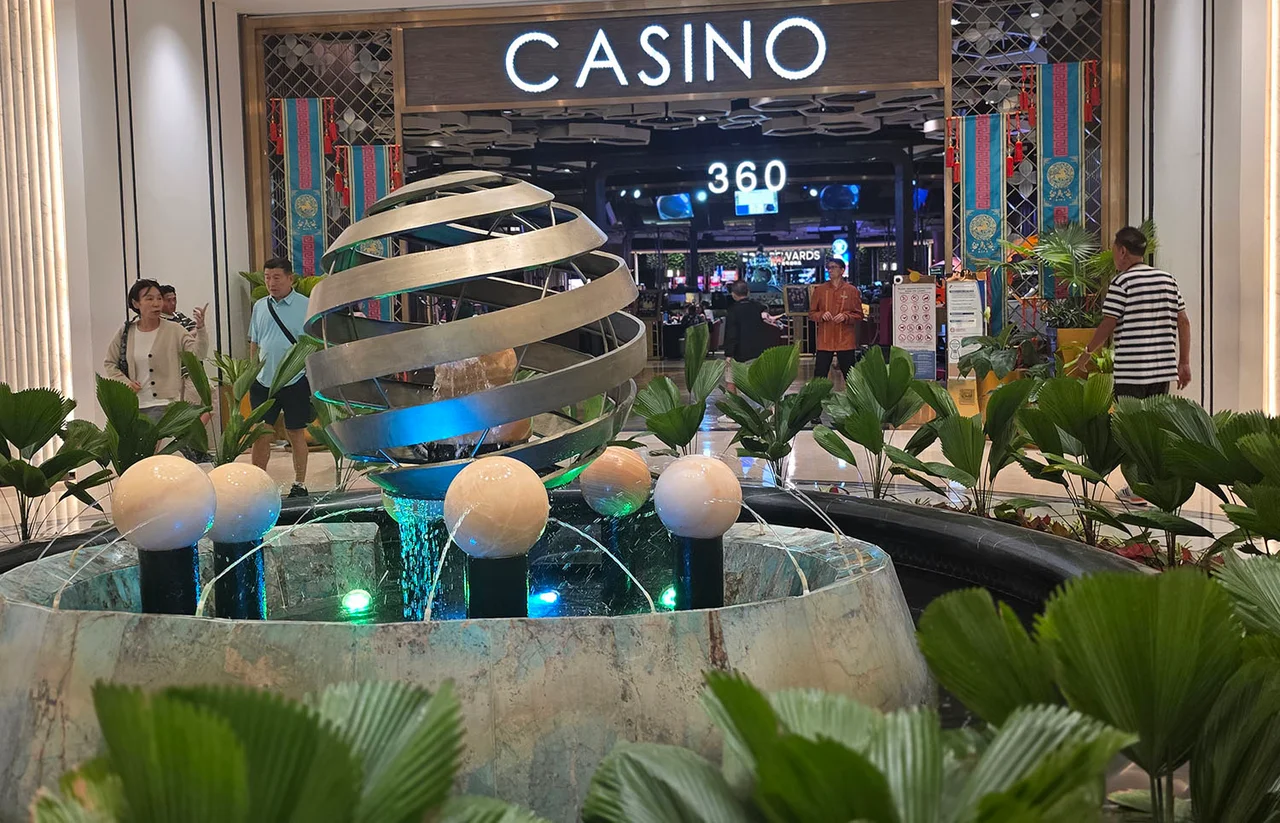
Resorts World Manila, located near Ninoy Aquino International Airport in Manila, was still a city that never slept.
On the first and second floors of the casino, hundreds of customers were enjoying slot machines and table games. In the 3rd-floor VIP room, foreign customers, including Koreans and Chinese, were gathered around baccarat tables.
Inside the integrated resort, which connected a hotel, shopping center, and casino, few were conscious of the fact that the date had changed.
Mr. K, a Korean casino agent having tea at the entrance of the 3rd-floor VIP room, was spending a night no different from any other.
Then, a series of short, sharp sounds erupted from the floor below.
“Bang! Bang! Bang!”
At first, people thought a jackpot had hit on a slot machine. But then, more gunshots rang out, piercing through the electronic sounds and music.
People’s faces froze.
In an instant, the casino turned into chaos.
▲ A Rifle and Gasoline Hidden Under a Trench Coat
The perpetrator was a Filipino man named Jessie Javier Carlos.
At 42 years old, he was a father of three and a former civil servant who had worked for an agency under the Philippine Department of Finance. Although he was an elite official in the tax sector, gambling destroyed his life.
Police investigations revealed that Carlos was heavily in debt due to his addiction to casinos and cockfighting. He had 4 million pesos (approx. 90 million KRW) in bank debt alone and lived apart from his family. Even after selling his assets, including his car and farm, he could not escape his debt.
As a last resort, his family requested the Philippine Amusement and Gaming Corporation (PAGCOR) to ban him from casinos. Consequently, he had been barred from entering casinos in the Philippines since April 2017, two months before the incident.
However, the ban did not stop his gambling.
That day, he prepared a rifle, a pistol, and gasoline and headed to Resorts World Manila. According to police-secured footage, Carlos purchased about 3 liters of gasoline at a gas station before arriving at the casino.
Mr. K, who knew the scene well, recalled the perpetrator's entry process:
“The main entrance on the first floor had relatively strict security, but the entrance on the second floor connected to the shopping center was relatively lax. Especially around midnight, it was a time for staff shift changes, so security could be loose.”
Carlos tried to enter the casino through a staff passage rather than the normal customer entrance.
A female security guard spotted him and shouted.
“Hey! You can’t go in that way. Go back and pass through the gate!”
At that moment, Carlos pulled a rifle from under his coat.
And he pulled the trigger toward the ceiling.
The tranquility of the casino was shattered by three gunshots.
▲ Muzzles Pointed at the Ceiling, Not People
Startled by the gunshots, customers threw down chairs and bags and fled. Money and game tickets left in front of slot machines were abandoned.
Carlos did not chase the fleeing customers to shoot them. He did not take anyone hostage or shout political slogans.
Instead, he walked deeper into the casino where people had already fled.
He poured the gasoline he had prepared onto game tables and slot machine chairs. The flames spread instantly across the fabric and sponge-covered chairs.
At first, it was a small flame.
But within minutes, black smoke billowed toward the ceiling. The casino’s lighting and flashy neon signs vanished into the thick smoke.
Toxic fumes erupted from the burning slot machine chairs and game tables. The enclosed casino floor began to turn into a giant gas chamber.
Carlos headed toward the chip storage facility, leaving the flames behind. He shot open the locked door and stuffed casino chips worth 113 million pesos into his bag. At the time, that was equivalent to about 2.6 billion KRW.
Because of this, the police focused on the robbery of casino chips rather than terrorism from the beginning of the investigation. It was officially confirmed that the chips the perpetrator stole were later recovered along with the bag.
However, the people inside the casino could not have known that.
All they heard were gunshots, and all they saw were flames and smoke.
▲ “Terrorists Are Waiting at the Exit”
At the time, battles were raging between government forces and Islamic extremist militants in Marawi, in the southern Philippines.
Tensions regarding the possibility of terrorism were high in Manila as well.
When gunshots were heard inside the casino, people naturally assumed that multiple armed terrorists had attacked the building. Some customers ran for the exits, but others hid in rooms, offices, and bathrooms at the end of hallways.
Rumors even spread instantly that someone had shouted, “There are people with guns at the exit.”
That unverified statement twisted the evacuation path.
Instead of moving away from the fire, people entered inner spaces with no windows and narrow exits. They locked the doors, turned off the lights, and held their breath.
It was an action intended to avoid the shooter's eyes.
But what actually approached them was not the shooter, but black smoke.
The smoke seeped into the rooms through door gaps and ventilation ducts. At first, there was a choking smell, and soon it became difficult to keep one's eyes open. Coughing followed, and people with labored breathing collapsed to the floor one by one.
In particular, those who had taken refuge in bathrooms and enclosed spaces could not escape.
According to police announcements and autopsy results, most of the victims died from smoke inhalation and suffocation, not gunshot wounds. There were no victims killed directly by the perpetrator's gunfire.
The hiding places they chose to avoid bullets became spaces of death instead.
▲ A Korean Witness Who Ran Away from the Smoke
There were about 100 other customers and staff around Mr. K on the 3rd floor.
When the first gunshots were heard, some ran toward the stairs and exits. However, as word spread that “there might be multiple terrorists,” many tried to hide inside the VIP room.
Mr. K moved in the opposite direction.
“I didn’t know where the terrorists were, but I could see the direction the smoke was coming from. I judged that I had to go in the opposite direction, avoiding both the side where the gunshots were heard and the side where the smoke was spreading.”
He shouted to the people around him.
“You shouldn't stay here! We have to get out on the opposite side of the smoke!”
Black smoke began to descend rapidly from the ceiling. Visibility blurred, and his throat stung with every breath.
Mr. K moved with people while staying low. Someone lost their shoes, and someone fell. Mobile phones, bags, and casino chips were scattered in the hallway.
Alarm sounds, screams, and coughing were all tangled together.
He barely managed to escape the building.
Outside, injured people were lying on the ground, and some were hurt from breaking windows or jumping from high places. Fire trucks and police cars arrived one after another, but no one knew the exact situation inside.
Mr. K said that worry for those left inside outweighed the relief of having survived.
“I didn’t see the young dealers I knew. They were all kind and diligent employees. Later, I heard the news that many of them had died from smoke inhalation.”
▲ The Escape That Ended in a 5th-Floor Hotel Room
Carlos, who had stolen the casino chips, fled toward the adjacent Maxims Hotel after clashing with security forces.
He entered a 5th-floor room and locked the door.
When the police approached, Carlos lay on the hotel bed, poured gasoline, and set it on fire. It was investigated that he then shot himself.
His body was discovered inside the room after 1 a.m.
The crime was over, but the smoke inside the casino did not clear easily. As rescue teams searched every corner of the building, victims were discovered one after another.
36 people, including casino staff and customers, died from fire and smoke inhalation. Including the perpetrator, there were 37 deaths at the scene. About 70 people were injured or received hospital treatment.
There was also a Korean victim. According to local reports, this Korean person suffered a heart attack during the evacuation process.
At first, reports of a “casino terror attack” spread across the world. IS even claimed responsibility.
However, the Philippine police concluded that it was not a terror attack with political or religious motives.
The person who caused the incident was not an organized terrorist, but a former civil servant driven to ruin by gambling debt and personal collapse. He did not spray bullets at people; he headed to the chip storage facility and stole chips worth 113 million pesos.
Manila police officially announced, “It was a lone-wolf crime by one person and has no connection to terrorism.”
However, just because the motive was not terrorism did not change the horror of the tragedy.
▲ A Catastrophe That a Casino Ban Couldn't Stop
Carlos's background made the incident even more shocking.
He was not someone who had lived as a criminal from the start. He had a stable job, a family, and was a father of three.
But as he fell into gambling and cockfighting, his debt grew. He bet larger sums to recover his losses and sold his assets to fund his gambling. He lost his job and his relationship with his family broke down.
His family requested the authorities to ban him from entering casinos.
Although a ban was issued, it did not resolve his treatment, debt problems, or psychological crisis. When he could no longer enter the casino, he did not escape gambling; instead, he grew more angry and desperate.
Mr. K, who had seen Carlos at the casino before the incident, remembered his change.
“He used to look like a person with a pleasant personality. But as his visits to the casino became more frequent, his expression darkened, and the person changed. I also saw a large man watching him from behind while he was playing.”
Mr. K presumed that man was someone from a loan shark who had lent money to Carlos. However, this is not a fact officially confirmed by investigative agencies.
What is certain is that Carlos was suffering from massive debt, unemployment, and the dissolution of his family.
Gambling addiction didn't just take his money.
It cost him his job, drove his family away, and in the end, destroyed his ability to judge reality.
▲ The Failure of Security and Evacuation That Worsened the Tragedy
Although this incident started with one person's crime, it was pointed out that the cause of the 36 deaths could not be attributed solely to the perpetrator.
How someone with a rifle and gasoline could enter the casino, whether alarms and guidance were properly provided after the gunshots, and why customers hiding in enclosed spaces could not be rescued quickly were all brought into question.
Resorts World Manila management admitted during a Philippine congressional hearing that some security guards were not at their designated positions.
Lack of guidance accurately informing people of the shooter's location and the fire situation also worsened the damage. This is because a paradox occurred where people hiding from the shooter were exposed to fire and toxic gas.
The company stated that the casino had 13 emergency exits. However, in the sudden gunshots and terror, it was difficult for customers to identify the locations of emergency exits and move in an orderly fashion.
The existence of emergency exits and their actual operation during a disaster are completely different matters.
The Philippine government and Congress criticized the casino's security failures and poor safety management. PAGCOR temporarily suspended Resorts World Manila's casino operating license during the investigation. The casino resumed operations at the end of the same month.
▲ Other Chips That Vanished in the Flames
When the incident occurred, customers and staff inside the casino fled without time to grab their belongings.
Game chips, which are treated like cash, remained on tables, in chip trays, and inside the gaming floor.
The 113 million pesos worth of chips stolen by the perpetrator were officially recovered. However, after the incident, stories circulated among local casino staff that a large amount of additional chips had disappeared during the fire suppression and search process.
It is said that some employees even received messages saying, “If you exchange the chips secured during the accident, I will give you half.”
One official described the situation at the time:
“I received offers several times saying there were hundreds of millions of won worth of chips and they would give me half if I exchanged them. I told them to return them voluntarily if they were stolen chips, and warned them that I would report them to the police if they attempted to exchange them.”
Locally, the possibility was raised that some chips might have been taken by firefighters, police officers, or people who entered during the rescue process.
However, there were only claims that CCTV footage was difficult to identify due to smoke and soot, and rumors that ‘over 100 billion won worth of chips were lost’ or the identity of the thieves were never confirmed by official investigation results.
It is still unclear how many chips actually disappeared in the chaos of the disaster.
However, testimonies from local officials continued that there were people caught trying to exchange chips of suspicious origin afterward.
It is a story that in the scene of a tragedy where people were dying, someone picked up abandoned chips, and someone else looked for a way to turn them into cash.
It was another ‘kaleidoscope’ left behind by this incident.
▲ A Month Later, the Casino Is Full Again
When Resorts World Manila reopened after the tragedy, local Korean residents expected the number of customers to drop significantly.
It was a scene where dozens of people had died. It was a casino that had been covered in black smoke and screams just a month prior.
However, as soon as operations resumed, customers flocked back.
Slot machines spun without rest, and empty seats were rare around the baccarat tables. Shopping centers and restaurants were also bustling with people.
One Korean resident was dumbfounded by the sight at the time.
“Even though so many people died, the casino quickly returned to its former state. In Korea, people would have stayed away for a while, but in Manila, the games started as if nothing had happened.”
Not far from the place where the fire started, dealers were dealing cards again.
Customers stacked chips and waited for the next result.
The gunshots and screams of a month ago were buried under casino music and the electronic sounds of slot machines.
▲ The Cruelest Face Shown by a Casino
The Resorts World Manila tragedy was not a terror attack.
But to the people in the casino that day, it was no less terrifying than one.
Although the perpetrator did not spray bullets at people, the fire he started claimed 36 innocent lives. The despair of an individual destroyed by gambling addiction was directed at innocent customers and staff who had nothing to do with it.
The incident also laid bare the loopholes in casino safety management.
An armed person broke through the entrance, and customers, without receiving accurate guidance, hid in enclosed spaces. Those trying to avoid bullets suffocated in smoke.
After the tragedy, another human desire reared its head.
Suspicions were raised that chips had disappeared from the places where people had lost their lives and fled, and someone tried to turn those chips into cash. When operations resumed, customers filled the tables again.
Neither gunshots, nor fire, nor the deaths of dozens could dim the casino's lights for long.
Resorts World Manila on June 2, 2017, showed the cruelest face a casino can have.
Gambling destroyed a civil servant's assets, job, and family, one by one. In the end, it took not only his own life but also the lives of innocent people who worked and enjoyed themselves at the casino.
The last scene witnessed by survivor Mr. K that night was not the flames.
It was the countless chips scattered on the floor inside the casino, having lost their owners, after the black smoke had cleared.
The fire was extinguished, but human desire was not.