타타타 저널

Yoji Casino·10/31/26

A North Korean Elite Who Managed 3 Army Corps: Why Did He Try to Become a Casino Pro?

홍춘봉편집국 기자·By

Early September 2017, Manila, Philippines.


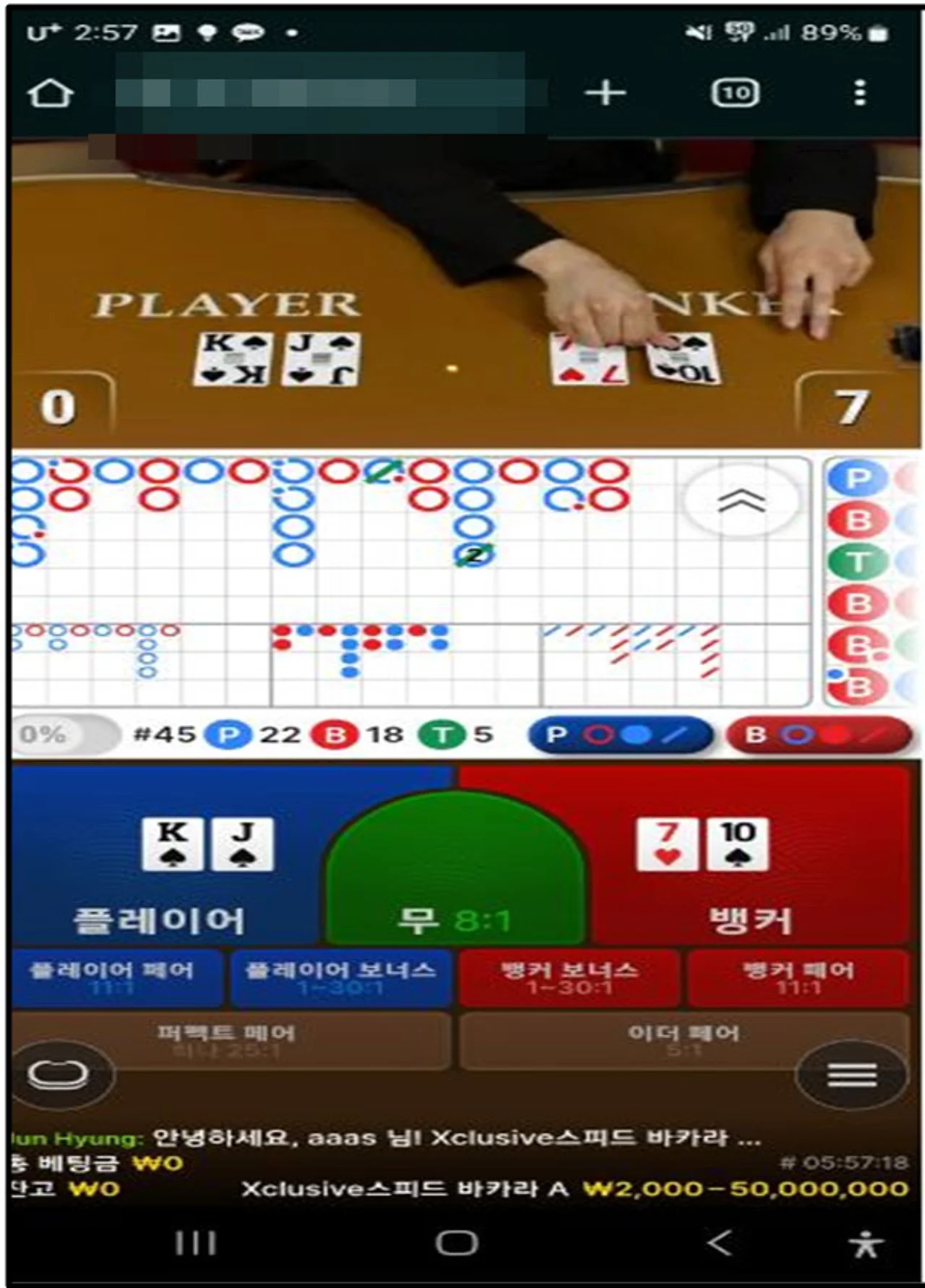
The casino lights never dimmed, even in the dead of night. At the baccarat tables, cards were flipped incessantly, and red and blue chips moved like borderless currency.


Lee Ju-young (pseudonym), sitting at one side of the table, kept his eyes locked on the dealer’s fingertips. While cheers and sighs erupted around him with every outcome, his face remained expressionless.


He didn't participate in the game, watching the table for a long time instead. He repeatedly recorded something in a small notebook and erased it.


“I observe the flow of the game before placing any money. I don’t bet on feelings or moods like others,” he said in a low voice.


“It’s almost complete now. My own system that can beat the casino.”


His words were filled with conviction.


Lee was no ordinary casino enthusiast. He was an elite who graduated from a North Korean economic university and, during the 'Arduous March,' was the practical manager responsible for the livelihoods of three North Korean army corps.


He found minerals like iron ore to sell to Chinese merchants, mobilized soldiers to collect steel byproducts, and organized freshwater fishing based on the season to secure operating funds for the military units. He was more confident than anyone in calculation, negotiation, and overcoming crises.


After successfully defecting and settling in South Korea, the final battlefield he chose was the casino.


However, the casino is a place that breaks even those who consider themselves the smartest in the world.


And in 2018, the following year, Lee vanished from Manila like a ghost.

◇ A Janggi Match for a Diploma


Lee’s competitive spirit was said to be exceptional from a young age.


While attending an economic university in Wonsan, he suddenly left school before graduation. He wanted to find the best Janggi (Korean chess) master in North Korea to learn the game.


After three months of intensive training, his master told him, “There is nothing more I can teach you.” Upon returning to Wonsan, he played for money in several cities. He reportedly earned a significant amount by using ‘Bakpo-Janggi,’ a strategy to trap opponents.


The problem was school.


When he returned, the department head informed him that he couldn't receive his diploma due to his long, unauthorized absence. When Lee explained that he had been learning Janggi, the department head—a fellow enthusiast—proposed an unexpected match.


“If you beat me at Janggi, I will grant your graduation. If you lose, leave the school.”


His future was placed on the board.


According to Lee’s testimony, he played the department head three times and won every match. The department head stared at the board for a while before admitting defeat.


“This is the first time I’ve lost a game to a student. With that level of skill, I will recognize your graduation.”


For Lee, Janggi was not just a game. It was a battle of wits, reading the opponent's intentions and looking dozens of moves ahead.


Years later, when he first encountered baccarat, he had the same thought.


‘If there is a way to win in Janggi, there must be a way to win in a casino.’


That belief shook his life once again.

◇ The Economic Expert Who Fed 30,000 North Korean Soldiers


In the mid-1990s, the North Korean economy fell into extreme chaos.


Factories stopped, and the distribution system collapsed. Military units were not properly supplied with food or fuel. One day, a military corps official, having heard that Lee was exceptionally brilliant, sought him out.


“The state says it can only support us with weapons and ammunition. Find a way to feed the soldiers.”


At the time, he was provided with two platoons of troops, cargo trucks, buses, and a passenger car. He was also given a military uniform, rank insignia, and an officer’s ID.


Lee set up a warehouse and office near the corps headquarters and began his economic activities. He first investigated what Chinese traders wanted.


Chinese merchants were willing to buy iron, gold, silver, and copper, as well as rare metals like cobalt and nickel. Lee collected minerals scattered in abandoned mines, smelters, and private homes. He recovered large quantities of neglected steel byproducts from old smelters near Pyongyang.


When the ice on the Taedong River melted, he had soldiers use nets to catch sand eels and glass eels.


The money he earned became food for the soldiers and fuel for the unit's vehicles. Lee soon became an indispensable figure across three army corps. His rank at the time was Colonel.


However, success in North Korea did not guarantee safety.


When a close relative was accused of colluding with South Korea, his fate turned instantly. A security officer he knew warned him secretly:


“You will be dragged away soon. You don’t have much time.”


Lee immediately decided to defect.

◇ Tears Burst on the Frozen Yalu River


One dawn in February 2007.


The Yalu River was frozen thick. Lee headed to the border with his wife and young son. He decided to take only his youngest son first, judging that bringing all his children would increase the risk of detection.


He put the child in a large backpack and carried him on his back.


A Korean-Chinese acquaintance was waiting on the other side of the river. The problem was the searchlights crossing the river and the border guards.


Whenever the beams swept across the ice, the three stopped in their tracks. One wrong step could mean the end.


When they reached the middle of the river, the child in the backpack woke up. Cold and stifled, the child burst into tears.


The sound of crying spread across the silent Yalu River.


Immediately, the North Korean military’s searchlights moved. The lights converged on Lee and his family, followed by gunfire.


“Rat-tat-tat, rat-tat-tat!”


Lee ran without looking back. He slipped on the ice but stood up again. The child in the backpack on his back continued to cry.


They barely reached Chinese soil, but the pursuit didn't end. Hearing the gunfire, the Chinese side also began searching the border area with vehicles.


Lee’s family hid behind a large rock. The headlights of a vehicle swept right past them. He was even afraid that the steam from his breath would give them away.


They couldn't move for over 30 minutes.


Having crossed the Yalu River, Lee went through China to Thailand and finally stepped onto South Korean soil.


He had crossed a border where bullets flew. He had escaped the surveillance nets of North Korea and China.


Perhaps that was why.


Lee came to believe there was no wall in the world he could not overcome.

◇ The Casino Encountered by a Welder


After settling in South Korea, Lee worked as a welder at a shipyard in Mokpo, Jeollanam-do.


The man who once directed economic projects in North Korea now had to stand in front of sparking steel plates. It was an unfamiliar environment, but he worked diligently while learning welding skills.


Then, one winter, he visited Kangwon Land to go skiing during his vacation.


Skiing was the goal, but it was the casino that changed his life.


The gambling floor he first entered was shocking. The flashy lights, electronic sounds, chips piled up at every table, and the sight of millions of won changing hands with a single card were a completely new world for someone who had lived 40 years in North Korea.


He started playing with a few hundred thousand won. He experienced his money multiplying several times over in a short period. Conversely, he also experienced the money in front of him disappearing in an instant.


Only the moments of victory remained vividly in Lee’s mind.


“I never saw a casino in my life in North Korea. At first, I thought it was a wonderful form of entertainment. But after winning millions of won with just a few hundred thousand, I thought differently.”


‘With my brain, I can succeed in a casino, too.’


This dangerous conviction sprouted.


He had learned Janggi and found the best masters, and he had created a business to feed 30,000 North Korean soldiers. He had even risked his life to cross the Yalu River.


He thought the casino would be no different.


As his visits to Kangwon Land continued, his shipyard work took a backseat. Conflict with his wife also deepened. Eventually, he quit his stable job and rented a room in Sabuk.


And so, Lee Ju-young, the welder, turned into a ‘casino researcher.’

◇ Asking for Directions from Fallen Pros


Lee sought out renowned casino experts in the Kangwon Land and Sabuk areas.


He met a former Korean Air captain with overseas casino experience, an elderly gambler who was a former customs officer, and a businessman who had earned tens of billions of won in apartment development projects but lost his fortune in the casino.


However, the stories they told were closer to failures than success stories.


Nam Won-ho (pseudonym), a former customs officer, had nearly 40 years of casino experience, traveling between Las Vegas, the Philippines, and Kangwon Land. He said he once had significant assets, including apartments and real estate in Seoul, but lost most of it through the casino.


He told Lee:


“When I had money, the casino looked easy. It was only after I became penniless that I realized. The casino is a factory that turns people into beggars.”


The life of Choi Jung-seop (pseudonym), a former construction firm CEO, was even more dramatic.


He had amassed a massive fortune through apartment construction, but after visiting Kangwon Land with a business associate, he became addicted to baccarat. He said he sold his five-story building, apartments, and even his vacation home, and eventually his family fell apart.


The ‘experts’ he met at the casino were all once rich, intelligent, and confident in their ability to win.


But in the end, they all lost their money.


Yet, Lee tried to find a secret method in their downfall rather than a warning.


‘If I avoid the reasons these people failed, I can succeed.’


This was the beginning of the most dangerous delusion in the casino.

◇ “There is Definitely a Gap in Baccarat”


Lee recorded baccarat results and analyzed betting flows.


He observed result patterns like ‘streaks’ and ‘chops,’ but he was wary of betting based on feelings. He judged that the moment emotions were involved, the game would collapse.


He created his own principles.


"Start with a small amount of money.

Leave immediately once the target amount is won.

Do not blindly increase the bet amount even if a loss occurs.

Do not sit at the table for long periods.

If you feel angry or excited, end the game for the day."


Looking at the principles alone, they seemed rational.


However, there was a separate, bigger problem.


No matter how sophisticated the money management principles were, the results of baccarat itself could not be predicted. The outcome of the player and banker is independent of previous rounds, and no pattern can predict the next card.


Lee himself admitted, “There is no 100% winning system.” Yet, he believed he could survive in the long run with his method.


The power of the casino to hold onto people comes from this very contradiction.


It makes you believe that ‘my method will be different,’ even while knowing the fact that ‘there is no perfect method.’

◇ Leaving Kangwon Land for Manila


Lee judged that it was difficult to properly test his system at Kangwon Land.


Competition for seats was fierce, and it was hard to stop and rejoin the game at will. In particular, he felt the maximum betting limit of 300,000 won was the biggest obstacle to system betting. He thought of the Philippines, where he could freely change tables and choose betting times.


After hearing stories from several senior gamblers who lived by playing baccarat in Manila, he headed to the Philippines in July 2016.


He organized the previous day's game results during the day and headed to the casino at night. On days he didn't bet, he watched other customers' games from behind. Lee, who always went to the casino with a clear head, also avoided alcohol.


He watched when customers who lost money increased their bets, at what point those on a winning streak became greedy, and how the expressions of self-proclaimed experts crumbled in the face of losses.


He thought of the casino as a giant laboratory.


He returned to Korea once in September 2016 and stayed around Kangwon Land to refine his strategy. He even participated in a gambling addiction prevention and healing program to observe the process of how addicts collapse.


Then, in June 2017, he left for Manila again for the final showdown. He packed up all his belongings from his room in Sabuk.


This time, his confidence was different.


Just before leaving for Manila, he said, “The system is complete. Now, all that’s left is to prove it in the real world.”


◇ The Last Meeting in Manila


I met Lee again in September 2017.


He looked thinner than before, but his eyes were still sharp. Even while eating, he couldn't stop talking about baccarat.


“My daily game money is about 500,000 won. I leave when I win 200,000 won. I just need to maintain this rhythm without being greedy.”


His explanation was meticulous.


However, the more I listened, the more a strange contradiction emerged.


He said that if you are greedy in a casino, you will surely fail. He also said there is no way to win 100% in baccarat. He pointed out that even people who had studied the game for decades eventually collapsed.


And yet, he believed he would be different.


“Most people who bet by looking only at the ‘picture’ (scoreboard) at Kangwon Land fail. ‘Chance betting’ based on feelings is not the path of a pro, but the path to becoming an addict.”


After a brief pause, he added:


“I am different from those people.”


It was the most common thing people addicted to casinos said.


Park Jun-ki (pseudonym), who had 38 years of casino experience and watched his challenge, said coldly. Park was also an elite who had worked in large corporations and the IT industry but lost his entire fortune of 6 billion won at a Macau casino.


“If you dig into the casino for a long time, all that remains is the answer that there is no answer. Winning occasionally is not because of the system, but because of luck. But people mistake that luck for their own skill.”


He advised Lee several times to quit.


“You can see the other side of the Yalu River, but there is no other side to a casino. If you keep going, it’s an ocean where you’ll eventually drown.”


But Lee did not stop.


And then, the contact was lost.


In 2018, I exchanged messages with Lee, who was staying in Manila, a few times.


Then, at some point, the phone stopped connecting. Messages went unanswered. I asked acquaintances about his whereabouts, but could not hear any clear news.


It is not even confirmed whether he returned to Korea or moved to another city in the Philippines.


There is a possibility he succeeded in the casino and is living quietly. Conversely, he may have lost his money and cut off contact with people. The possibility of problems with his personal safety cannot be completely ruled out.


There is only one confirmed fact.


He, who headed to Manila claiming he would become a casino pro, disappeared from my sight after 2018.


Lee sought out the best Janggi master in North Korea to learn the game. He fed 30,000 soldiers amidst extreme economic hardship and crossed the frozen Yalu River avoiding bullets.


His life was a series of endless challenges.


The opponent he chose last was the casino.


But the casino was different from a Janggi board. You cannot read the opponent's expression, nor can you calculate dozens of moves ahead to force a checkmate. The outcome of the previous round does not predict the next, and the longer you play, the more mathematically advantageous the casino is, not the customer.


This is why countless aspiring casino pros collapse in front of the casino.


They believe they are studying the casino's probabilities, but as time passes, the casino instead reads their impatience, pride, greed, and delusions.


Perhaps the casino lights, which silently pull people in, are more terrifying than the bullets of the Yalu River.


Whether Lee, who walked into those lights, proved his own system or became another ‘vanished pro’ remains unknown.


However, the words he left at our last meeting are still vivid in my memory.


“I am different from other people.”


The most dangerous challenge in a casino begins with that very belief.


(※ This article is a non-fiction piece based on testimonies heard by the author after meeting the individual and those around him dozens of times. The author also met him in Manila, Philippines. The names of the characters are pseudonyms, and some details rely on the individual's memory and claims. Editor's Note)

Frequently Asked Questions

Why did an economic expert who managed 3 North Korean army corps become addicted to casinos?+

Lee, who graduated from an economic university in North Korea and handled practical tasks like procuring operating funds for military units, visited Kangwon Land while working as a shipyard welder after defecting. Experiencing the flashy casino environment and the rapid growth of his money, he gained a dangerous conviction that he could beat the casino using his brilliant brain and calculation skills.

What is the 'system' Lee researched to beat the casino?+

Lee was wary of emotional betting and established strict money management and principles. He used strategies such as starting with small amounts, leaving immediately upon hitting a target, and not blindly increasing bets after losses. Although he recorded and analyzed baccarat flows in a notebook, he faced the contradiction that no perfect winning system can exist because baccarat is a game of independent probability.

What happened to Lee after he left for Manila?+

Feeling limited by the low betting limits and environment at Kangwon Land, Lee headed to Manila, Philippines, in 2017 in search of a freer gaming environment. He treated the casino as a giant laboratory to prove his system in real-world conditions, but he eventually disappeared without a trace in Manila in 2018. His story remains a stark example of the harsh reality of casinos and the dangers of gambling.

About the reporter

홍
홍춘봉Reporter

K-Journal reporter covering casino industry news and issues.

More from 홍춘봉 →

Comments

No sign-up or login required.

No comments yet. Be the first to comment.