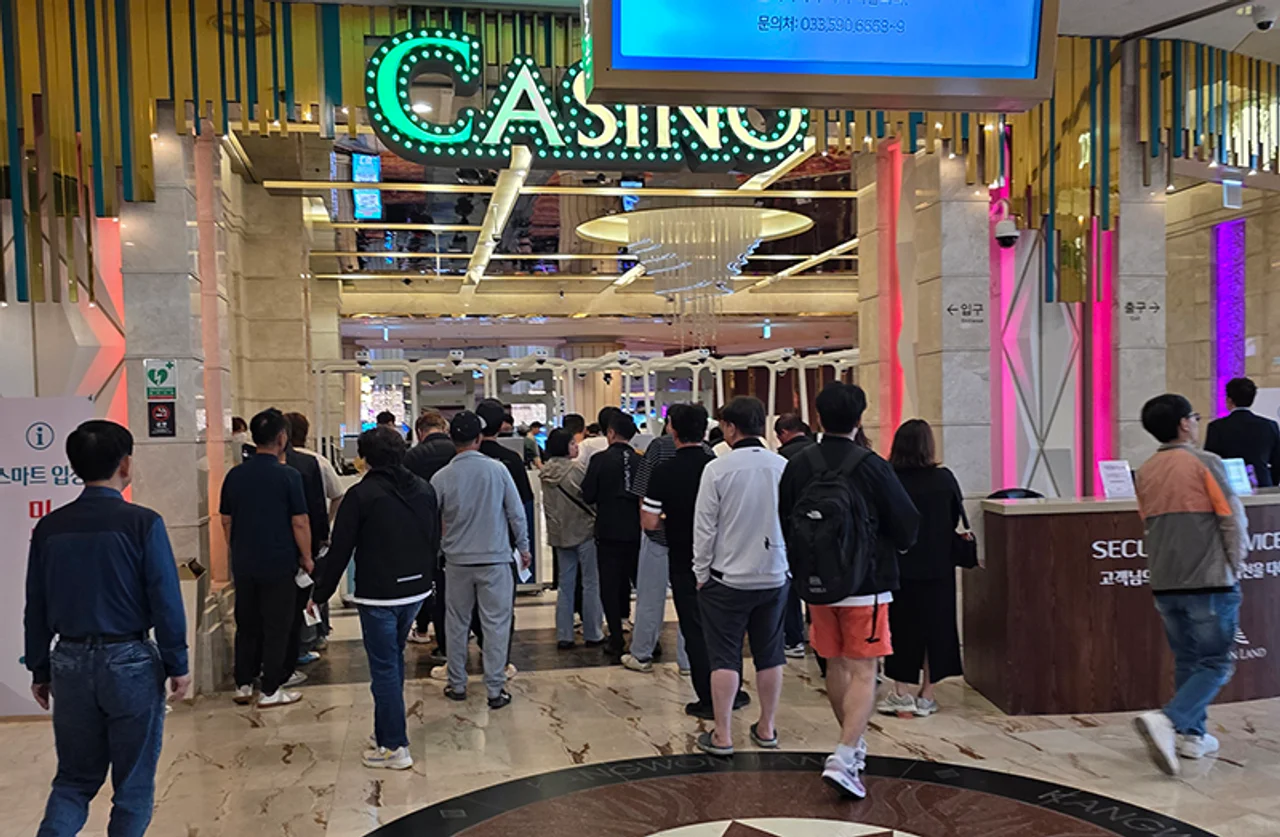
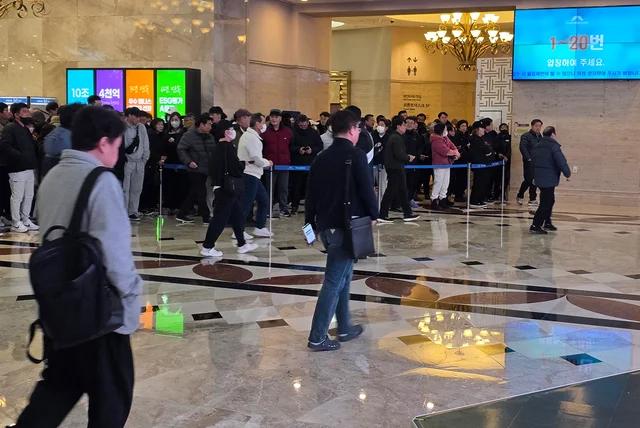
As Kangwon Land, the only casino in South Korea where locals are permitted to enter, marks its 26th anniversary, it has been analyzed that a distinct 'Korean-style casino culture' has emerged, setting it apart from international casinos.
Experts point out that this culture is not merely due to the tendencies of Koreans, but is a complex result of its founding purpose—'domestic monopoly' and 'revitalization of abandoned mining areas'—combined with 'long-distance travel,' 'limited game supply,' and 'strict operating hours and entry regulations.'
According to Kangwon Land on the 23rd, since the opening of the small casino in October 2000, it has operated as the only casino where South Korean nationals can legally enter.
While this monopoly ensured stable demand, it also weakened competition in services and content. Because there is no other casino in the country to turn to, customers have nowhere else to go even if they are dissatisfied with the facilities or services.
Consequently, unlike overseas casinos that focus on service and content competition to attract customers, Kangwon Land is evaluated as having focused its operations on managing a large volume of customers within limited facilities.
The mountain location of Kangwon Land is also cited as a factor in its unique usage culture. It requires significant travel time even from the Seoul metropolitan area, and the burden of access is even greater from southern regions like Busan and Gwangju. This leads to a tendency for visitors to stay longer or concentrate their gaming into a single day, given the difficulty of the journey.
Operating 20 hours a day and limiting the number of monthly visits also affect customer behavior. It is suggested that some users, conscious of closing times or remaining entry quotas, may not rest sufficiently or may display impatience in trying to recover losses within the same day.
Kangwon Land customers emphasize that there is a lack of statistics to conclude that operating hours and entry restrictions directly cause excessive usage. They suggest that regulations should be empirically verified by investigating usage amounts by time, rest periods, and length of stay.
Limited game supply has given rise to a 'seat-securing culture.' While Kangwon Land is equipped with 200 table games and 1,360 slot machines/video games, not all are always in operation. As customers flock to popular tables and machines, a phenomenon has emerged where obtaining an entry number and securing a seat is considered more important than choosing a game.
Customers share real-time information on congestion, entry wait times, popular machine status, and traffic/accommodation info through online communities and apps. While this improves convenience, it also risks spreading unverified rumors about machines or misconceptions about odds.
It is also pointed out that Kangwon Land customers should not be viewed as a monolithic group. They include diverse profiles such as tourists, social players, gaming enthusiasts, profit-seekers, high-rollers, and long-term stayers, all with different purposes and behaviors.
The social stigma that views casino customers as potential problem users rather than consumers is another issue to be addressed. While customers are key consumers supporting the accommodation, restaurant, and transportation sectors in the former mining region, they are simultaneously placed in a dual position of being evaluated as the cause of social problems.
According to casino users, innovation in Kangwon Land's culture cannot be achieved through kindness training or facility expansion alone. They argue that customer movement, stay, and gaming behaviors must be analyzed with data, the effectiveness of regulations on over-immersion must be verified, and the perceptions of staff and the local community toward customers must change.
In particular, many point out that the structure centered on entry numbers and seat competition must be abandoned. Instead, the supply of games and leisure content should be expanded to allow customers to choose what they want, and the service system must be improved.
An official from the Korea Gaming Tourism Professionals Association analyzed, “Kangwon Land’s culture is the result of 26 years of combining a monopoly, regulations, mountain location, and the economy of a former mining region. Moving forward, we must respect customers as legitimate consumers rather than objects of control and management, while simultaneously enhancing responsible gaming and service competitiveness.”