Kangwon Land has announced a comprehensive overhaul of its mid-to-long-term management strategy, setting a new revenue goal of 3 trillion won to prepare for global casino competition, including the opening of the Osaka Integrated Resort (IR) in Japan in 2030.
In particular, the company has restructured its existing 2030 strategy into a framework aimed at 2035. By prioritizing the strengthening of casino and tourism competitiveness, regional synergy, and management innovation, the company is effectively executing the mid-to-long-term vision of CEO Kim Do-kyun, who took office last September.
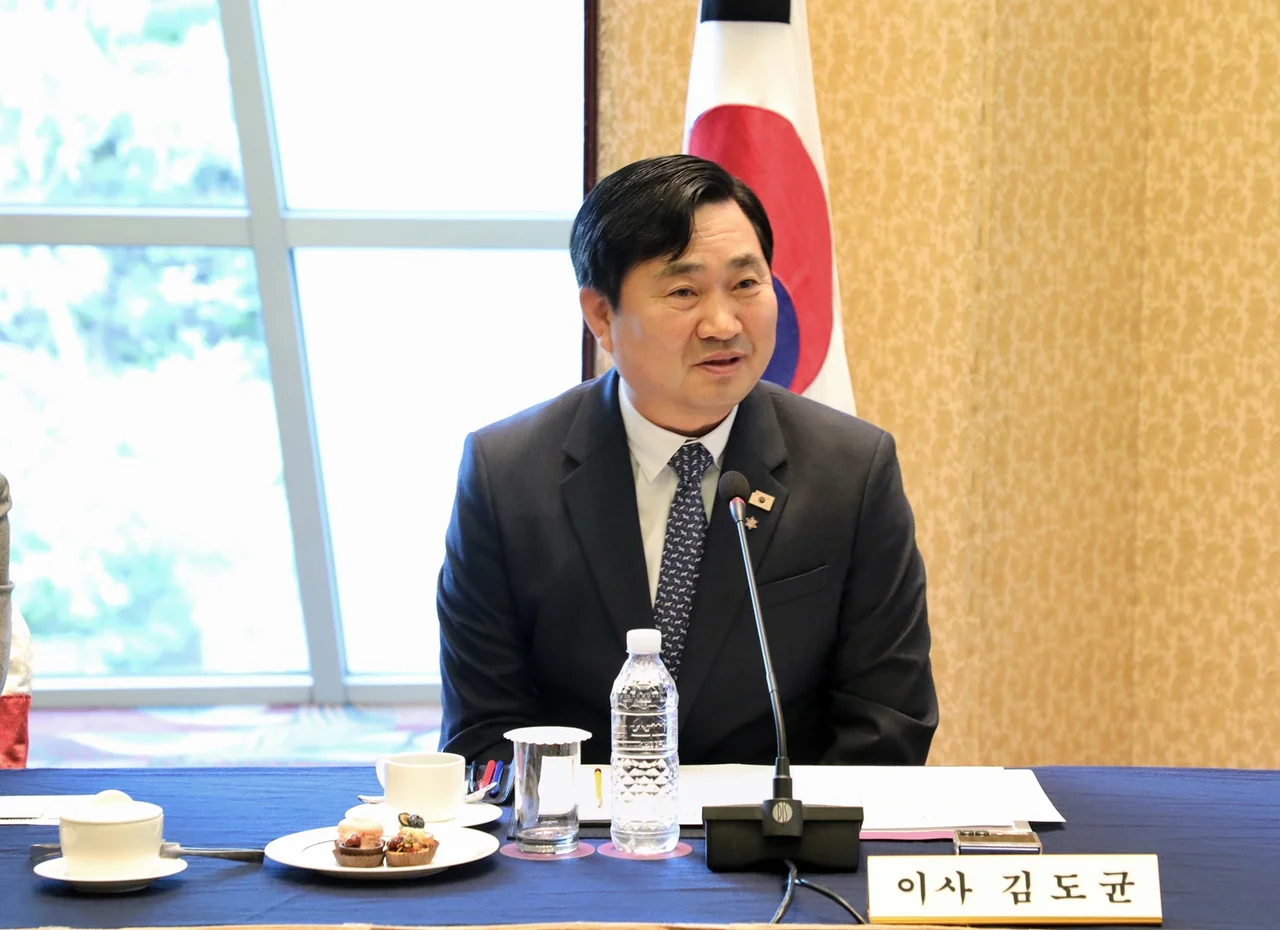
Kangwon Land held its 236th Board of Directors meeting at its headquarters on the 26th, where it deliberated and approved three agenda items, including the '2027–2031 Mid-to-Long Term Management Goal Plan.'
This reorganization focuses on securing future growth engines and creating tangible management results by completely revamping the vision, core values, management goals, and strategic tasks of the previous strategy.
The new vision is defined as: 'A global public-type integrated resort that adds joy to the people and vitality to the region.'
Core values have also shifted from respect, safety, ethics, practicality, and challenge to happiness, synergy, innovation, and responsibility, emphasizing customer satisfaction, contributions to the local economy, and its role as a public institution.
Key management goals include achieving 3 trillion won in total revenue, attaining an 'Excellent' grade in Customer Satisfaction (PCSI), an 'S' grade in integrated ESG evaluation, and an 'S' grade in KL-Regional Economic Contribution.
To achieve this, four strategic directions have been established: ▲Securing experiential tourism competitiveness, ▲Realizing a sound entertainment-type casino, ▲Revitalizing coal industry transition regions, and ▲Enhancing corporate value for sustainable growth.
What stands out in this strategy is the simultaneous pursuit of an external growth target of 3 trillion won and the securing of global integrated resort competitiveness.
Kangwon Land is currently pursuing the 'K-HIT' project, which involves investing 2.5 trillion won by 2032 to build a second casino floor, renovate hotels and condos, and expand tourism content.
However, large-scale facility investment alone does not guarantee increased revenue or enhanced competitiveness.
In particular, the Osaka IR, scheduled to open in 2030, is considered a formidable rival due to its geographical proximity to Korea, posing a threat to Kangwon Land's existing customer base.
Recent surveys of Kangwon Land customers showed that 52.1% of respondents would consider visiting the Osaka IR once it opens, highlighting the potential for customer migration to overseas casinos.
Consequently, experts point out that for Kangwon Land to reach its 3 trillion won revenue target, it must go beyond simple facility expansion. It is crucial to enhance on-site competitiveness by expanding popular gaming facilities, reducing customer wait times, improving entry procedures, and providing differentiated customer service.
Rationalizing casino operational regulations while simultaneously maintaining responsible gaming policies to prevent gambling addiction remains a key challenge.
Furthermore, to improve a business structure overly dependent on casino revenue, it is necessary to increase profitability in non-casino sectors such as hotels, condos, and leisure facilities, and to implement strategies that extend visitor stays.
Synergy with the former coal mining regions is also a variable that will determine the success or failure of the new strategy.
Kangwon Land must strengthen its role as a public institution contributing to the local economy while establishing a practical cooperative system that links tourism products, transportation, lodging, and local commercial districts in areas like Jeongseon, Taebaek, Yeongwol, and Samcheok.
Since CEO Kim Do-kyun’s inauguration, the company has initiated organizational reforms, including the formation of an Organizational Diagnosis Innovation Task Force and an Innovation Committee, as well as personnel reshuffles. Attention is now focused on how this mid-to-long-term strategy will integrate with these organizational changes.
While the new vision and revenue goals are significant, Kangwon Land's future competitiveness will be judged by concrete investment outcomes, customer satisfaction, non-casino profitability, and contributions to the local economy.
Above all, the key is how much tangible change customers can experience in the time remaining before the Osaka IR opens in 2030.
Whether CEO Kim Do-kyun’s management blueprint for the 3 trillion won era will lead to sustainable growth and global competitiveness, rather than remaining a mere goal, remains to be seen.
Meanwhile, the Board of Directors also approved the '2026 Employee Welfare Fund Contribution Plan' and the 'Grand Hotel Employee Cafeteria Relocation and Expansion Adjustment Plan.'