
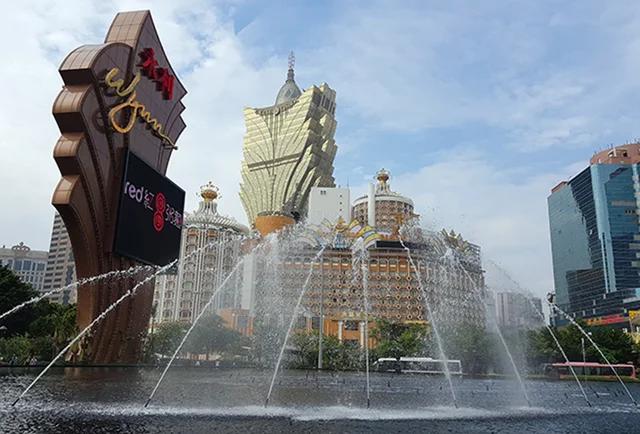
For those new to casinos, they appear as spaces filled with flashy lights, slot machine sound effects, and unfamiliar card games. However, beneath the surface, probability, statistics, psychology, spatial design, marketing, and customer management all work together.
To understand casinos, you must know not only the rules of the games but also the structure of how money changes hands and why your judgment might be clouded. Understanding the meaning behind chips, return-to-player (RTP) rates, complimentary services, and winning sounds is the starting point.
Ⅰ. Why do casinos use chips instead of cash?
In table games, it is standard to use chips instead of cash.
Chips allow for faster processing of bets and payouts and make it easier to verify amounts. They are also useful for managing security, accounting, and game flow.
It is also worth considering the psychological aspect. The feeling of spending money can be different when placing chips on a table compared to handing over actual cash.
As chips become as familiar as game tools, you must be careful not to lose your sense of the actual monetary value. The same applies to amounts displayed as electronic credits or points.
The point to remember is simple: chips and credits represent the value of real money. When betting, it is a good habit to check how much you are wagering in your local currency rather than just the number of chips.
Ⅱ. Why is Baccarat so popular in Asian casinos?
Baccarat is a card game where customers basically bet on one of three outcomes: Player, Banker, or Tie.
'Player' and 'Banker' are just names for the card hands. Just because a customer bets on the Banker does not mean they are acting as the casino operator.
Because the procedures for drawing additional cards are fixed, customers don't need to make complex choices every time, and the game is relatively fast-paced. This is the background behind why it has become a representative game in Asian casinos, including Macau.
However, simple rules do not mean the game is easy to win. Since the payout methods and the casino's mathematical edge vary depending on the type of bet, you should check the game instructions first.
You should also be cautious about the 'roadmap' that displays past results. A record of consecutive or alternating results does not guarantee the next outcome. The result board is a record, not a predictive tool for the future.
Ⅲ. Do slot machines really operate randomly?
Modern, typical casino slot machines use a Random Number Generator (RNG) to determine results.
When a customer starts a game, the random number value is linked to the result according to a set game structure. You cannot determine the next win simply by watching the reels stop or by using specific button-pressing techniques.
'Random' here does not mean that all symbols and winning combinations appear with the same probability. The probability of each result and the payout are determined by the mathematical structure of the game.
You cannot assume a win is coming just because the previous customer lost a lot or because a jackpot hasn't hit in a while.
When understanding slots, you should look at the following elements:
RTP (Return to Player): The long-term theoretical percentage designed to be paid back as winnings from the total bets.
Volatility: The tendency for the size of winnings and the fluctuation of profit and loss.
Hit Frequency: The frequency with which payouts occur. Payouts can be smaller than the bet amount.
Bonus Structure: Features and payout conditions such as free spins, multipliers, and jackpots.
Special jackpots or progressive features have different conditions for each game. Always prioritize checking the help menu and paytable of the specific machine over general explanations.
Ⅳ. Does a 90% return rate mean I get 90% of my money back?
Not at all.
Just because the RTP is 90% does not mean a customer who puts in 1 million won is guaranteed to get 900,000 won back. It is a theoretical average based on a very large number of games, and actual results in a short period can vary significantly.
Furthermore, the benchmark is not the initial cash deposit, but the 'total amount wagered repeatedly in the game.'
For example, if you start with 100,000 won and re-bet the winnings to play a total of 500,000 won worth of games, the total bet is 500,000 won, not 100,000 won. This is why you should not interpret RTP as the ratio of the final balance to the initial deposit.
Games with the same RTP can feel different. This is because the flow of profit and loss differs between games that pay out small amounts frequently and those that pay out large amounts rarely.
You should look at volatility, game speed, and bet size, not just the return rate. Under the same conditions, the larger the bet and the more games played, the greater the exposure to potential loss.
Ⅴ. Why do casinos have few or no clocks and windows?
In some casinos, the lack of windows and visible clocks can make you feel disconnected from the outside world.
Several factors play into casino spatial design, including lighting, security, traffic flow, and the gaming environment. It is difficult to explain the entire design solely as a purpose to blur the customer's sense of time.
However, in an environment where it is difficult to track the transition between day and night, you may end up staying longer than expected.
Not all casinos have the same structure. Some are integrated resorts that utilize natural light or are connected to food and beverage, shopping, and performance facilities.
What customers need is the habit of checking their own usage time rather than speculating on the building's design intent. Setting an end time and an alarm before entering can help with time management.
Ⅵ. Why do casinos provide free services?
Some casinos provide services such as drinks, meals, lodging, transportation, and performances. These are commonly called 'Comps' (Complimentary).
Comps are a marketing tool to encourage customer visits and repeat visits. Availability and levels may vary depending on business policy, membership tier, game type, bet size, and time spent.
The important thing is not to increase your spending just to receive benefits.
You might end up betting more than necessary to get a free room, only to suffer a loss far greater than the price of the room. There is no need to keep playing just because you feel the service you already received would go to waste.
Don't just look at the word 'free'; check the terms and restrictions of use. The cost and risk you bear additionally may be greater than the value of the benefit.
Ⅶ. What is a Junket?
A 'Junket' is a term referring to agents or operators who introduce high-net-worth customers to casinos or connect them with travel, lodging, and VIP services.
In the past, they played an important role in some Asian casino markets, including Macau. In some markets, they have also performed tasks related to fund settlement or providing credit.
However, permitted activities and registration/licensing requirements vary by country and region. Not all junkets are illegal, but using the name 'junket' does not guarantee legality.
Customers should be wary of trusting only the introducer's explanation and handing over passports or bank accounts, or sending money to third-party accounts. It is fundamental to check directly with the casino operator whether it is an official service.
In particular, you should never engage in transactions without fully understanding the terms of loans, currency exchange, commissions, and debt obligations.
Ⅷ. Does a winning sound mean I actually made money?
Slot machine music, lights, and winning sound effects heighten the anticipation and immersion of the game.
If sounds are constantly ringing around you, many people might feel like others are winning money. However, you cannot know the actual profit or loss of other customers just from the sound.
You must also distinguish between a 'win' indication and 'net profit.'
In some multi-line slots, you might bet 10,000 won and get 3,000 won back, which can trigger a win indication and celebratory sound effects. A payout occurred, but the actual profit/loss for that round is a 7,000 won loss.
What you need to check is the difference between the bet amount and the payout amount, not the volume of the sound effect.
In a casino, individual winning scenes are very visible, but how much each customer spent beforehand is not. Do not use another person's win as a basis for your own additional betting.
Ⅸ. Why are customers obsessed with specific seats and numbers?
Some customers only look for specific slot machines, while others wait for their favorite dealer. They may even link numbers, times, clothing, and colors to luck.
Humans have a tendency to look for rules and meaning even in situations that appear random. The problem arises when individuals accept personal jinxes as actual predictive ability.
Thinking that it is the 'turn' for the opposite color to appear in roulette because the same color came up several times is a classic 'Gambler's Fallacy.' In normally operated independent trials, previous results do not change the probability of the next result.
In Baccarat, because cards are dealt from the same deck until depleted, the probability can change slightly depending on the remaining card composition. Even so, it does not mean that you can reliably predict the next outcome just by looking at the pattern of win/loss records.
You must distinguish between enjoying a jinx and using it as a basis to bet more money.
Ⅹ. How are overseas casinos different from Kangwon Land?
Kangwon Land is the only casino in Korea where locals are permitted, starting from a policy background of economic revitalization and job creation in abandoned mining areas.
Its founding purpose, market structure, and regulatory environment are different from typical overseas casinos. There are restrictions on entry and betting, and it is required to fulfill public roles such as customer protection and regional contribution.
It is also difficult to group overseas casinos into a single category. Entry requirements, business regulations, and customer protection systems vary by country and region, and operating forms range from large integrated resorts to small-scale businesses.
Therefore, it is difficult to judge superiority based solely on the number of facilities or betting limits. You should look at the quality of service, transparency of rules, accessibility, prices of lodging/food, and customer protection systems together.
Just because casino use is permitted locally overseas does not mean all legal issues disappear for Koreans. It is necessary to check relevant laws and official travel/safety information before visiting.
Ⅺ. Why does betting increase when losing money?
One behavior to be careful of in gambling is 'Loss Chasing.' This refers to the act of continuing to play or increasing bets to win back lost money.
Even people who initially intended to use only an affordable amount may think, 'I'll stop once I break even,' when losses grow.
However, the possibility of winning the next game does not increase just because the amount lost has grown. Increasing your bet size carries the risk of losses growing even faster.
'Tilt,' a term used in poker, refers to a state where emotions are shaken, leading one to deviate from rational judgment and play. While it is not the same as loss chasing, they can occur together.
If you feel the urge to 'win it back today,' you need to stop playing and leave the area rather than trying to secure additional funds.
Ⅻ. You must be careful even when you are winning.
Your judgment can be clouded even when you are winning.
If you started with 1 million won and your balance is now 3 million won, you might feel the additional 2 million won is less valuable than your own money. This tendency to take more risks due to previous gains is often explained in connection with the 'House Money Effect.'
However, the money you won is also your property. If you re-bet it and lose, it is a real loss.
The fact that you won before does not guarantee the next win. Be careful not to change your budget and time limits just because your confidence has increased.
Beware of excessive confidence when winning, just as you would the impatience when losing.
ⅩⅢ. The influence of skill varies by casino game.
Casino games have different elements that affect the outcome.
In typical slot machines and roulette, it is difficult to change the next result through the customer's choice or skill. In blackjack, choosing a strategy according to the rules affects profit and loss, but knowing the strategy does not guarantee consistent profit.
Standard Hold'em poker is a structure where you compete against other customers and the operator takes a commission. However, there are separate poker-style games where the casino is the opponent, so do not judge solely by the name.
In poker where customers compete against each other, skill differences can affect long-term performance, but short-term luck, commissions, and the opponent's skill are also important. Having experience does not eliminate the risk of loss.
First, you must check who the opponent is, how the operator generates profit, and what rules and costs apply.
ⅩⅣ. Remember the criteria for stopping and the right to seek help.
Before starting a game, it is good to set a budget, a loss limit, and an end time.
The budget should be within a range that does not interfere with your life even if you lose it. You should never use living expenses, loan money, or money borrowed from others as gambling funds.
It is a principle to stop regardless of the result once you reach a pre-set limit. While setting a limit does not make gambling safe, it can serve as a standard to check your usage.
However, gambling harm should not be explained solely as a lack of individual willpower.
If you repeatedly exceed limits, hide losses, take on debt, or have problems with work and family life, you need to seek external help such as professional counseling and self-exclusion rather than trying to solve it alone.
Casino operators must also provide clear game information and rest environments, and make it easy for customers to stop using or request help. Customer protection is a task that must be shared by individuals, companies, and policy authorities.
- 7 Commandments for Casino Beginners
Major casino games like slots, baccarat, and roulette are designed to favor the operator in the long run.
RTP is not a guaranteed refund rate for individuals.
Past result tables and jinxes do not guarantee the next win.
Chips, credits, and money won in games are real money.
Do not increase unplanned spending because of free services.
Do not increase bets or borrow money to win back losses.
If it is difficult to stop, request help rather than enduring it alone.
- Knowing the structure of a casino changes your perspective
Chips, winning sounds, free rooms, and VIP services each have operational reasons and marketing purposes. Understanding this makes it easier to distinguish between the wins and benefits in front of you and your actual profit and loss.
Understanding a casino requires not only knowing the probabilities but also examining your own emotions and actions. You should also look at whether the operator provides fair rules, sufficient explanations, and effective protective measures.
Enjoy the casino, but do not be dragged by it. Being able to stop when necessary and seek help—this is the casino literacy that customers should know first.