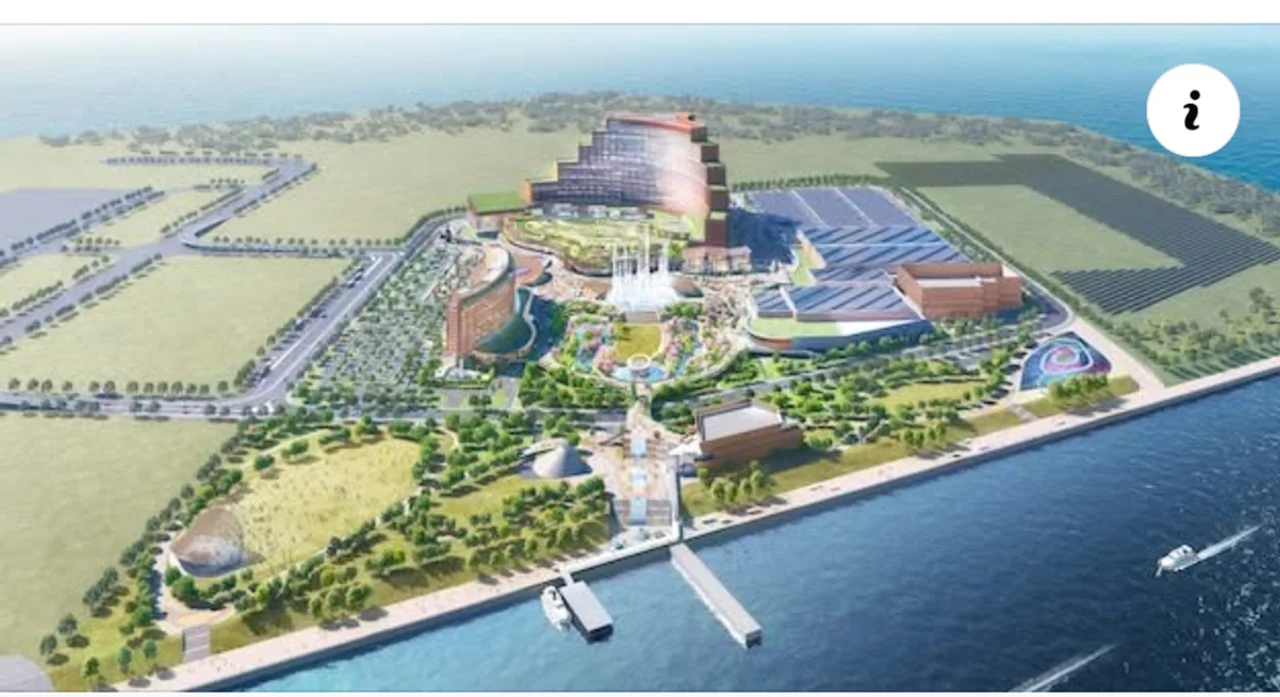
The Integrated Resort (IR) in Osaka, Japan, scheduled to open in the fall of 2030, is projected to attract approximately 19.9 million visitors annually, with 6.3 million of them being international tourists.
With tourists from Asian countries such as South Korea, China, and Taiwan emerging as key international customer segments, attention is focused on how many Koreans will visit and how many customers from Kangwon Land—the only casino in Korea open to locals—might defect.
According to global casino operator MGM Resorts and industry publication GGRAsia on the 31st, MGM estimated the Osaka IR's annual visitor count at approximately 19.9 million in its Q3 investor presentation released on the 28th.
The visitor composition is projected as follows: 54% (approx. 10.8 million) residents from the Osaka area, 14% (approx. 2.3 million) tourists from other parts of Japan, and 32% (approx. 6.3 million) international tourists.
This indicates that the Osaka IR is positioning international tourism as a core growth engine alongside the domestic Japanese market.
However, MGM did not disclose the specific breakdown of international tourists by country or the expected number of Korean visitors.
■ 6.3 Million International Tourists: Interest in Korean Visitor Numbers
The Osaka IR is Japan's first casino-integrated resort, with an investment of approximately 1.513 trillion yen (approx. 15 trillion KRW) from partners including MGM Resorts and Japan's Orix.
Located on the artificial island of Yumeshima in Osaka, the project is under construction with a target opening date in the fall of 2030, featuring about 2,500 hotel rooms, international conference and exhibition facilities, shopping centers, performance venues, and a casino.
MGM plans to install 470 gaming tables and 6,400 gaming machines at the Osaka IR, securing a total of 9,220 gaming positions.
This is about 40% larger than the combined gaming positions of the two Macau casinos operated by MGM.
According to MGM, approximately 11% of the total construction is complete, and the project is proceeding according to the 2030 opening schedule.
One of the key competitive advantages of the Osaka IR is its accessibility from other Asian countries.
In its investor presentation, MGM noted the flight time between Seoul and Osaka is approximately 1 hour and 45 minutes, compared to 3 hours and 40 minutes for Seoul–Macau and 6 hours and 20 minutes for Seoul–Singapore.
For Korean tourists, Osaka could emerge as a more accessible casino destination than Macau or Singapore.
Furthermore, analysts suggest that because Osaka already boasts strong tourism and shopping demand, it can attract both general tourists and casino players simultaneously.
However, the 6.3 million international visitor figure is a projection for the entire integrated resort, not necessarily meaning all of them will use the casino.
Therefore, the actual number of Korean casino users can only be determined after observing the visitor composition and casino usage rates following the opening.
■ 52.1% of Kangwon Land Customers Say They Will Visit Osaka Casino
The most closely watched aspect by the domestic casino industry is the potential for Kangwon Land customers to visit the Osaka IR.
A survey presented at the 'Seminar on the Impact of Japan's IR Casino Introduction,' held by the Korea Casino Association at the Koreana Hotel in Seoul on the 14th, drew significant attention.
In a survey conducted by a research team from Kangwon National University in September, targeting 493 general floor customers at Kangwon Land, 52.1% of respondents stated they intended to visit the Osaka IR once it opens.
This is a 4.2 percentage point increase from the 47.9% recorded in a 2018 survey.
Based on these results, researchers presented a scenario where approximately 445,304 Kangwon Land customers could visit the Osaka IR annually, with gaming expenditures potentially ranging from 316.5 billion to 1.266 trillion KRW, depending on the frequency of visits.
The survey found that those interested in visiting the Osaka IR expected to go an average of 4 times per year, with an average gaming expenditure of 3.01 million KRW per visit.
However, these are estimates based on stated intent and expected spending; it does not necessarily mean 440,000 Kangwon Land users will defect or that Kangwon Land's revenue will decrease by that exact amount.
It is possible that a significant number of customers will continue to visit Kangwon Land while also using the Osaka casino.
■ What Customers Want: A Freer Gaming Environment
What is noteworthy is the reason Kangwon Land customers wish to visit the Osaka IR.
In the survey, the most common response was "I want to enjoy casino games in a freer environment" (38.4%), followed by "I think entry and regulations will be more relaxed" (20.7%).
When asked about improvements required at Kangwon Land, respondents cited service improvements (19.7%), expansion of auxiliary facilities (15.8%), 24-hour operations (15.1%), higher betting limits (13.6%), and relaxed entry restrictions (12.5%).
Although Kangwon Land is the sole operator of a casino for locals in Korea, the gaming environment differs significantly from major overseas casinos.
Currently, Kangwon Land operates for 20 hours a day and is subject to regulations such as a 15-day-per-month/30-day-per-quarter entry limit and betting caps per game.
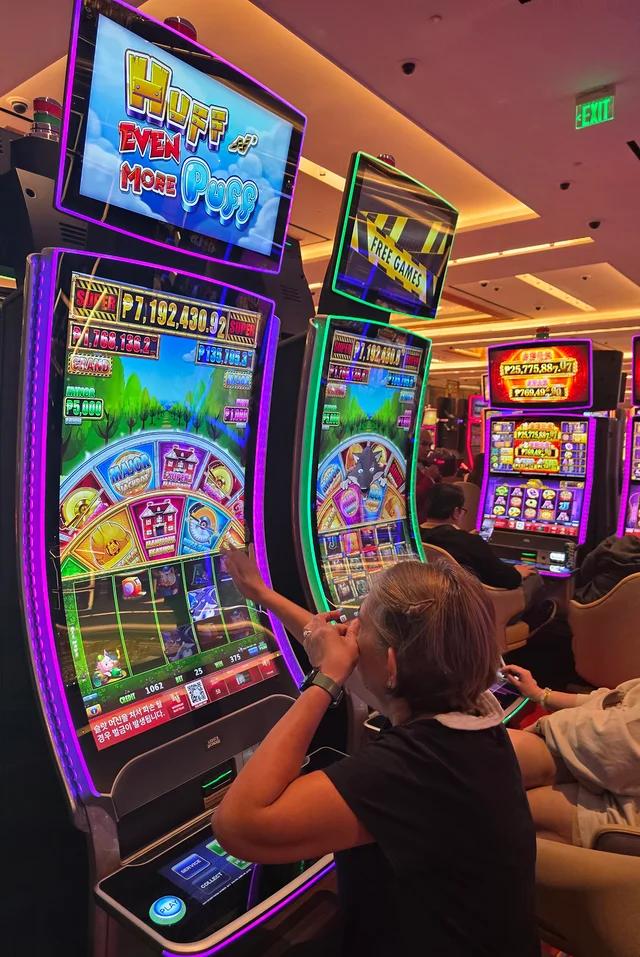
Additionally, customer complaints persist regarding the ARS entry application system, waiting queues, and competition for popular slot machine seats.
In contrast, the Osaka IR is being built as a massive integrated resort combining state-of-the-art gaming facilities with hotels, shopping, and performances.
Of course, Japan also enforces strict regulations on its own citizens and foreign residents, including entry fees and visit limits. However, different entry rules may apply to short-term foreign tourists like Koreans, which is expected to lead to differences in actual convenience.
Ultimately, whether Kangwon Land customers visit Osaka will likely be determined by various factors, including gaming facilities, service, entry convenience, and travel costs, rather than simple tourist curiosity.
■ Competition Inevitable for Foreign-Only Casinos
The impact of the Osaka IR opening is not limited to Kangwon Land.
Domestic foreign-only casinos in Incheon, Jeju, and Seoul will also face a new competitor in the race to attract Asian tourists.
A study released by the Korea Casino Association suggested a scenario where the opening of the Osaka IR could lead to a decrease of 360,000 to 420,000 annual visitors to domestic foreign-only casinos, with gaming expenditure losses potentially reaching 807.1 billion to 1.0498 trillion KRW.
In particular, competition between Osaka and domestic casinos for major international customer bases from China, Taiwan, and Hong Kong is likely to intensify.
Recent moves by casinos in Incheon and Jeju to expand international poker tournaments and various customer attraction events are noteworthy in terms of securing long-term competitiveness.
However, it remains to be seen whether individual poker events are direct strategies to counter the Osaka IR.
■ Four Years Until 2030: Urgent Need for Kangwon Land Competitiveness
In preparation for the opening of the Osaka IR, Kangwon Land is pursuing the 'K-HIT Project,' which includes the construction of a second gaming floor, renovations of hotels and condos, and the expansion of gaming facilities.
However, experts point out that improvements in service and the gaming environment that customers can actually feel are just as important as facility investment.
In particular, securing popular slot machines, replacing aging gaming equipment, introducing diverse gaming content, and improving entry procedures are considered key tasks for increasing customer satisfaction.
At the government level, there is also a need to review reasonable regulatory improvements that can enhance the competitiveness of the casino industry while preventing gambling addiction.
The 6.3 million international visitor projection presented by MGM provides a glimpse into the status the Osaka IR will hold in the Asian casino market.
How many Korean tourists will be included in this figure, and to what extent Kangwon Land customers will actually shift their patronage, remains unknown.
However, the survey result showing that more than half of Kangwon Land's customers intend to visit the Osaka IR is a signal that the domestic casino industry cannot afford to take lightly.
Whether domestic casinos can retain their existing customers after the Osaka IR opens in 2030 will depend on the facility investments, customer service innovations, and changes in government regulatory policies implemented over the next four years.